The space-left rocket stage is on a collision course with the Moon. This event, scheduled for 2026, will provide scientists with the opportunity to study the details of an artificial impact on the natural satellite for the first time.
Details of the Falcon 9 Collision
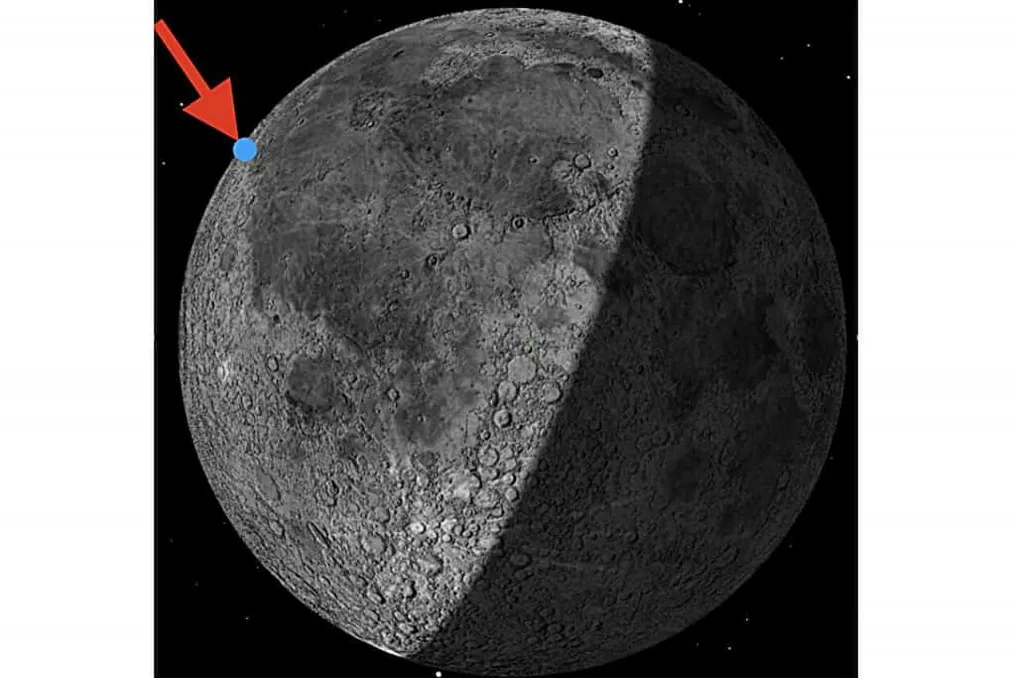
The object belongs to the Falcon 9 rocket from SpaceX and is expected to reach the Einstein Crater area on the near side of the Moon, while astronomers monitor this phenomenon. According to the study, the collision will occur on August 5, 2026. This object is the upper stage of the Falcon 9 rocket, identified as 2025-010D.
The rocket was launched in January 2025 to support the sending of two private robotic modules into space. After completing its mission, it lost fuel and began moving along a trajectory that will lead it to the surface of the Moon. The stage is about 12 meters long, 4 meters wide, and weighs approximately 4 tons, and is expected to reach the Moon at a speed close to 8,750 km/h.
Predicted Impact Consequences
Researchers used data calculated by astronomer Bill Gray and physical simulations to predict the results of the collision. Since the rocket has a hollow metal body, it is expected to be destroyed upon impact rather than penetrating deeply into the ground like a compact asteroid.
Projections indicate that this event could cause:
- A new crater with a diameter of approximately 20 to 30 meters;
- A large cloud of lunar dust lifted to an altitude of several kilometers;
- A flash visible at the moment of impact;
- A new way to test methods for detecting impacts on the Moon.
Observing the Space Event
Scientists hope that professionals and amateur astronomers can witness this moment. The resulting images may help in studying how objects reach the lunar surface and improve methods used in future research. The collision is expected to happen at 03:35 Brazilian time. Since the impact will occur on the near side of the Moon, cameras capable of recording high-speed video will be required.
According to astronomer Marcelo Zurita, who is a columnist for Olhar Digital, the impact may be visible from Brazil and will occur near the Carroll Crater, named after the Artemis 2 mission. Expected signs include a 'flash at the moment of impact' and a 'jet of ejected material'. The fall of the Falcon 9 stage will be a rare opportunity to observe a man-made object colliding with another world. In addition to the visual spectacle, the recordings may reveal the reaction of the lunar surface to this type of impact.