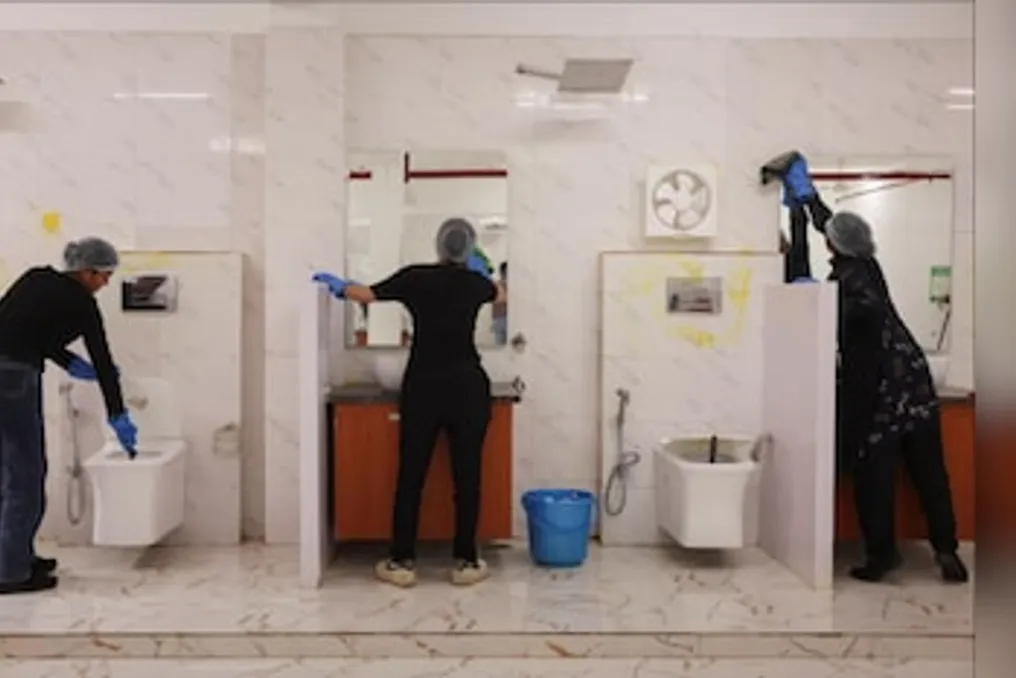
The Indian instant home services industry has reached a significant milestone, with leading platforms now collectively processing over 100,000 orders daily. Companies such as Snabbit, Pronto, and InstaHelp from Urban Company are actively competing by offering faster delivery, lower prices, and aggressive expansion, while attracting thousands of domestic workers.
However, even though customers are willing to pay only between ₹29 and ₹99 for cleaning, dishwashing, laundry, or cooking, an important question remains: what income do the workers themselves actually receive?
The answer depends not only on the payment per order but also on the number of jobs completed, travel time, bonuses, and the platforms' efficiency in keeping workers busy throughout the day.
How much do workers earn per order?
According to Anjali Sardana, founder and CEO of Pronto, partner remuneration is determined by the duration of each job, not the price paid by the customer. She explained that payments to partners are structured at approximately ₹150–190 per hour of work. Consequently, a 30-minute job yields ₹90–95, and a 60-minute job yields ₹150–190, depending on the service type and applicable bonuses.
Pronto's payouts generally align with InstaHelp from Urban Company, where workers reportedly earn around ₹150 per hour. Meanwhile, Snabbit has stated that its specialists earn approximately ₹80–100 per hour, reflecting a somewhat different payout structure. These figures indicate that worker compensation is independent of discounts offered to customers; Sardana emphasized that promotional offers are funded by the platform itself, not deducted from partners' earnings.
What income does a worker earn per day?
Earnings per order only provide a partial picture, as a worker's total income depends on the number of tasks they complete during the day. According to Pronto data, a partner working a standard eight-hour shift completes five to six orders and earns about ₹800–900 per day. Although official figures for this metric are not disclosed by InstaHelp from Urban Company or Snabbit, reports on worker income suggest a similar range of daily earnings.
A worker interviewed by Business Standard noted that completing more orders within one area helps increase daily income, whereas time spent traveling or waiting between orders can reduce net earnings. Sardana added that approximately 13% to 20% of a worker's time is spent commuting between assignments, waiting for the next order, or taking breaks. As platforms expand into densely populated areas, reducing travel time has become critical, as it allows workers to complete more orders in one shift, thereby increasing their earning potential.
How much can workers earn per month?
Based on an average daily earning of ₹800–900 over 28 working days, a regular Pronto partner can earn about ₹25,000 per month, according to the company. Reported incomes from other instant home service platforms are in a similar range, although they vary depending on the number of hours worked.
According to data provided by Snabbit workers, partners working more than eight hours a day earn about ₹20,000 per month, while those working over 10 hours receive approximately ₹25,000. Workers who work longer can earn around ₹30,000, and the highest earners report monthly incomes up to ₹40,000. Previously, an InstaHelp specialist claimed that workers have a guaranteed monthly income of around ₹20,000–25,000. Earlier reports also indicated that the top five percent of InstaHelp workers earn about ₹50,000 per month.
Workers told Business Standard that they joined instant home service platforms because they offered more predictable income compared to traditional domestic work, as well as benefits such as health insurance and accident insurance.
Do discounts reduce workers' wages?
The rapid growth of instant service has been accompanied by intense price competition, as platforms launched heavily discounted introductory offers while continuing to invest in customer acquisition. Industry analysts estimate that leading players collectively spent about $16–17 million in June competing for market share.
Despite aggressive price reductions, Pronto asserts that customer promotions do not affect worker payments. According to Sardana, the platform absorbs the cost of discounts, while partners' earnings remain unchanged. A similar strategy is observed across the industry: platforms continue to invest in customer acquisition, worker recruitment, and network expansion, prioritizing growth over profitability. Previous reports indicate that the business of InstaHelp from Urban Company remains unprofitable as the company focuses on service scaling.