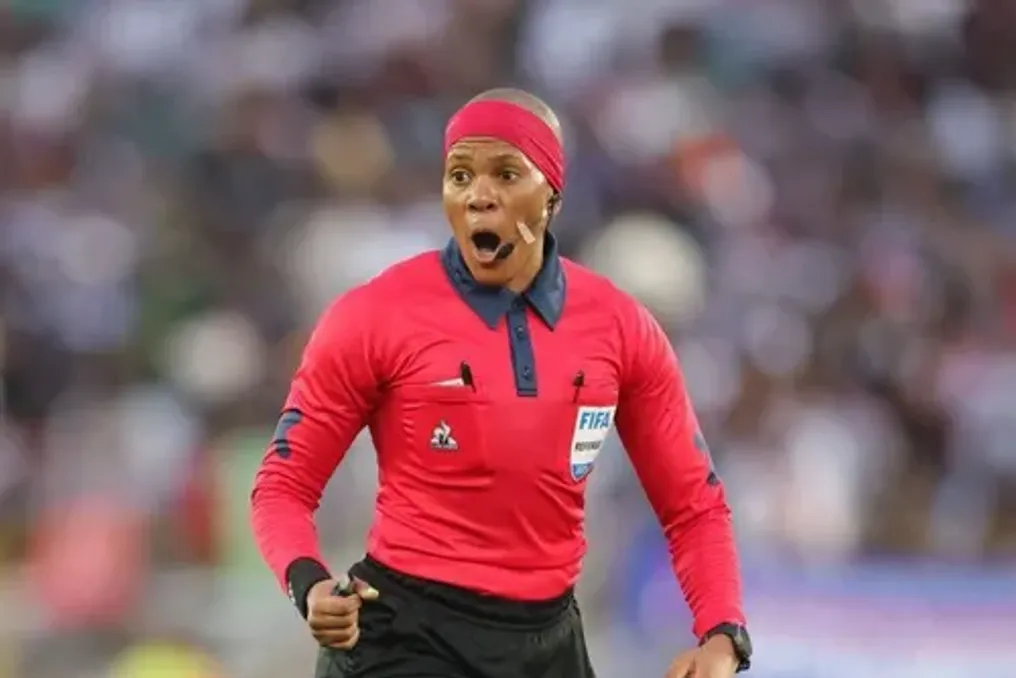
Women referee Ahona Makalima continues to strengthen her reputation at the current Africa Women's Cup in Morocco. She officiated the opening match between Algeria and Senegal.
When the 2026 Africa Cup began in Morocco, attention was not only focused on top African players. South African referees Ahona Makalima and assistant referee Maneo Tau were tasked with officiating the opening match between Algeria and Senegal, highlighting the country's growing reputation in preparing elite female officials.
This high-profile appointment is another milestone for Makalima, who has been breaking barriers in South African football for over a decade, indicating that she is no longer a lone pioneer.
Together with Tau, they represent the success of a development program that prepares a new generation of referees capable of receiving appointments at CAF and FIFA competitions. This program reached another important point earlier this year when Khlonifile Msezane was awarded a FIFA referee badge after completing the Safa women's development program.
Assistant referee Nandifa Msenze also had a breakthrough season, being named South African Assistant Referee of the Year for the 2025-26 season following many years of consistently strong performances with the national team.
While Makalima and Tau continue to raise South Africa's profile on the continental stage, the emergence of referees like Msezane and Msenze indicates that the country is no longer generating isolated success stories. Instead, it is creating a sustainable pipeline of female referees and assistant referees ready to succeed at the highest level.
The latest confirmation of this is the current Wafcon tournament, where Makalima and assistant referee Maneo Tau were again assigned to officiate at one of Africa's largest football venues. For Makalima, this is another chapter in a career that has helped change perceptions of women referees in South African football.
Known for her calm authority, physical fitness, and ability to handle tense situations, she has become one of the most respected referees on the continent, while Tau has established herself as one of Africa's leading assistant referees through numerous international appointments.
Their consistent participation in major CAF tournaments reflects both their individual quality and South Africa's steady progress in developing elite female officials. Although referees like Makalima, Tau, Msezane, and Msenze are public faces of this success, Safa believes their achievements are built upon a much wider support network.
Technical instructors, match assessors, and administrators continue to play a vital role in preparing referees for the demands of elite football, providing everything from fitness and performance analysis programs to rule interpretation, mentorship, and psychological support. These investments appear to be paying dividends.
Where Makalima was once a lone pioneer, South Africa now possesses a growing pool of female referees capable of receiving appointments at CAF and FIFA competitions. The result is a sustainable path that produces not just one outstanding referee, but an increasingly competitive group able to represent the country on the biggest stages.
As women's football grows across Africa, the performances of South African women referees serve as another reminder that the country's influence extends far beyond the players on the field. While Makalima and Tau continue to represent the country in Morocco, and Msezane and Msenze develop landmark seasons at home, the next generation of South African referees already has a clear action plan—proof that the whistle has become as powerful a symbol of progress as the jersey.