Cape Town offers one of the most pleasant ways to explore the peninsula without needing a rental car or complex route planning. This journey begins with the characteristic sound of a train departing from Cape Town station.
Journey along the Southern Line
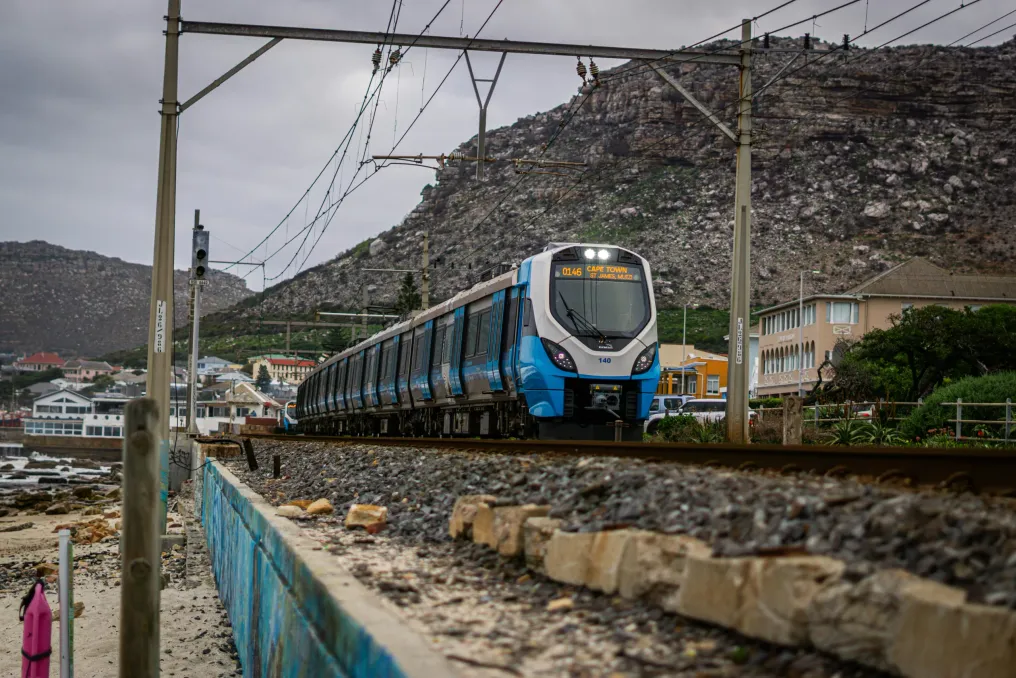
The Southern Line has served passengers for many generations, but for tourists, it offers a completely different experience. As the city gives way to green suburbs, beach towns, and working harbors, the route unfolds like a moving postcard of daily life in the Mother City. When the train approaches the edge of False Bay, where waves crash just meters from the tracks, it is easy to forget that you are on public transport.
The route from Cape Town to Simon's Town takes about 90 minutes, but it is recommended to allocate a full day for it. Part of the charm lies in the ability to get off at any stop, linger longer than planned, and catch the next train when ready to continue the journey.
Leaving the Urban Area
The journey starts under the bustling platforms of Cape Town station, where passengers, students, and visitors use the same departure boards. As the train leaves the city center, Table Mountain remains in the background, and the urban landscape gradually gives way to neighborhoods showcasing another side of Cape Town.
The first stretch passes through the Woodstock and Observatory areas, long known for their creativity and culture. Converted warehouses house independent cafes, art studios, and design spaces, while colorful murals enliven ordinary streets. Although these spots may not be on standard tourist routes, they offer an authentic glimpse into the city's creative energy. Those with spare time should stop in any of these areas to have breakfast, enjoy a good coffee, or take a leisurely stroll before heading further south.
The Sea Appears on the Horizon
The character of the trip begins to change after the southern suburbs. Almost suddenly, the urban landscape gives way to open water as False Bay appears along the railway lines. This moment often surprises first-time passengers, while regular commuters rarely tire of the sight.
Between Muizenberg and Simon's Town, the railway closely follows the coastline, offering passengers continuous views of the bay. On one side, mountains rise sharply from the shore, and on the other, the ocean stretches to the horizon, changing color under the influence of the changing light. Traveling early in the morning or late in the afternoon delights photographers with soft light, and in winter and spring, there is often the chance to see southern whales in the open sea. It is widely recognized as one of South Africa's most picturesque railway routes, and this is not accidental.
Surfing Culture and Seaside Life
The beauty of this route lies in the freedom to explore places beyond the station platforms. Muizenberg is often the first stop for visitors. Its colorful Victorian beach huts have become one of Cape Town's most photographed attractions, and the beach itself remains one of the best places in the country to learn how to surf. The relaxed promenade invites leisurely walks, coffee breaks, and long lunches with a view of the water.
Just a few minutes further down the line is Kalk Bay, which offers a completely different atmosphere. This historic fishing village is easy to explore on foot. Fishing boats continue to bring in the day's catch, Cape fur seals gather around the harbor, and the main street is lined with independent bookstores, antique shops, and cafes. It is a place where an hour can easily turn into a whole day.
Nearby, Dalebrook Tidal Pool offers one of the peninsula's most picturesque swimming spots, and local cafes provide the perfect excuse to slow down before boarding the next train. Further south, Fish Hoek presents a quieter stretch of coast. Families gather on the wide sandy beach, pedestrians stroll along the promenade, and the calm waters create a noticeably softer atmosphere than on the busier beaches closer to the city. The Southern Line encourages travelers not to rush between destinations, but instead to experience each stop as locals do, exploring each area individually.
Arrival in Simon's Town
The final destination feels worlds away from the city where the journey began. Simon's Town, one of South Africa's oldest towns, has long been associated with the South African Navy, but there is much more here than just maritime history. The streets are adorned with historic Victorian buildings, cafes spill onto the sidewalks, and the harbor serves as a constant backdrop for yachts, fishing vessels, and arriving ships.
It is best to explore the town unhurriedly. Stroll through the independent shops, enjoy fresh seafood with a view of the water, or visit one of the museums detailing Simon's Town's naval heritage. Just a short walk or taxi ride from the station is Boulders Beach, home to one of the few terrestrial colonies of endangered African penguins. Elevated boardwalks allow visitors to observe the birds without disturbing them, making it one of the most memorable wildlife experiences on the Cape Peninsula. It is the perfect place to spend a day before taking the train back to Cape Town.
Planning the Railway Adventure
For the best experience, it is recommended to choose a window seat on the left when traveling south, as the coastal view is most beautiful then. It is advisable to travel during the day and to always check the latest Metrorail schedules before departure, as services may change due to ongoing infrastructure improvements. Whether you decide to linger in Kalk Bay, catch a wave in Muizenberg, or head straight to Simon's Town, flexibility is part of this experience.
The Importance of Slow Travel
In a city often defined by mountain passes and coastal drives, the train journey offers a refreshing change of perspective. The Southern Line invites visitors to look beyond the main attractions and discover the rhythm of Cape Town through its neighborhoods, beaches, and coastal communities. The point is not to reach Simon's Town as quickly as possible. It is about watching the city unfold from the carriage window, getting off when curiosity calls, and rediscovering the simple pleasure of traveling without haste. Sometimes the best way to get to know Cape Town is not to be behind the wheel. It is to be on the rails that quietly connect the city for over a century.