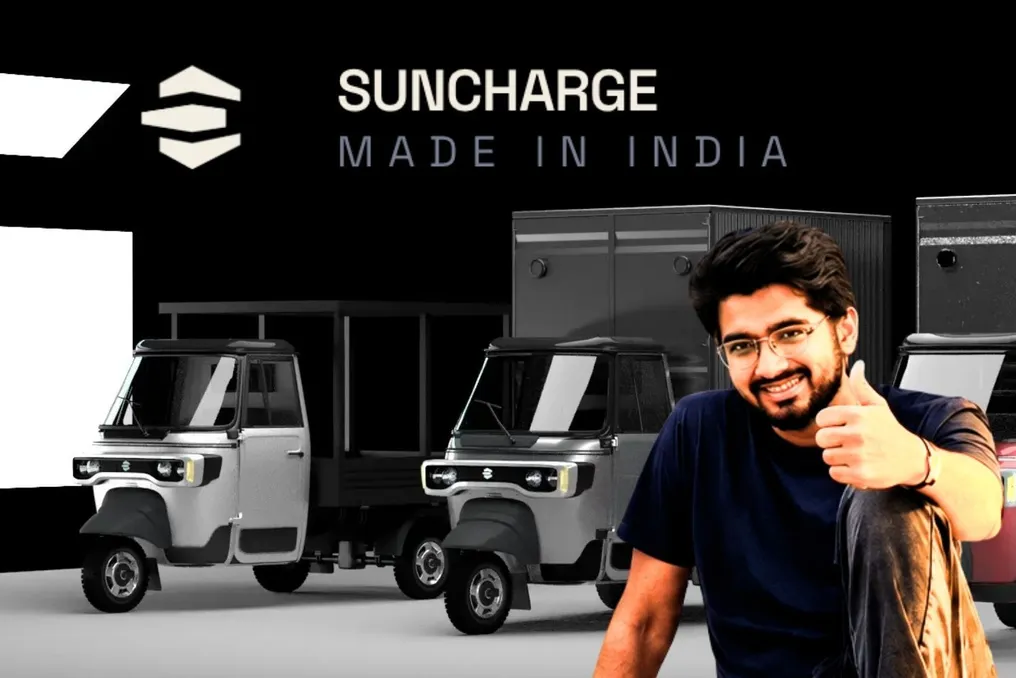
SunCharge Motors is developing electric vehicles equipped with solar panels installed on the roof. This development aims to solve the problem where commercial operators of three-wheeled vehicles earning from rides lose income while charging instead of operating.
Given limited charging infrastructure and unstable power supply, when a vehicle is stationary for charging and generating no revenue, many commercial carriers continue to use compressed natural gas and diesel engines, even if electric alternatives are cheaper to operate.
The company was founded in Pune in 2024 by Sanskar Motors to address precisely this issue. Instead of relying on the construction of additional charging stations, the company integrates solar panels directly into the vehicle itself, allowing it to generate some of the necessary energy while in motion.
Modi asserts that the future of electric transport in India cannot depend solely on expanding the charging network. He believes the potential lies in creating energy-integrated systems adapted to the country's existing infrastructure. The company views its activity as an energy challenge rather than a vehicle-specific problem, which is an unusual stance in a market where most new players compete on price and range.
The product is a three-wheeled vehicle with a solar roof designed for commercial fleets. A battery management system and real-time energy controllers are placed around the panel, jointly regulating the balance between solar input, the battery, and the load throughout the working day.
According to the company, the development process was fast: from design sketch to delivery took about two years. Design work began in 2024. In 2025, the first prototype demonstrated a real range of 180 km with a claimed roof efficiency of 25%. Deliveries started in 2026, with the first vehicles handed over to fleet operators along with a connected driver application.
Although using solar panels on vehicles is not a new concept, it has rarely achieved commercial success. The car's roof is usually not large enough to generate significant power compared to the vehicle's consumption. However, the three-wheeled vehicle changes this math because it is lighter, slower, and consumes significantly less energy per kilometer, allowing the same panel to cover a larger share of the needs.
These vehicles are available in various colors, and the company positions its offering by emphasizing uptime and operating costs rather than range. For a fleet operator, the hours available for operation are more important than the figures in the technical specifications.
Along with the first deliveries, a connected application was released. SunCharge closed a seed funding round in May 2026, led by JITO Incubation and Innovation Foundation with participation from angel investors. The investment amount was not disclosed. These funds will be directed towards technology development, infrastructure research, and expanding solar-assisted systems.
The company's main clients are fleet operators, not private buyers, which aligns with the product's economics depending on daily operating hours rather than just the purchase price. Modi stated on social media that the company became the first in India to manufacture commercial solar-powered electric vehicles.