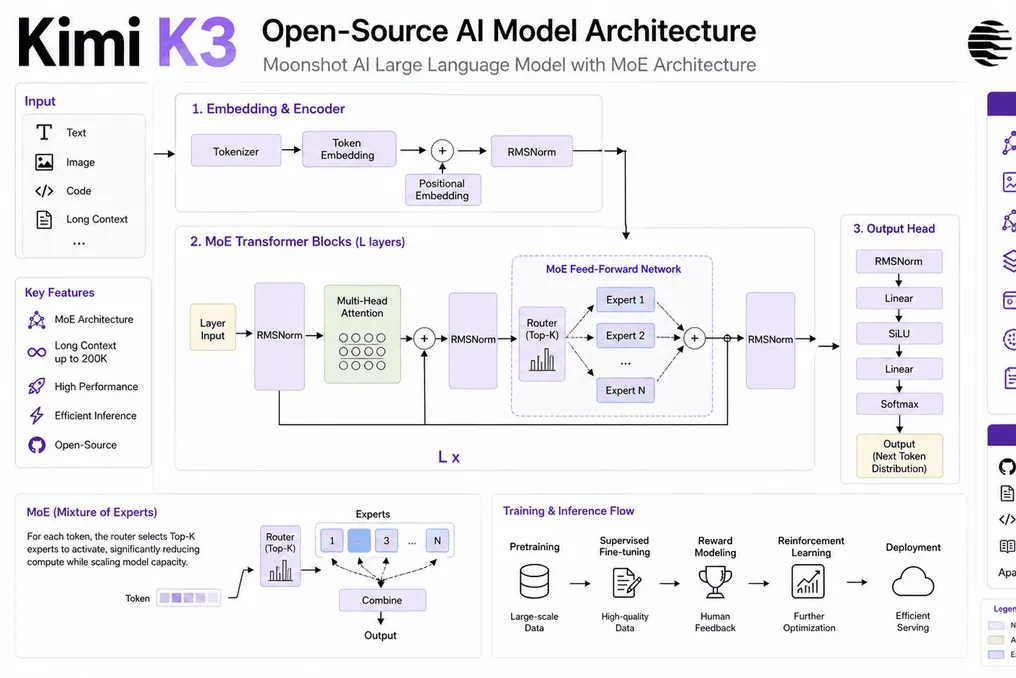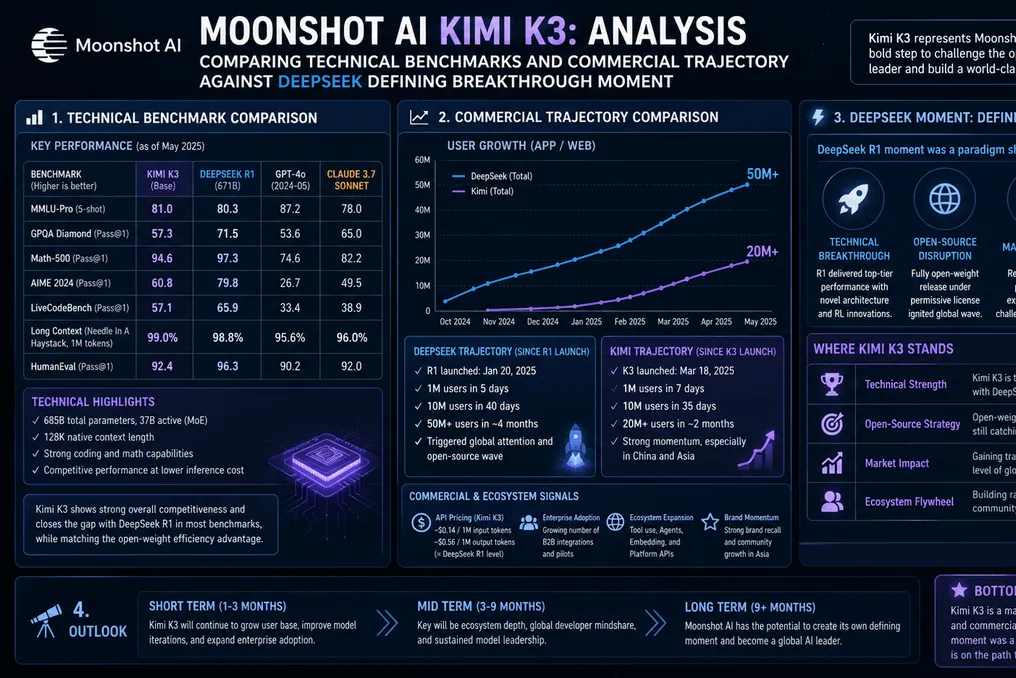
The development of coding and agent capabilities over the past year has significantly altered model rankings. As agents take on longer task chains, increasingly versatile models are beginning to meet the demands of native multimodality.
According to a report by 36Kr, a divergence is observed: Moonshot AI Kimi K3, Alibaba Qwen3.8-Max, and ByteDance Doubao-Seed-2.1 have opted for native multimodal training. In contrast, DeepSeek, Zhipu, and Tencent Hunyuan retain a text-only format in their latest general-purpose bases.
Lian Wenfeng noted that high-quality AI training does not necessarily require a world-class model or multimodality, but he acknowledged that multimodality is ultimately necessary. Companies agree on the long-term value of this approach but disagree on the timelines and costs. In this phase of rapid coding improvement, the choice between synchronous vision training and determining investment volume in the model, data, and computing power shapes the technological path of leading Chinese models.
The reason native multimodality is important lies in how long agents can reason. When executing tasks with long sequences, if feedback is only provided at the code level, errors can accumulate, leading to very poor final results. Vision provides a much more precise feedback signal.
When agents generate web pages, manage software, and verify execution results, vision transforms from a simple user-provided input parameter into a feedback mechanism that the model uses for self-checking and action correction. After the release of Kimi K3, it ranked first in the Arena Frontend Code leaderboard with a score of 1679 points. This ranking assesses not only code functionality but also the correctness of page rendering.
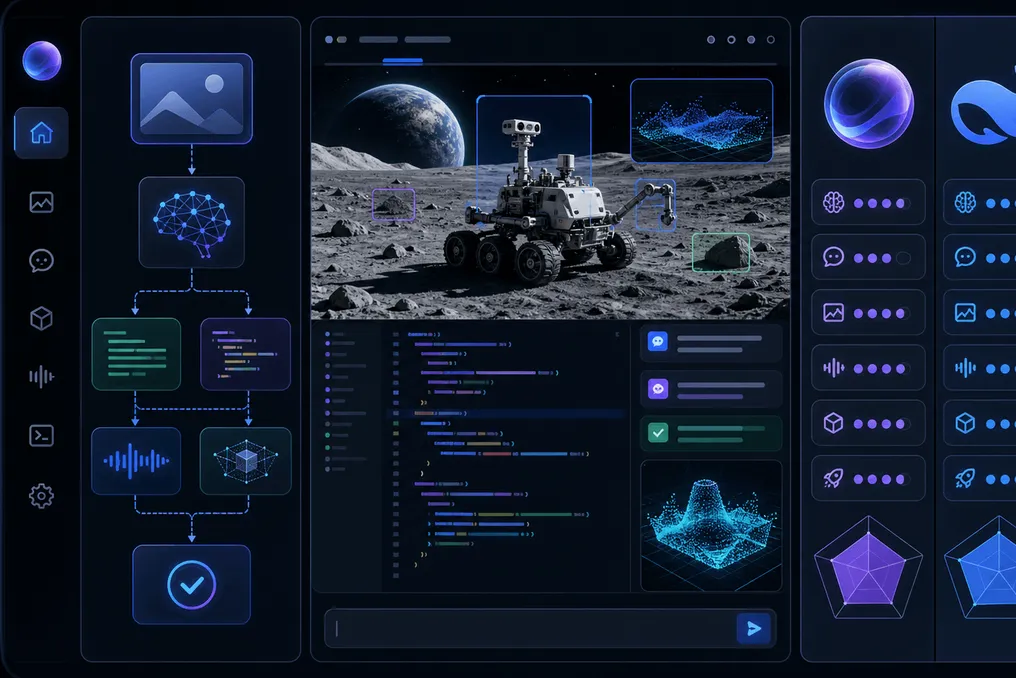
On the Puter browser platform, five visual discrepancies were introduced into test pages; Kimi K3 compared the target page with a screenshot of the running page and detected all five without false positives. Moonshot AI calls this method 'vision in the loop': the model writes code, views the page, and then continues refinement based on visual data.
Proponents of external vision tools argue that systems can invoke OCR or an independent VLM via an agent framework or MCP, converting images into text or coordinates before passing them to the text model. However, this modular approach has limitations. If a tool is called, there remain two models: one LLM that cannot see, and an auxiliary model capable of seeing.
Internally native multimodal models possess a broader communication channel between visual input and the language core, rather than compressing the image into text first and then passing it to another model. This difference manifests even after training. If the model can do it itself, the result will be better. In long-chain tasks requiring multiple screen views, this difference becomes more apparent. Without native multimodality, the model has no eyes, and feedback is limited to text. Many user outcomes are visual: web pages, images, videos. The model must understand these results and provide self-feedback.