The exhibition, titled 'Abundance and Absence,' was created by two designers with the aim of drawing attention to the issue of food waste and helping to raise funds for preparing food for those in need.
The exhibition, titled 'Abundance and Absence,' was created by two designers with the aim of drawing attention to the issue of food waste and helping to raise funds for preparing food for those in need.
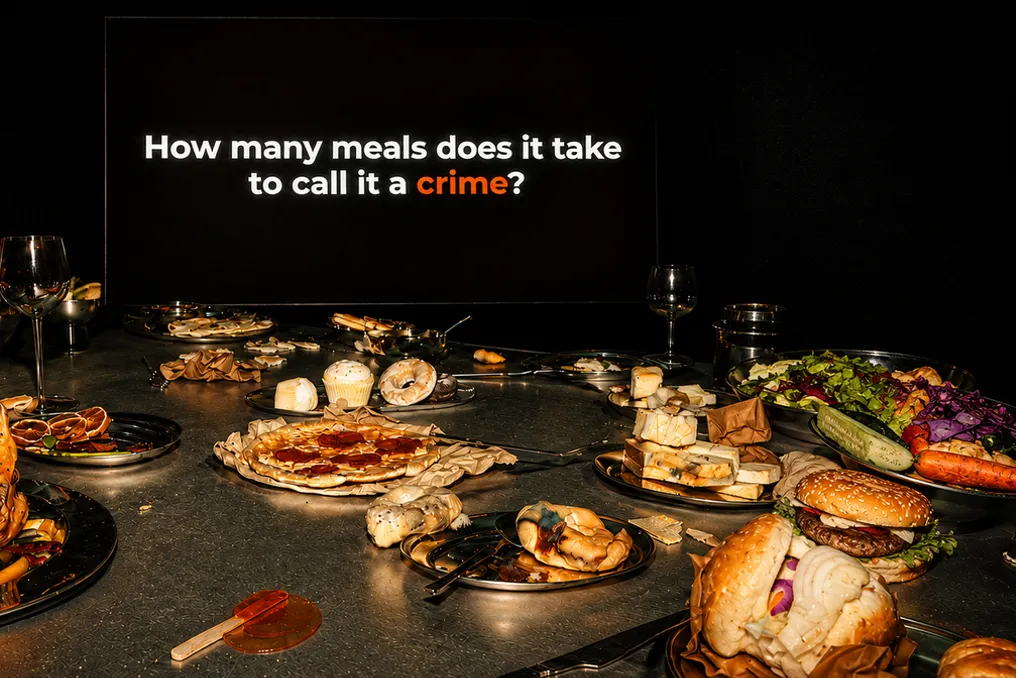
Visitors are greeted by a stainless steel table illuminated by gallery lighting, featuring plates as if someone had suddenly stepped away. At first, it is difficult to understand that the presented dishes are not real, but then one realizes that such a scene has been seen before.
The installation occupies an eight-foot space made of stainless steel. On it are half-eaten dal, torn rotis, and biryani, stylized with hyperrealistic detail. Although all elements are inedible, they look as if the meal was interrupted, presenting a still life built around the moment when appetite fades.
Each dish was formed using samphu, a Japanese craft traditionally used for restaurant displays. Food artist Bonani Hazarika, working under the pseudonym The Jolly Belly, adapted this technique to recreate leftovers and uneaten meals with the same precision as perfect dishes, instead of depicting appetite.
The lighting changes to a flat, clinical flash. The 'Wall of Crimes' consists of a series of photographs formatted like case files, each stamped with a number, location, and date. These pictures document food waste, much like a forensic team documents a crime scene. The installation does not accuse anyone specifically, but merely records what usually goes unnoticed.
The exhibition features images of half-eaten thali on a restaurant table, vegetables thrown out behind kitchen doors, and a cooled wedding banquet. The photos were taken in homes, restaurants, and street stalls, and they are not staged for shock, which makes them so penetrating, prompting reflection on one's own kitchen.
A pyramid rises, composed of layers of densely packed and glistening food, thinning towards the base where only crumbs remain. This structure is built entirely from food, not statistics, turning waste into a map of accessibility that shows who receives food first and who is left with almost nothing.
Traditional scales hold a mountain of discarded fruits and vegetables on one side, while the other pan remains empty. There are no inscriptions nearby, as the imbalance speaks for itself—an unresolved tilt that visitors tend to linger over longer than expected.
A research panel anchors the exhibition with facts: approximately 78 million tons of food are wasted annually in India, equating to nearly 55 kilograms per person, while over 800 million people worldwide go without guaranteed meals. By the time visitors view these figures, they confirm the feelings already evoked by the installations.
Visual artist Saurabh Chauhan structured the exhibition's narrative like a film, sequentially evoking a sense of discomfort. Architect Sumesh Menon designed the physical path the viewer takes, determining moments of light change and a feeling of heaviness in the room. Commissioned by Kuche7, both specialists developed a space intended to disrupt habitual thought patterns.
On the wall near the center of the room is the exhibition's title—'Abundance and Absence.' This is not a poetic flourish, but a condensation of the entire experience into two words: overflowing plates are just steps away from empty ones, forcing visitors to accept both truths simultaneously, rather than allowing one of them to disappear.
As the feeling of heaviness from what is seen threatens to become too intense, one wall breaks the established pattern. A single counter and one action appear. Pressing the 'Wall of Promises' activates five real meals donated through Robin Hood Army, and the counter updates in real-time with every visitor.
By the closing of the exhibition, 1,253 visitors utilized this opportunity, providing 6,265 real meals for those in need. Sumesh Menon subsequently gathered a community of architects and designers who continue this work monthly, ensuring that the discomfort experienced by visitors does not end after the doors close.
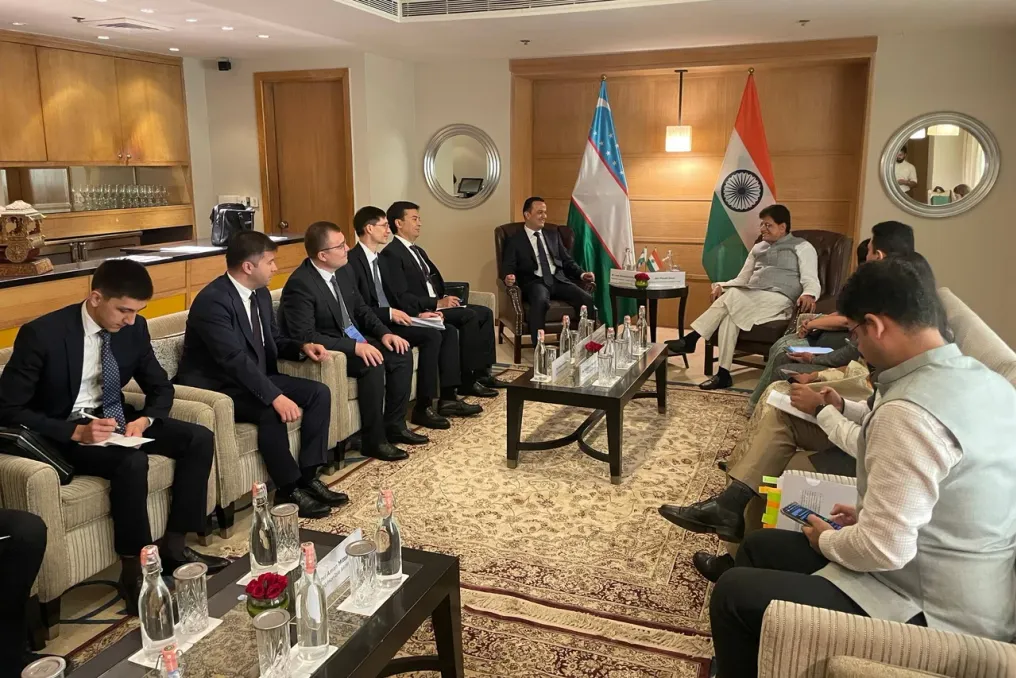
A round table was held at the Embassy of Uzbekistan in India dedicated to developing investment and industrial interaction between Uzbekistan and India. The event gathered representatives of major Indian companies.
The Uzbek delegation, led by the Minister of Investments, Industry, and Trade Laziz Kudratov, included Abdullah Azizov, Director of the Agency for the Development of the Pharmaceutical Industry. The round table was organized jointly with the Confederation of Indian Industry (CII).
The discussion featured Vikramjit Singh Saxena, Chairman of the International Council of CII, as well as leaders and representatives of significant Indian firms operating in sectors such as pharmaceuticals, chemical industry, banking and finance, and other strategic industries.
Participants reviewed Uzbekistan's investment potential, current reforms in healthcare and pharmaceuticals, and prospects for establishing high-tech production, technology transfer, and implementing joint investment projects.
Following the meeting, representatives of Indian business expressed a desire to increase investment activities in Uzbekistan, establish joint ventures, and strengthen partnerships between the business communities of the two countries.
The Tashkent Republican Stock Exchange presented a summary of trading operations for the first half of 2026. A total of 490,365 transactions were registered, amounting to 6,937.69 billion soms, both on the exchange itself and on its platform for non-listed trading.
During the reporting period, 280 issuers participated in the trading process, and the number of traded instruments reached 335 over 120 trading days. The majority of the turnover was generated by the exchange's own trades, excluding the non-listed venue.
In exchange trading, 419,971 transactions were conducted for a total amount of 4.33 trillion soms (equivalent to 357.69 million US dollars), involving 87 issuers. Compared to the same period in 2025, the number of transactions increased by 130.87 percent, while the trading volume decreased by 25.33 percent.
The peak activity occurred in February, when the transaction volume reached 1.45 trillion soms. This growth was driven almost exclusively by the 'Bond Market' segment on the 'Main Market' platform.
The 'Stock Market' segment generated 403,975 transactions involving securities from 72 issuers worth 937.70 billion soms over six months, accounting for 21.66 percent of the total exchange turnover. Activity in this segment showed quarterly growth: the first quarter recorded 169,269 transactions worth 264.38 billion soms, and the second quarter saw 234,706 transactions worth 673.32 billion soms, with the number of traded securities increasing nearly tenfold.
Aloqabank led in the number of transactions on the 'Main Market' platform with 34,910 deals, while the National Investment Fund of Uzbekistan topped the ranking by trading volume with 40.85 billion soms. Among the most liquid securities, all stocks of listed issuers showed growth in the first half of the year, with Uzsanoatqurilishbank shares demonstrating the largest increase at 204 percent, followed by Ipoteka-bank and Kvarts, both of which increased by more than 130 percent.
The 'Bond Market' segment was the largest by volume, registering 11,061 transactions involving securities from 13 issuers worth 3.29 trillion soms (270.70 million US dollars), which constitutes 75.88 percent of the total exchange turnover. Bonds issued by Asakabank accounted for the largest single transaction volume—1 trillion soms, and securities from the microfinance organization Agat Credit showed the highest number of transactions—6,947, totaling 166.61 billion soms. Furthermore, 4,925 transactions worth 106.31 billion soms were conducted through the EPTK brokerage system, mainly related to initial public offerings.
During the reporting period, 16 issuers added their securities to the official quotation list, while 11 issuers were removed due to bond redemption, routine monitoring results, or voluntary delisting.
As of the end of June, 154 instruments from 95 issuers were on the quotation list. The total market capitalization of these issuers reached 428.06 trillion soms (35.49 billion US dollars), representing a growth of 50.39 percent since the beginning of the year. The UCI index, which tracks the overall dynamics of the stock market, rose by 46.24 percent over the half-year, rising from 744.02 to 1,088.07 points.
Separately, the exchange provided a report on its non-listed trading platform, where 70,394 transactions worth 2,607.83 billion soms (216.31 million US dollars) were made during the first half of the year involving securities from 201 issuers. The highest number of daily transactions was recorded on April 20, 2026—1,137 transactions, and the record daily volume was achieved on April 30, 2026, exceeding 1.17 trillion soms. Uzsanoateksport JSC led the non-listed platform in terms of total number of transactions, while Digital Business Agregator JSC led in trading volume.
According to Oleg Korobchenko, Deputy Prime Minister and Minister of Industry and Trade of Tatarstan, trade turnover between Tatarstan and Uzbekistan may exceed $500 million by the end of the current year. This figure reflects an increase of approximately 13.5 percent compared to last year. The statement was made by Oleg Korobchenko at the Tatarstan-Uzbekistan business forum held in Kazan, which gathered about 200 enterprises from both regions.
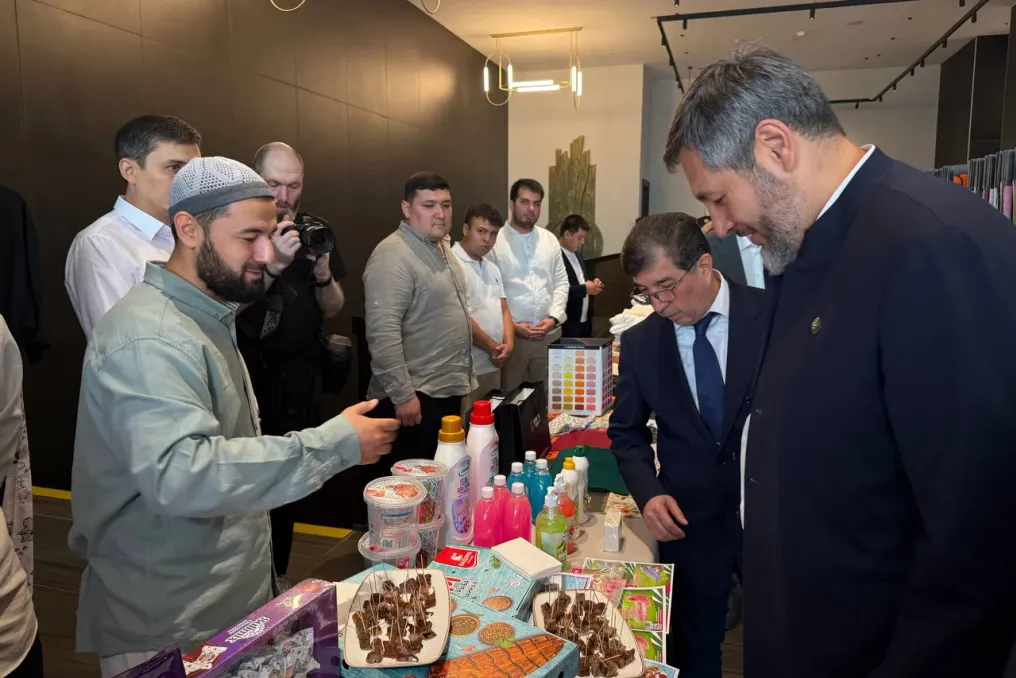
Before the event, Korobchenko inspected the exhibition of Uzbek products. He noted that almost all major Tatarstan enterprises interact with the Uzbek market, either by supplying products or purchasing raw materials and goods. Special attention was paid to cooperation in the light industry, as Tatarstan companies processing synthetic fibers from oil regularly purchase cotton and wool in raw form from Uzbekistan.
Tatarstan became one of the first Russian regions to invest in the economy of Uzbekistan by building four industrial parks in Chirchik, Navoi, Jizzakh, and Bukhara. Oleg Korobchenko reported that the industrial park in Chirchik, established in 2021, is fully occupied, and the other sites are also operational. He also emphasized the low rental cost in these zones, which ranges from $1.5 to $2 per square meter, as well as the absence of taxes and additional payments for residents.
Talia Minullina, head of the Investment Development Agency of Tatarstan, presented data indicating that total Russian investments in the economy of Uzbekistan reach nearly $5 billion. She noted, however, that the reverse flow of investment from Uzbekistan to Tatarstan remains significantly smaller. She cited historical and cultural ties, Uzbekistan's openness to investment, and the active participation of entrepreneurs at the forum in mid-summer as key factors bringing the business communities of both sides closer.
Odilxon Rustamov, Deputy Chairman of the Chamber of Commerce and Industry of Uzbekistan, reported that mutual trade between Uzbekistan and Russia has reached a volume of about $13 billion, and the number of enterprises with Russian capital in Uzbekistan continues to grow. He identified the textile and leather industries, food production and chemical products, furniture and construction sectors, as well as the agro-industrial sector as the most promising areas for joint work.
Shamil Ageyev, Chairman of the Chamber of Commerce and Industry of Tatarstan, drew the attention of Uzbek participants to the difficulties faced by small and medium-sized enterprises in Russia, including tax issues. Nevertheless, he stated that the Tatarstan market remains open to new partners despite general external economic pressure.
Uzbek producers also showcased their products at the forum, including a weaving factory from Tashkent that produces knitwear, towels, and bedding from 100% cotton. A representative of the factory, Maksud Shakirov, specified that the enterprise produces 6.5 metric tons of fabric daily and already supplies it to sewing factories in Moscow and Kostroma specializing in children's clothing. Odilxon Rustamov led the Uzbek delegation at the forum, which included more than 100 entrepreneurs.