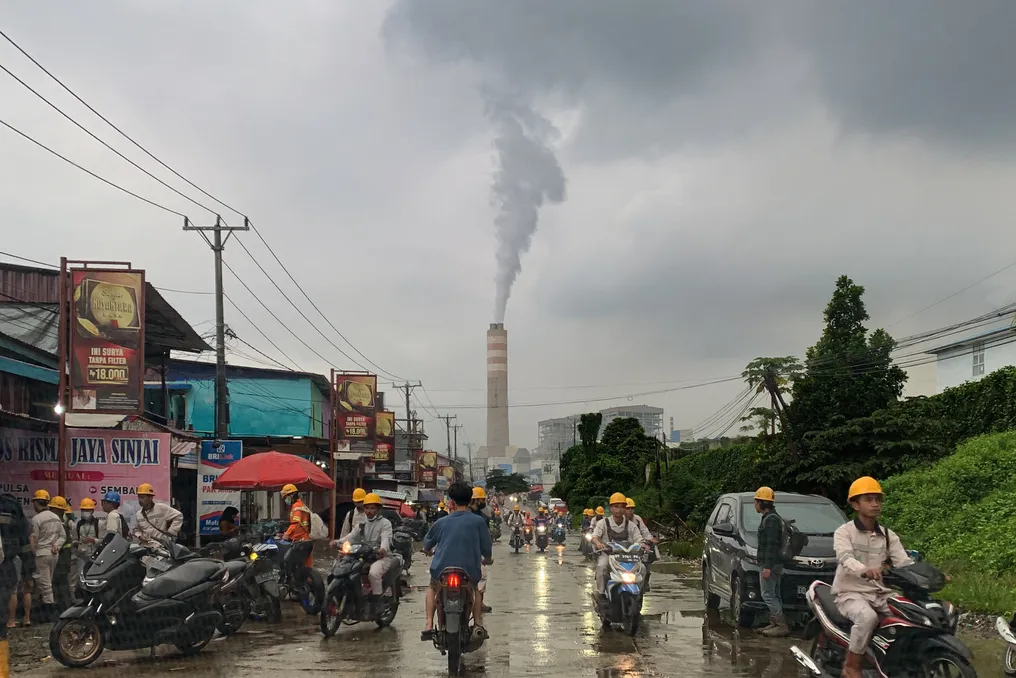
In 2025, President Prabowo Subianto announced Indonesia's determination to ensure all its electricity is generated from renewable sources within ten years. However, this goal is complicated by private coal power plants, which are autonomous facilities generating power for industrial enterprises. Each new such plant is viewed as a loophole in Indonesia's energy transition program.
Private coal, referring to private, autonomous coal power plants, is built to support industrial operations and largely remains unnoticed in national energy transition plans. Their expansion is justified by the country's export strategy. A series of materials explores the loopholes that have fueled the growth of coal generation, who benefits, and what this means for a nation caught between climate commitments and industrial ambitions.
In 2022, the incumbent President Joko Widodo issued a decree banning the construction of new coal-fired power plants connected to the national grid to reduce national emissions. Nevertheless, this decree contained certain exceptions. Firstly, the construction of any approved new coal power plants was permitted. Secondly, new coal plants deemed necessary for strategic industrial projects (such as nickel processing) could be allowed provided they reduced emissions by at least 35% within 10 years of operation and were slated for closure by 2050.
Under the Prabowo administration, both these conditions remain in effect. During public consultations in November 2025 regarding the revision of this regulation, various publications reported that the government proposed additional exemptions for any new coal power plants required to maintain system reliability and energy independence.
The 'Anomalous Spectre'
According to a 2025 study by the Indonesian Just Energy Transition Partnership (JETP) on the country's industrial energy landscape and green transition potential, the operational capacity of private power plants reached 25.9 GW in 2024, with over 75% based on coal. This figure rose to 36.7 GW when including plants under construction or in planning. Of the planned 4.6 GW of private capacity, 3.1 GW was allocated to coal.
These financial agreements help developing countries transition to cleaner energy sources and are primarily structured to be as equitable as possible. Funding is provided by a group of countries initially including Canada, Denmark, France, Germany, Italy, Japan, Norway, the Netherlands, the United Kingdom, and the United States.
The first JETP was announced at COP26 in 2021 and focused on South Africa. Since then, Indonesia, Vietnam, and Senegal have also established Just Energy Transition Partnerships.
According to Elvita Trisnawati, a researcher from the Indonesian Center for Environmental Law, large-scale independent private coal power plants operate outside official planning frameworks. She noted: 'This is why it has become a kind of 'anomalous spectre' of the energy transition, a loophole.'
Earth Dialogue
Since private coal power plants are fully autonomous and managed by the private sector, they do not appear in public energy supply plans, such as the Indonesian Electricity Supply Business Plan (RUPTL). This national ten-year electricity delivery strategy is jointly published by PLN and the Ministry of Energy and Mineral Resources.
However, private energy is included in Indonesia's national electricity plan for 2024–2060 (RUKN). This state strategy outlines policies, supply conditions, demand and supply forecasts until 2060, as well as plans for developing the national power system. According to a report by the non-profit energy analysis center Ember from October 2025, RUKN anticipates over 16 GW of additional private coal capacity by 2031 for mineral processing needs. It also indicates that private coal capacity in Indonesia will exceed 32 GW within seven years, surpassing the total coal capacity of Southeast Asia's second-largest generator, Vietnam (27.2 GW in 2024).
Driven by Mining and Nickel
The use of private energy is heavily concentrated in the mining and nickel sectors, which are stimulated by the hilirisasi policy. This national deep processing policy led to a ban on nickel ore exports in 2020 and pushed domestic companies to produce intermediate products with higher added value, such as ferronickel, a key material for steel.
The 2025 JETP study notes that regions with intensive mining were among those showing the highest operational capacity of private energy. Sulawesi showed the highest figure at 10.5 GW, while Maluku ranked third with 4.5 GW.
Central Sulawesi is home to PT Indonesia Morowali Industrial Park (IMIP), a joint venture between China's Tsingshan Group, as well as Bintang Delapan Group and Sulawesi Mining Investment, both Indonesian. North Maluku province hosts PT Indonesia Weda Bay Industrial Park (IWIP), supported by Chinese investors Tsingshan Group, Huayou Holding Group, and Zhenshi Holding Group.
Power distribution issues are one reason why smelters and industrial zones are granted permission to build private power plants. Haikal Hubais, Secretary-General of the Association of Indonesian Smelters and Processors (AP3I), stated: 'In fact, in the industrial zones where these smelters operate, we face limitations in the national power supply.'
Hubais added that a coal power plant is more reliable for continuous business operation: 'It's not just about being cheap; it's really related to the reliability, availability, and readiness of the technology to meet round-the-clock operational needs.'
The JETP study acknowledges that coal 'is considered the most economically efficient, timely, and reliable source of power supply, especially for industrial facilities that lack suitable access to the PLN system, have high and stable energy consumption requirements, and face serious price competition.'
However, the study also highlights how governments and industries worldwide are increasingly striving for supply chain sustainability. It states that the growth of private coal energy creates market and financial risks for Indonesian industry, in addition to causing environmental damage and climate impact: 'Such risks could jeopardize Indonesia's ability to compete in the global export market and attract FDI, which requires a cleaner supply chain.'
Earth Dialogue
'Earth Dialogue' contacted the JETP Implementation Department and referred to the 2025 report. We also contacted the Ministry of Energy and Mineral Resources for comment but received no response.
Transitioning to Renewable Energy
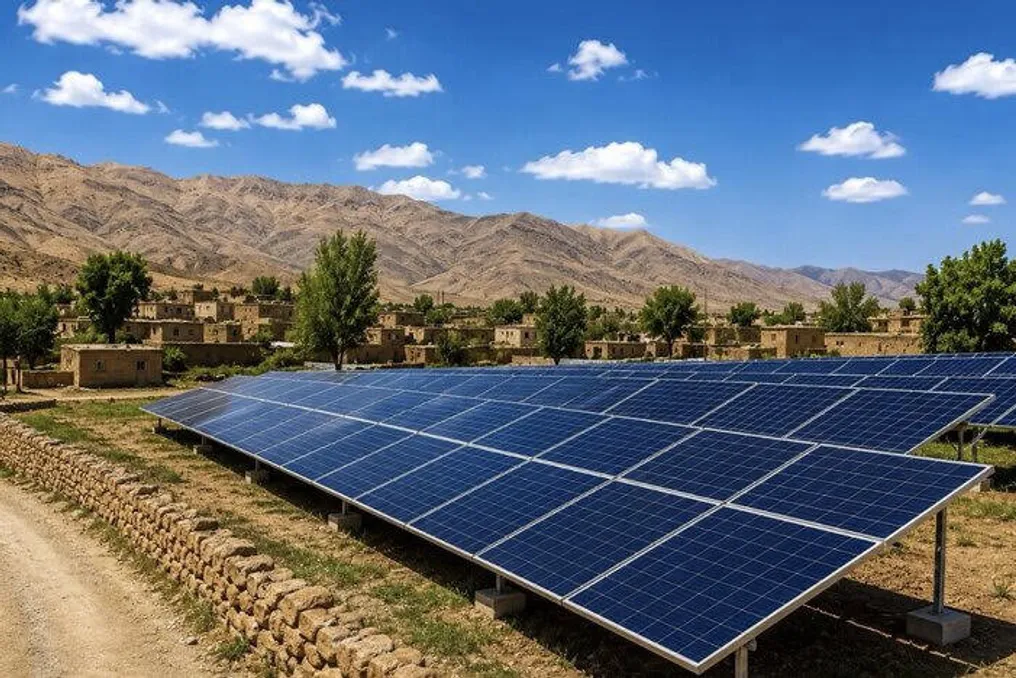
Some industrial zones have begun taking steps to align with the government's target of net-zero greenhouse gas emissions by 2060. Dedi Kurniawan, an IMIP representative in Central Sulawesi, reported that a solar power plant was built on the industrial site next to a cogeneration coal power plant, which simultaneously generates electricity and industrial steam.
Kurniawan said that IMIP began developing renewable energy in 2022 after conducting a feasibility study. The construction of a 1.27 MW solar power plant started the following year and was fully commissioned in 2024. Kurniawan added that these solar plants 'function as supplementary energy sources, not as a primary replacement.'
Kurniawan emphasized: 'IMIP recognizes that the energy transition is not just a strategic choice, but a necessity for both environmental sustainability and long-term industrial competitiveness. Furthermore, once operational, renewable energy leads to cost reductions. Among these is minimizing the current carbon tax.'
Dwi Chahya Agung Saputri, Power and Renewable Energy Systems Manager at the Institute for Essential Service Reform (IESR), an energy analysis center in Jakarta, noted that there is no single solution for transitioning to renewable energy. For instance, the IESR report 'Beyond Industrial Coal' from February 2026 states that Indonesian companies with outdated coal power plants have begun connecting to the PLN grid. This strategy reduces operating costs and can provide cleaner energy sources. In Riau, the palm oil and cellulose sector was identified by IESR as having the potential to convert abundant organic waste into a basic energy source, thereby reducing methane emissions.
However, the IESR report also points out shortcomings. An industrially integrated enterprise can reinvest savings into building its own renewable capacity. But for ground-mounted solar generation, PLN's parallel collection is calculated based on a fixed monthly rate that may be higher than the actual generation of a specific solar installation. As the report states, the implementation of renewables is currently 'limited to small-scale autonomous applications for monitoring and 'green branding,' rather than substantial capacity replacement.'
Regarding the use of organic waste as a base energy source, IESR notes that national investment roadmaps lack a 'specific strategy,' creating 'significant uncertainty' for investors: 'Local authorities emphasize the urgent need to revise regulations that align central policy with Riau's unique potential for biomass-based decarbonization.'
Kurniawan from IMIP indicated that ensuring large-scale, round-the-clock energy supply in an industrial setting requires massive initial investments for the energy transition: 'In fact, implementing the energy transition requires investment in supporting infrastructure, especially for energy storage.'
Furthermore, he stated that there must be a government policy that accounts for the full costs borne by the industry, identifying gaps and inconsistencies in energy transition investments.
Saputri from IESR believes the government should start limiting coal by 2030, or at least sooner than 2050, to meet net-zero targets. He warns: 'If everyone continues to rely on fossil fuels, and if the use of fossil fuels is permitted after 2030, the transition to renewable energy will become even more difficult.'