The Uzbek delegation discussed cooperation with Tatarstan in the fields of agro-industry, food production, and logistics. This proposal was put forward at the 'Tatarstan - Uzbekistan' business forum held in Kazan.
The Uzbek delegation discussed cooperation with Tatarstan in the fields of agro-industry, food production, and logistics. This proposal was put forward at the 'Tatarstan - Uzbekistan' business forum held in Kazan.
Uzbekistan offered Tatarstan companies a joint entry into the Afghan market through the 'Airtom' trade and logistics center in Termiz. According to Adilkhon Rustamov, Deputy Chairman of the Chamber of Commerce and Industry of Uzbekistan, 'Airtom' provides the necessary infrastructure for entrepreneurs to deliver products and establish trade relations.
Nearly 200 companies from Uzbekistan and Tatarstan participated in the forum. During the event, an exhibition of Uzbek products was organized, and B2B negotiations took place between the two sides. The main focus was on production cooperation, localization of products, expanding exports, and developing logistics.
According to Oleg Korobchenko, Deputy Prime Minister of Tatarstan and Minister of Industry and Trade, the trade turnover between Uzbekistan and Tatarstan could exceed $500 million by the end of 2026. Furthermore, this indicator is expected to surpass $427 million in 2025, growing by 13.5 percent in one year.
One of the important results of industrial cooperation is the production sites established in Uzbekistan with the participation of Tatarstan. The Chirchik and Jizzakh technoparks are operating. In Navoiy, the first production building and new enterprise were commissioned in April 2026, while work continues to settle residents and implement new projects in the Bukhara industrial complex.
The 'Airtom' trade zone, covering an area of 36 hectares, opened on the Uzbekistan-Afghanistan border in August 2024. This area includes trade and logistics centers, warehouses, customs facilities, and production buildings. In the initial 13 months, products worth $187 million have been exported through this area. Afghan citizens can stay in the zone visa-free for up to 15 days.
At the end of the forum, agreements were reached to develop cooperation in the fields of industrial cooperation, localization, export, and logistics, but a list and total value of signed commercial contracts have not yet been determined.
A fundamental shift is occurring in global demography. While concerns several decades ago were focused on excessive population growth, the primary threat today is the sharp decline in birth rates and population aging.
To maintain demographic stability and prevent natural population decline, an average rate of 2.1 children per woman is required. However, more than half of the world's population lives in countries where this safe rate is lower.
The most serious consequences of the crisis are visible in Asia and Europe. In South Korea, which was considered an absolute record holder for the process, the fertility rate hovers around 0.7. High real estate costs, intense competition in the labor market, and the expenses of raising children force young people to forgo starting a family and having children.
In Japan, which has become one of the oldest nations, this figure is approximately 1.2, and the country's population is shrinking by hundreds of thousands annually. China, which long pursued the 'One child, one family' policy, has also fallen into a severe demographic trap: the fertility rate reached 1, and the population began to decrease. As a result, India has taken the position of having the largest population.
The situation in Europe is also critical: the average birth rate across the continent is 1.46. For example, Italy (1.2) and Spain (1.16) are facing serious population aging. In the USA, the rate is 1.6, and the demographic balance is mainly maintained through external immigration.
The sharp drop in birth rates worldwide is linked to several interconnected factors. Firstly, urbanization and the high cost of living in cities place significant pressure on family budgets. Secondly, as women receive higher education and have more opportunities for career advancement, the age of marriage is noticeably postponed. Thirdly, family and personal values are changing: among the younger generation, the tradition of living without children or limiting themselves to one child is becoming popular.
The demographic crisis entails serious economic and social consequences. The reduction in the workforce and the increase in the number of pensioners create unprecedented strain on state budgets and pension systems. Economic growth and innovation rates are slowing down, and due to a lack of children, schools and kindergartens are closing, while the demand for nursing homes is increasing.
Despite developed countries (South Korea, Japan, and European countries) allocating huge financial resources and providing tax incentives to stimulate birth rates, these efforts have not yet yielded the expected results. In regions such as Central Asia, including Uzbekistan, and in Africa, high birth rates persist. Consequently, a sharp change in the balance of economic power in the world and the direction of global labor migration is possible in the near future.
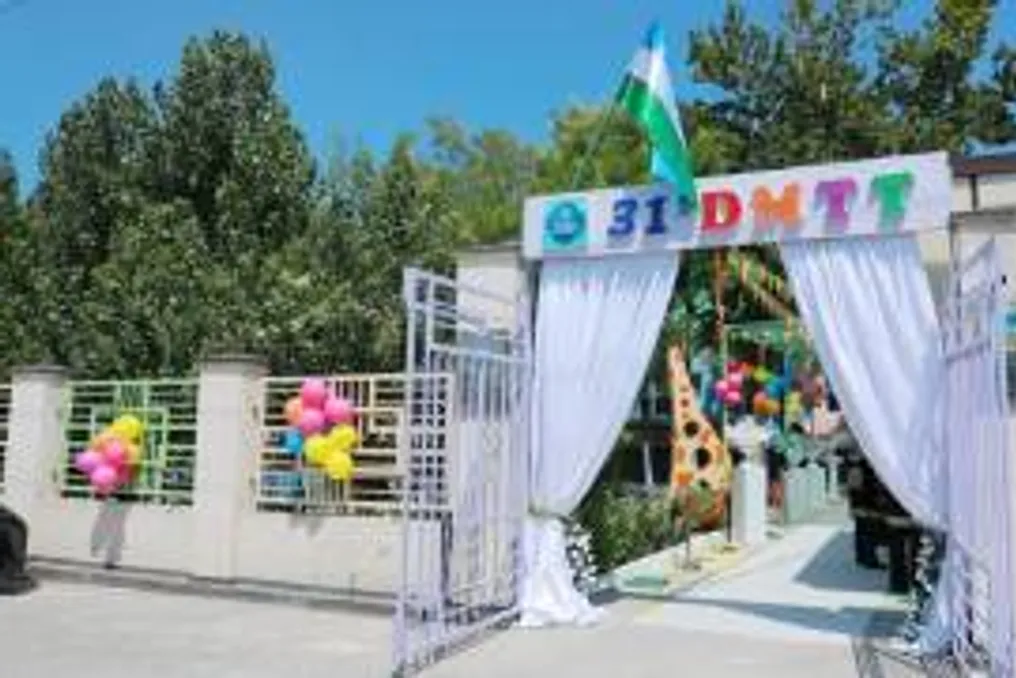
In anticipation of the celebration of the 35th anniversary of independence, a joyful event took place in the village of Sirdaryo, in the Pakhtakor quarter. A new state preschool educational institution designed for 150 children was solemnly commissioned there.
This project was implemented as part of the execution of the Decree of the President of the Republic of Uzbekistan dated March 3, 2025, 'On measures for the active development of the socio-production infrastructure of the Syrdarya region.' 4 billion 600 million soums were allocated for the construction and equipping of the new kindergarten. As a result, a modern and spacious educational environment was created that meets all the necessary conditions for the comprehensive development of children.
The head of the Syrdarya district, Azizbek Turdimurodov, participated in the opening ceremony. He emphasized that the state policy on developing the system of preschool education and increasing the intellectual and spiritual potential of children is being consistently implemented in the country. Furthermore, he noted that the new kindergarten will ensure quality upbringing for children and create significant convenience for parents.
The institution is equipped with large and bright groups designed taking into account the age and interests of the children. It also has halls for music and physical culture, a medical office, a dining hall, and many rooms equipped with modern educational equipment. Modern playgrounds and green areas have been established in the district to ensure meaningful leisure and physical development for children.
According to worker Bakhtiyor Kenjaev, the commissioning of the new institution in anticipation of Independence Day was a great gift for the residents of the quarter. He expressed great joy at the opportunity to see the conditions created for their children and grandchildren. Bakhtiyor Kenjaev added that the modern kindergarten has all the possibilities for receiving a quality education and achieving healthy, full development. He particularly noted that the educators are highly qualified specialists who approach child-rearing responsibly, and he expressed gratitude to the head of state for such care and attention.
The commissioning of the new kindergarten is an important step towards expanding coverage of preschool education in the quarter, creating a modern educational environment for children, and providing additional convenience for parents.
The documentary film, created by the 'Ziyo' media center at the Academy of International Islamic Knowledge of Uzbekistan, was presented to an international audience through Al-Azhar University in Egypt. It was previously reported that the film 'Ignorance in the guise of guidance' was posted on the official and social pages of the observatory, which is engaged in preparing media products in various languages to inform about geo-spiritual threats.
The joint work of the 'Ziyo' media center continues. Last week, the second part of this film was posted on the Al-Azhar observatory's platforms.
The film demonstrates the importance of science and education, and also shows how ignorance and radicalization can lead society to catastrophe, using specific examples and the participation of deep-thinking experts specializing in this topic.
The film featured Reihan Abdullah Salama, Director of the Al-Azhar Observatory; Khabibulla Sadibaqosov, Professor at the Academy of International Islamic Knowledge of Uzbekistan; Ahmad Abdullah Zayed, Professor and Director of the Alexandrian Library; and Husniddin Akhmedov, Director of the Institute of Advanced Training and Retraining in Religious and Educational Sphere under the Committee for Religious Affairs of the Republic of Uzbekistan.
The author of the film is Abdulhamid Mukhtorov, a member of the Writers' Union of Uzbekistan and Director of the 'Ziyo' media center. The film is directed by Mikayl Sulaimonov, a member of the creative association of cinematographers of Uzbekistan, who has directed several films. Utkirbek Hasanboev, Doctor of Philosophy in Historical Sciences, served as a subject consultant. The film's geography covers research centers and their experts from Uzbekistan, Egypt, and Turkey.