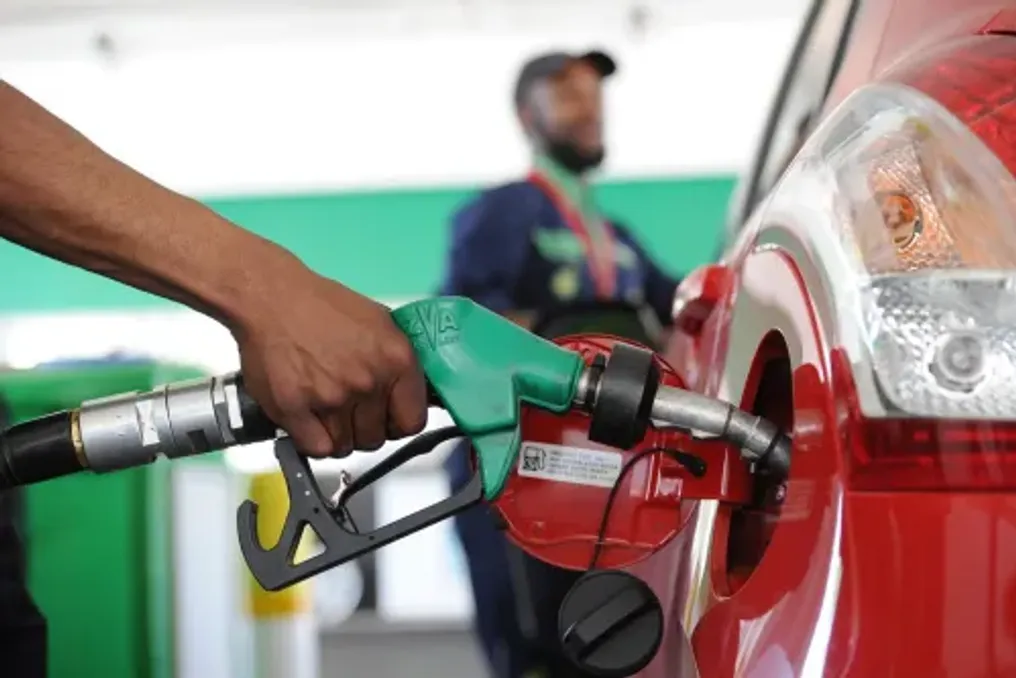
Drivers in South Africa welcome the decrease in gasoline prices by 52 cents per liter, but the rise in diesel fuel costs raises concerns about the overall impact of these changes on consumers, as economists warn of persistent financial pressure.
The Department of Mineral Resources and Energy (DMRE) announced on Monday that starting Wednesday, the price of gasoline will drop by 52 cents per liter, while diesel fuel will increase by between 1.23 and 1.38 South African Rand per liter. Additionally, the wholesale price of kerosene will rise by 1.52 South African Rand per liter.
Chief Economist Johann Els noted that the reduction in excise duty played a significant role in mitigating the effects of the sharper fuel price increases in August. He emphasized that the excise duty adjustment was made for both gasoline and diesel, which helped. Els added that the fall in gasoline prices was greater than expected, and the rise in wholesale diesel prices was less than expected.
Els also stated that recent changes in the oil market offer cautious optimism, suggesting that drivers may see further gasoline price reductions if geopolitical tensions continue to ease. He mentioned that oil prices already fell over the weekend in response to positive news about a potential agreement between the US and Iran.
In Els's view, the fuel price decrease will support the inflation forecast, although households continue to face financial strain. He noted that rates have not been increased further. In the medium and long term, oil prices are expected to stabilize closer to 50 or 60 dollars per barrel, and a stable and strong rand will help in further gasoline price reductions over the next twelve months, which will undoubtedly ease the situation for consumers.
Professor Waldo Krügel, an economist from Northwestern University, explained that diesel fuel prices remain under pressure due to global supply constraints. Krügel pointed out that crude oil prices and the exchange rate were quite volatile in July, but on average, the oil price was slightly higher, and the rand exchange rate against the dollar was slightly weaker, leading to relatively small changes in the base fuel price. He also noted that refinery capacity influences the rise in diesel fuel prices.
Krügel believes that geopolitical events, especially relations between the US and Iran, will remain key factors influencing fuel prices in the coming months. He suggested that a lull in military action could help lower oil prices again.
According to DMRE data, the average price of Brent crude oil decreased from $86.53 to $82.37 per barrel during the review period. This was due to weakening global demand and reduced tension following the ceasefire memorandum between the US and Iran, outweighing previous price surges. However, international prices for diesel fuel and kerosene continued to rise due to export restrictions on Russian diesel fuel related to the conflict between Russia and Ukraine, as well as declining refining capacities in some parts of the Middle East.
The Ministry reported that the reduction in the state levy from 113.94 cents to 61.38 cents per liter helped mitigate the impact of higher international fuel prices on gasoline and diesel prices. Starting Wednesday, drivers will pay 52 cents less per liter for both types of gasoline, while the price of 0.05% sulfur diesel fuel will increase by 138.44 cents per liter, and 0.005% sulfur diesel fuel by 123.44 cents per liter.
Although gasoline car drivers will immediately benefit from the price reductions at the pumps, economists caution that the overall impact of the latest fuel price adjustments will depend on global oil prices and the geopolitical situation. Els added that further oil price drops and rand stability could create conditions for additional gasoline price reductions in the coming months.