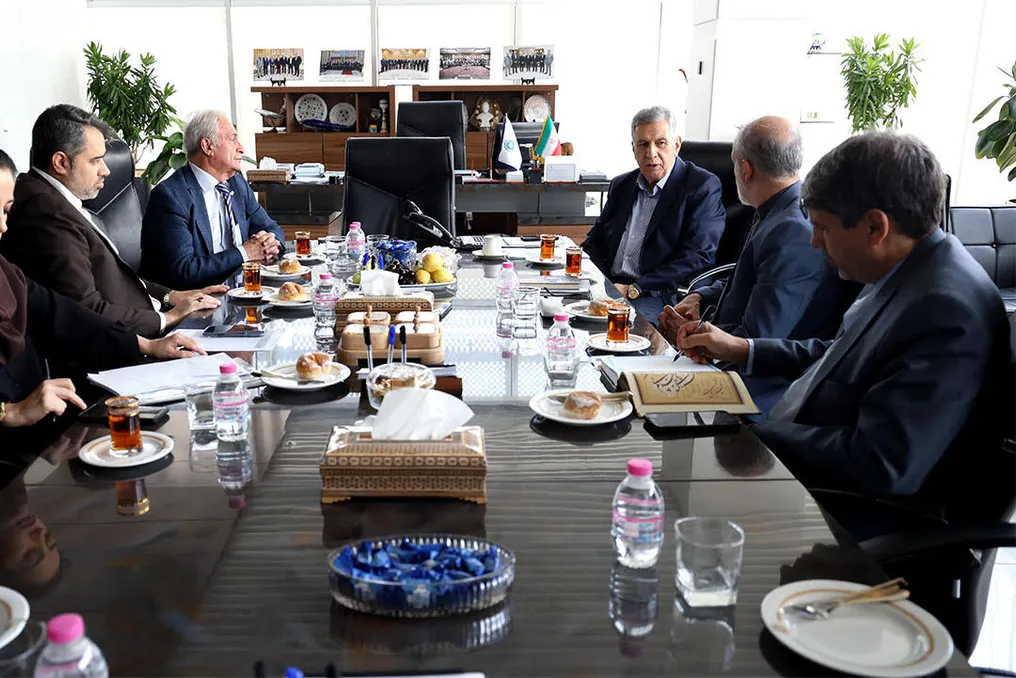
During a meeting between Ali-Akbar Rezaei, the newly appointed Iranian ambassador to Italy, and Samad Hassanzadeh, head of the Iranian Chamber of Commerce, possibilities for economic cooperation between the two countries were discussed. The role of the private sector in developing commercial relations and ways to restore Italy's status as one of Iran's traditional partners in Europe were also addressed.
Samad Hassanzadeh, who heads the Iranian Chamber of Commerce for Industry, Mining, and Agriculture (ICCIMA), highlighted Iran's strengths, including the presence of qualified personnel, rich energy resources, suitable infrastructure, and access to global markets, as well as its cultural and civilizational heritage. He stated that economic interaction with long-standing partners can be revived by utilizing the potential of embassies under conditions of stability and constructive engagement.
Hassanzadeh named Italy as a country with great potential for developing cooperation with Iran, emphasizing that a significant part of the country's industrial infrastructure was built using Italian technology and equipment, and Italy holds leading positions in many sectors. Furthermore, he added that Iran is capable of meeting some of Italy's needs for agricultural products and greenhouse produce, and there are numerous grounds for cooperation in tourism, academic, and cultural activities.
He also drew attention to the activities of the Joint Iranian-Italian Chamber of Commerce, noting that this chamber represents a valuable resource for strengthening economic ties between the countries. Given that maintaining and expanding ties with industrialized nations is crucial for Iran's economy, greater attention should be paid to joint chambers.
Ahmad Pourfallah, head of the Joint Iranian-Italian Chamber of Commerce, reported that this chamber is one of the oldest in the country. It is also the only joint chamber that has a sister chamber in Rome, whose members participate in each other's programs and meetings.
He recalled that for many years, Italy was Iran's main trading partner in Europe, and trade volume between them was at a high level. Pourfallah requested the Ministry of Foreign Affairs to engage more closely with the joint chambers and to utilize their potential more actively in developing economic relations. He also mentioned that Iran has significant opportunities to showcase its products at specialized exhibitions in Italy, including stone, ceramics, and gold, noting Iran's strong position in the gold industry and the potential for joint cooperation in this sector.
Seyed Hamed Askari, Deputy Head of the Iranian Chamber of Commerce for International Affairs, presented several proposals for reviving economic ties with Italy. He believes it is necessary for the Iranian embassy in Italy, using an economic approach, to become a center for developing bilateral trade. Among the measures contributing to the expansion of economic ties, he highlighted defining priority sectors for cooperation, resuming contacts with Italian small and medium-sized enterprises, and creating a database of these companies.
Askari also pointed out that joint investments for accessing third-country markets are another area of cooperation. Central Asia, Iraq, the Caucasus, and Africa have been identified as markets for this purpose. Other important aspects of bilateral relations include cooperation in technology transfer, utilizing the opportunities of Italian industrial zones, and developing a special plan for participation in relevant exhibitions.
The Deputy Head of the Iranian Chamber of Commerce for International Affairs continued that it is necessary to strengthen the link between universities and industry. Since there are many Iranian students in Italy, their potential can be used to develop industrial partnerships. He also emphasized that one of the modern tasks is changing Iran's image in the eyes of Italian business figures, as the decline in trade relations has led some Italian companies to forget about Iran's economic opportunities, and this issue requires compensation through special meetings and presentation of investment opportunities.
Ali-Akbar Rezaei, the appointed Iranian ambassador to Italy, stated that the proposals presented are practical and useful and will be taken into account in the embassy's programs. He clarified that the foreign policy of the Ministry of Foreign Affairs is based on two directions: ensuring national security and achieving national development, and after overcoming recent special circumstances, the issue of national development will be considered more seriously.
Rezaei noted that foreign parties are interested in cooperating with Iran, and all opportunities must be utilized to achieve the country's development goals. The philosophy behind establishing an Economic Deputy of the Ministry of Foreign Affairs is also aimed at promoting national development. He stressed that developing economic and trade ties, especially with long-standing partners, is one of the country's most important priorities. He added that relations with the East become stronger when relations with the West are established, and the world economy cannot develop selectively.
The appointed Iranian ambassador to Italy continued that attention to detail is necessary to gain economic benefits, and the embassy will use consultations and proposals from the Iranian Chamber of Commerce. Although sanctions remain the most serious obstacle to developing cooperation, efforts to expand economic ties will not cease. He also noted that the independent approach of the Italian government in the current situation could create a good opportunity to strengthen bilateral cooperation.
Rezaei added that the Iranian Chamber of Commerce represents the country's private sector, and economic development is impossible without the effective role of the private sector. The Iranian Embassy in Italy and the Ministry of Foreign Affairs are fully ready to cooperate with the joint chamber and economic actors.
In conclusion, the head of the Iranian Chamber of Commerce stated that the chamber will make every effort to eliminate obstacles and develop the country's economy and international relations. He reported that a network of 41 joint Iranian chambers of commerce in various countries provides enormous potential for expanding economic interactions, and the Iranian Chamber of Commerce is ready to carry out the necessary cooperation in terms of sending and receiving trade and economic delegations.