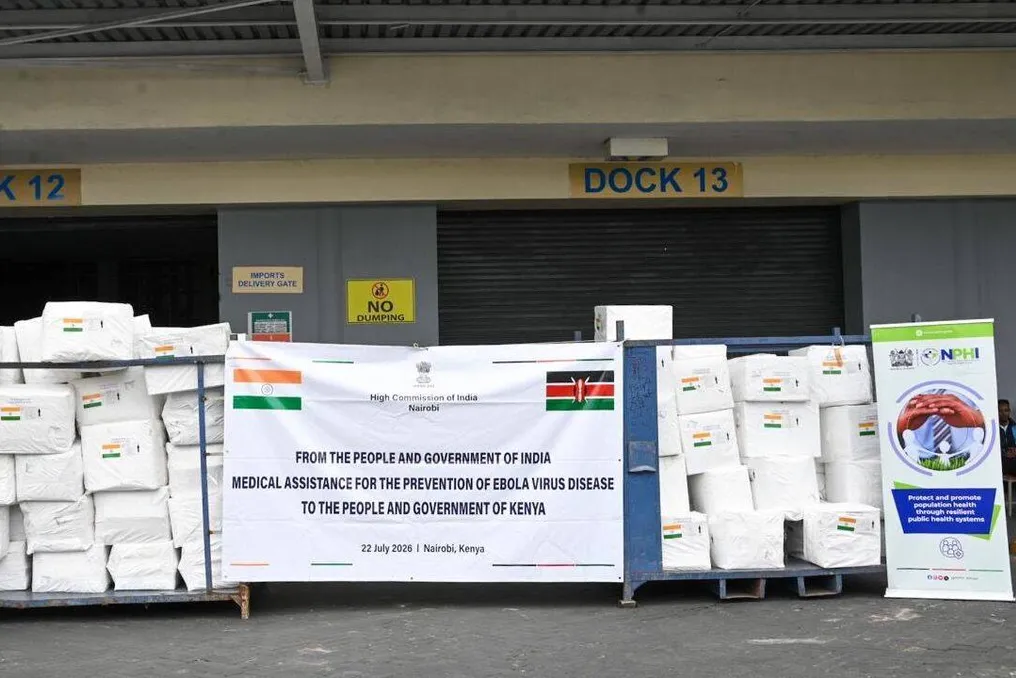
The Indian Ambassador to Kenya, Adarsh Swai, handed over the first batch of 4.5 tons of medical aid to the Deputy Minister of Health of Kenya, Aden Duale, at Jomo Kenyatta International Airport in Nairobi on Tuesday. This aid is intended to enhance Kenya's long-term capacity to respond to the Ebola virus disease, other infectious diseases, and future pandemic threats.
Contents of the First Aid Batch
The first batch includes 279 sets of essential medicines. These include personal protective equipment (PPE) kits, sample transport kits, infrared thermometers, face shields, sturdy protective boots, and other materials to prevent infection. A second batch of medical aid is expected to be sent soon.
Goals and Support for the Healthcare System
The high commission of India in Nairobi stated in a release that this aid is designed not merely as a short-term intervention but as a means of building sustainable and permanent public health preparedness. It will support the National Institute of Public Health of Kenya and other frontline institutions by strengthening capabilities for epidemiological surveillance, safe sample collection and transport, infection control and prevention, and protection of medical personnel. This will increase Kenya's ability to effectively detect, contain, and respond to the Ebola virus, new infectious diseases, and future pandemics.
Previous Aid from India
This current assistance follows deliveries of over 45 tons of medicines to the Africa Centre for Disease Control and Prevention (Africa CDC) in late May and early June 2026, which were aimed at supporting the continent's readiness for Ebola. This demonstrates India's broader commitment to strengthening public health and pandemic preparedness across Africa.
Healthcare Partnership
India has previously been one of Kenya's first responding partners during public health crises. During the COVID-19 pandemic, India supplied 1.12 million doses of 'Made in India' vaccines to Kenya under the Vaccine Maitri initiative, as well as providing necessary medicines and other medical support. The strong healthcare partnership between the two countries extends beyond emergency support. In recent years, India has provided Bhabhatron radiotherapy machines on a grant basis to improve cancer treatment capabilities at Kenyatta National Hospital, as well as CT and MRI machines (in process of procurement) for the Royal Navy Hospital in Mombasa, aiming to further strengthen Kenya's healthcare infrastructure. Annually, over 10,000 Kenyans travel to India for treatment, attracted by India's affordable, high-quality, and low-cost medical services. Furthermore, India is a leading pharmaceutical partner for Kenya, as Indian pharmaceutical products account for over 50% of Kenya's pharmaceutical market, ensuring the availability of quality and affordable medicines across the country.
India and Kenya share a long-standing partnership in the health sector, covering medicine and equipment supply, capacity building and training, accessible healthcare, and collaboration between their respective medical institutions. This aid reflects India's client-centric partnership with Kenya and its commitment to supporting partner countries in Africa in building stronger and more resilient health systems.