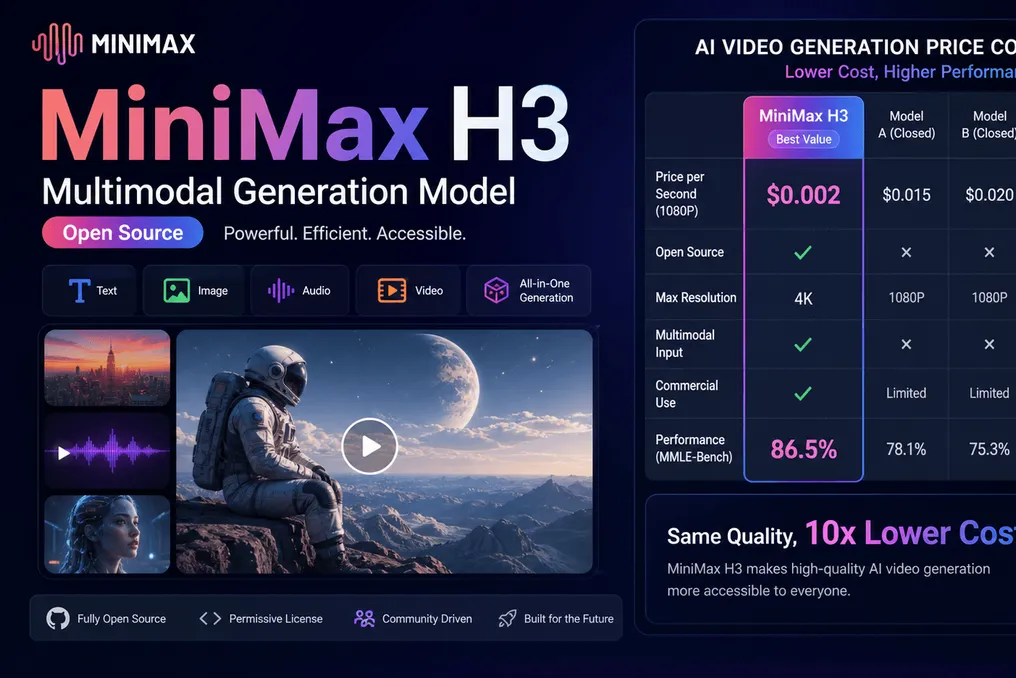
MiniMax released its first open-source multimodal generative model, H3, on July 31. This model supports processing text, images, audio, and video, offering direct output in 2K resolution and generating audiovisual content up to 15 seconds long. The release of H3 followed the M3 model, which was presented five months earlier, but its unsatisfactory performance caused a 15% drop in stock value in a single day.
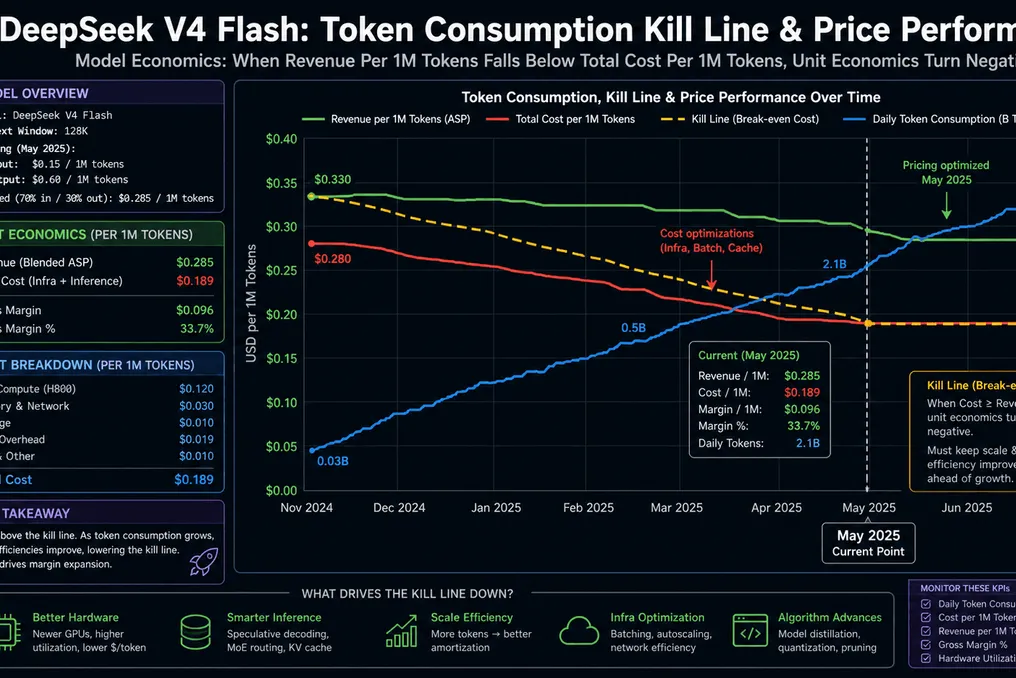
In July, the industry faced a certain 'line of survival': Moonshot AI unveiled the weights of the Kimi K3 model, while DeepSeek lowered the cost of the V4-Flash cache to 0.02 yuan per million tokens. The Kimi K3 model, boasting 2.8 trillion parameters, became the world's first open model at the trillion-parameter scale, ranking fourth globally and first among open-source models. The output cost of the DeepSeek V4-Flash model is about $0.28 per million tokens, which is roughly 90 times cheaper than Claude Opus 4.8. A model that cannot surpass Kimi K3 in performance and lacks DeepSeek's pricing strategy risks disappearing from the market.
Model H3 occupies an intermediate position: it ranks first globally in video editing according to the Artificial Analysis leaderboard, enabling 2K generation for 0.8 yuan per second, which is three times cheaper than comparable flagship solutions. Nevertheless, it is not a leader in either overall performance or price. The choice of open source is viewed as a more passive step aimed at lowering thresholds in the AI field, attracting chip manufacturers and developers for optimization compatible with domestic chips, and securing its place in the video segment dominated by Seedance through ecosystem and developer scale. The commercial value of open source will be tested by financial indicators.
Open source is a double-edged sword: in the long term, it creates ecosystem advantages deeper than the patents of closed systems, as demonstrated by Linux and Android. However, in the short term, it foregoes direct monetization, and open source itself does not generate revenue. Open-source companies typically have revenues an order of magnitude smaller than their closed competitors: OpenAI earns about $13 billion, and Anthropic about $45 billion annually, while Seedance 2.0's monthly revenue exceeds 100 million yuan. Open source can gain reputation, community, and developers, but so far has failed to ensure profitability.
MiniMax's 2025 financial reports show strain: revenue reached $79.04 million, a 158.9% increase, with gross profit at $20.08 million and a margin of 25.4%. However, Research and Development (R&D) expenses rose by 33.8% to $253 million, mainly due to cloud training costs and more than triple the volume of output. Adjusted net loss in 2025 reached $251 million compared to $240 million in 2024: revenue increased by one and a half times, while losses remained at the same level, driven by investments of similar scale rather than efficiency gains. Building an open-source platform requires developer tools, community operations, corporate support, and chip adaptation, and each aspect demands capital. The question arises as to how long shareholders will patiently wait for a company forced to continue burning cash in search of a more valuable direction. MiniMax has bet on overcoming the line of survival through ecosystem and extreme cost-performance ratio, rather than parameter scale.