
According to data from the World Gold Council, demand for gold jewelry in the United Arab Emirates (UAE) decreased by 28% year-on-year, reaching 5.6 tonnes in the second quarter of 2026 compared to 7.7 tonnes in the same period last year. This decline was attributed to the impact of regional geopolitical tensions and a decrease in tourist numbers.
Nevertheless, demand for gold jewelry in the UAE showed a quarterly growth of 21.7%. This was driven by the influence of record high precious metal prices observed in January.
The historical high price for the precious metal reached $5,589.38 per ounce on January 28, 2026. On that day, the price of gold jumped by more than $300 during the trading session, largely caused by escalating tensions between the US and Iran, as the US threatened a major strike against the country.
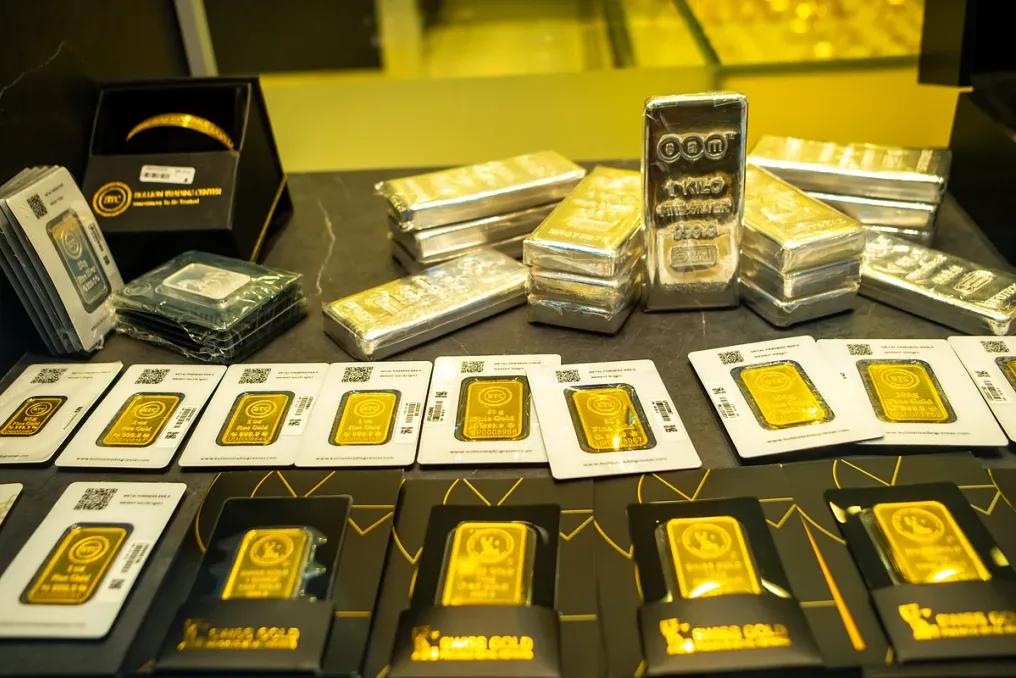
In contrast to jewelry, demand for gold bars and coins continued to rise. For the second quarter of 2026, demand for bars and coins increased by 30% year-on-year, reaching 5.3 tonnes, compared to 4.1% the previous year. Furthermore, according to the World Gold Council, the quarterly demand for gold coins and bars in the UAE grew by 32.5%.
Gold coins and bars remain a preferred investment instrument in the UAE due to a combination of cultural and financial factors. For expatriates from South Asia, Arabs, and other communities, gold is traditionally viewed as a value passed down through generations, closely linked to wedding traditions, festivals, and family savings.
From a financial perspective, gold coins and bars serve as a hedge against inflation and currency fluctuations, especially during periods of geopolitical uncertainty or stock market downturns. Many residents prefer physical gold over paper investments such as ETFs because it provides direct ownership, portability, and liquidity, allowing it to be relatively easily sold or used as collateral.
The precious metal price began to decline after the start of the Middle East war, as rising oil prices raised concerns about inflation in the US economy. On Monday evening, spot gold traded at $4,026 per ounce, which was 1.24% lower. In the UAE, 24K and 22K gold prices opened at AED 488.25 and AED 452.0 per gram, respectively.
Simon-Peter Massabni, Head of Business Development at xs.com, noted that the fundamental prospects for gold will be closely tied to the trajectory of inflation, US monetary policy, the direction of the dollar, and real bond yields. He believes that the long-term and medium-term forecast remains inclined towards a continuation of the upward trend for gold, although he anticipates strong corrective waves.
Massabni stated that new historical highs cannot be ruled out if current supportive fundamentals persist. He believes that the greater danger for investors may lie in underestimating the strength of the overall upward trend due to short-term corrections. At the same time, he sees little reason to chase gold growth with every rally. The best approach, in his opinion, is to wait for consolidation zones and re-entry, using technical levels to determine potential opportunities and effectively manage risks.
He added that gold is entering a turning point that could define the market's trajectory in the coming years. If the current movement proves to be merely a correction within a longer bull market, today's prices could ultimately be seen as a period of accumulation before another major surge. However, if gold successfully breaks key resistance levels and establishes stable trading above previous highs, a transition can be observed from a rally driven mainly by fear and hedging to a new phase characterized by a global revaluation of gold itself. Therefore, he does not believe that the history of gold ended after the last correction; rather, he sees it as an asset that still possesses strong structural drivers for further growth, provided there is disciplined risk management and confirmation of technical signals when navigating the next market phase.