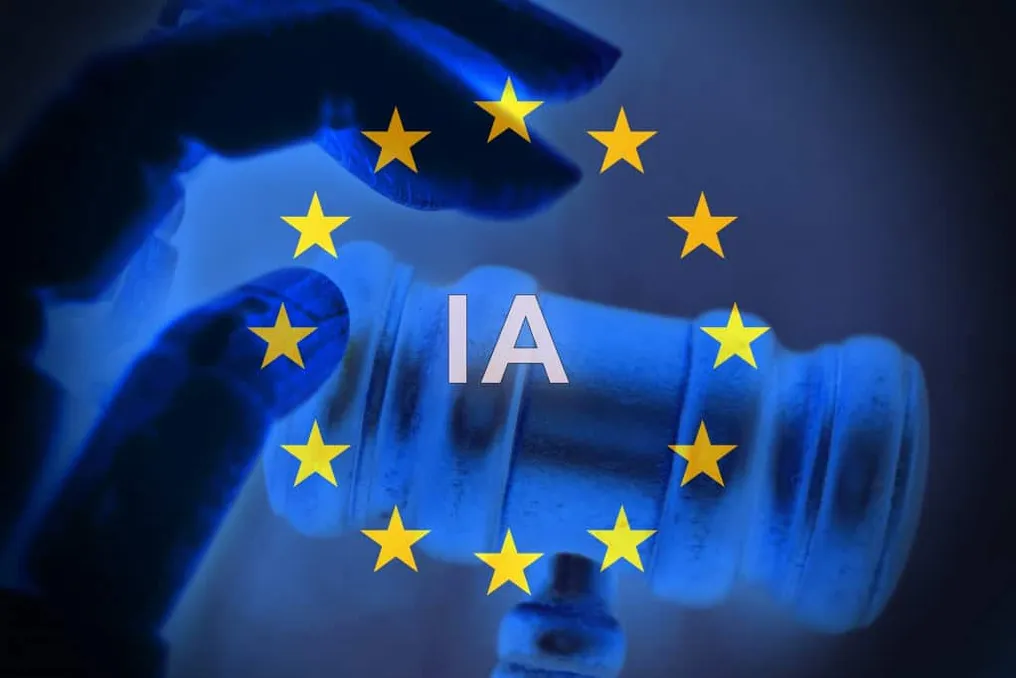
The European Union is beginning a new phase in the implementation of the AI Act, legislation that regulates the use of Artificial Intelligence within the bloc. Although the regulation was formally adopted in August 2024 and certain standards were already active since 2025, most provisions become valid starting this Sunday.
This set of laws categorizes AI systems based on the level of risk they present, imposing distinct obligations for each group. This current phase raises the required standards for companies that create and use such technologies, introducing transparency requirements for AI-generated content and initiating supervision of general-purpose AI models by the European Commission.
What is changing with the EU AI Act?
The AI Act is recognized as the first comprehensive legal instrument on AI approved by a major regulatory body. The legislation employs a risk-based methodology, dividing AI applications into three levels: unacceptable risk systems (which are prohibited), high-risk systems (which are subject to specific criteria), and systems that do not fall into any of the above categories.
Additionally, the regulation establishes transparency duties, as provided for in Article 50, for specific scenarios, such as the use of chatbots and the creation of synthetic content, regardless of the system's risk classification. Systems classified as unacceptable, such as certain forms of social scoring and behavioral manipulation practices, are banned. On the other hand, high-risk applications—those used in sectors such as healthcare, education, recruitment, credit granting, and public services—must meet certain requirements before being made available to the public.
Starting August 2nd, the transparency obligations described in Article 50 also come into force. Unlike other parts of the AI Act, these guidelines are not limited only to high-risk systems; they apply to any AI system used under the circumstances stipulated by the rule. These requirements fall on both the providers of these systems and the corporations and entities that use AI tools.
New rules for chatbots, deepfakes, and AI-generated content
Among the main obligations that are now applicable, notable ones include: providers of chatbots, virtual assistants, and other systems that interact directly with individuals must notify users that they are interacting with an AI; creators of systems capable of producing text, images, videos, and audio must ensure that this material is marked in a machine-readable format, allowing it to be identified as produced or modified by AI; companies and organizations that use AI to create deepfakes have the obligation to declare that the content was artificially generated or altered; and AI-generated texts published with the intent of informing the public about matters of general interest must also be identified, unless they undergo human review and there is editorial responsibility for the publication.
These rules also extend to open-source systems when they fit the cases provided for in Article 50. Generative AI models that were already available on the market before August 2, 2026, will have until December of this year to specifically comply with the requirement for machine-readable marking.
European Commission may supervise and fine companies
Another significant change is the start of the European Commission's supervisory powers over providers of general-purpose AI models (GPAI), a category that includes large language models used in chatbots and other generative AI tools. Although these providers were already under obligations since August 2025, the legislation provided a one-year adaptation period before supervision began. Starting this Sunday, the Commission has the prerogative to request technical documentation, conduct assessments, demand adjustments for compliance with the rules, limit the availability of the models, and even order their removal from the market.
Financial penalties can reach 3% of the company's annual global turnover or 15 million euros, whichever is higher, depending on the infraction committed.
Implementation Timeline
The application of the AI Act was structured in several stages. The regulation officially entered into force in August 2024, but much of its provisions had transition periods. The rules prohibiting certain practices considered unacceptable risk began to take effect in February 2025. In August of the same year, obligations related to general-purpose AI models (GPAI) were implemented.
Currently, on August 2, 2026, most of the legal determinations come into force, including the transparency rules of Article 50 and the start of the European Commission's oversight of these models.
Brazilian companies may also be affected
Even though Brazil is still debating its own regulatory framework for artificial intelligence, Brazilian companies that develop AI solutions or provide services to European Union clients may also be required to comply with the requirements established by the AI Act. The legislation applies to model providers launched in the European market, regardless of their country of headquarters. This implies that companies based outside the European Union may also be subject to the rules if they offer their systems to the bloc's users.