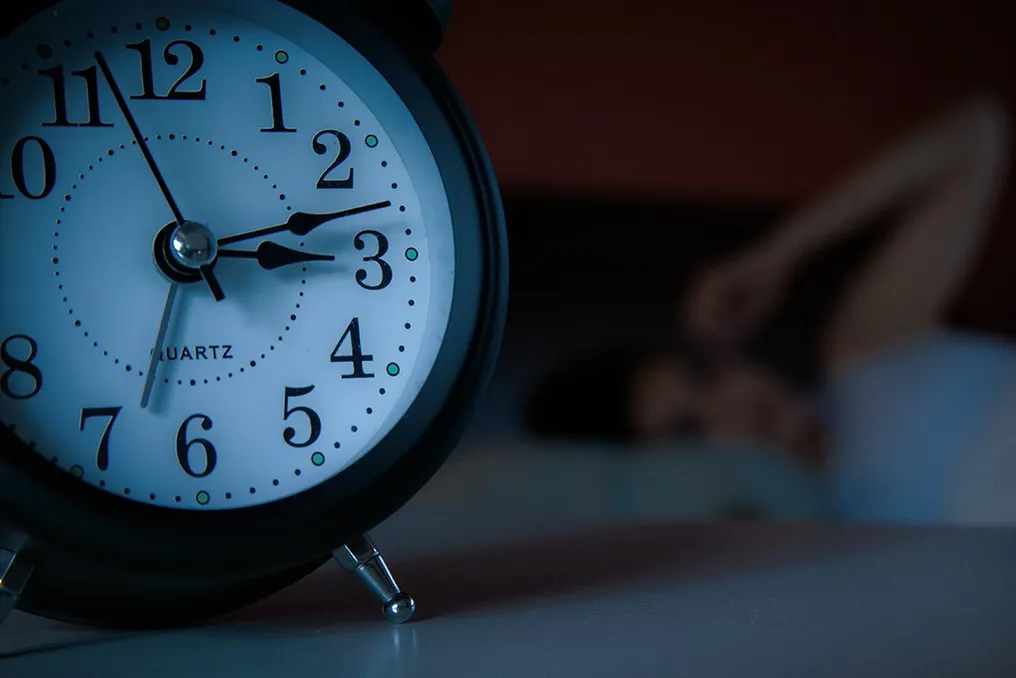
Waking up during the middle of the night may be a behavior inherited from past generations. Before the advent of the Industrial Revolution, sleep patterns were segmented, which was a very common practice.
In the time before cell phones and electricity, most people did not sleep continuously. It was customary to go to bed a few hours after sunset and wake up again around midnight. During this intermediate period, people spent time talking, tending fires, or, in social contexts, visiting neighbors before returning to sleep until dawn. Historians call this practice 'segmented sleep.'
This custom is extensively documented in historical sources, covering over 2,000 references from Homer's Odyssey to medical and literary records, such as poems and letters. Authors of the time rarely needed to detail the concept of 'first sleep' and 'second sleep,' as it was a widely known habit.
Changes began with the Industrial Revolution, driven by Thomas Edison's invention of the incandescent lamp in 1879. The introduction of artificial lighting led people to postpone bedtime, resulting in the merging of the two sleep periods into a single continuous block, establishing the modern pattern.
Sleep scientists investigate the possibility that the ancestral pattern is the most suitable. They argue that the human body was not biologically designed to sleep without interruptions. Sleep science reveals that the body goes through distinct cycles each night, each lasting approximately between 90 and 110 minutes, encompassing light sleep, deep sleep (N3), and REM sleep.
Most people complete four to six of these nightly cycles. However, the most crucial phases occur in the first half of the night: deep sleep is vital for physical and immunological recovery, while REM sleep is responsible for emotional processing and daily memory. After these initial phases, the body predominantly alternates between lighter stages, indicating that waking up in the middle of the night is a perfectly normal event, something many people do repeatedly without even realizing it.
The real problem arises when this awakening prolongs or becomes routine, occurring at the same time night after night. In a clinical trial conducted in 1992, it was shown that participants could resume sleep in two phases when not exposed to clocks or morning light.
The cause of consistently waking up at the same time is not yet fully understood by specialists. For a long time, cortisol, a hormone that helps the body react to physical and mental stress, was associated with waking up completely at three in the morning, due to the natural increase in its levels in the blood near dawn.
However, a study conducted in 2025, monitoring over 200 individuals, observed that the hormone increase showed no variation at the exact time of awakening; the level continued to rise at a constant rate, regardless of whether the person was sleeping or awake. Researchers attributed this finding to the methodology used, which employed a subcutaneous tissue catheter to measure cortisol, instead of relying solely on saliva samples collected after waking. Nevertheless, they emphasize that variability among participants must be considered, and many of these questions remain without a definitive answer.
Another theory suggests that specific times may merely be the circadian rhythm in action, regulating sleep, hormones, and body temperature, excluding isolated cases. Furthermore, about 40% to 60% of women going through menopause are affected by interrupted sleep, which is attributed to the decrease in progesterone, which can compromise deep sleep.
Changes in blood sugar levels can also cause similar effects. If dinner is eaten early or is light, glucose may decrease during the night. The body responds by releasing stress hormones to raise this rate again, a mechanism that is sometimes potent enough to wake the person up completely. Such episodes are more frequent in diabetics, although they are not limited to this group.