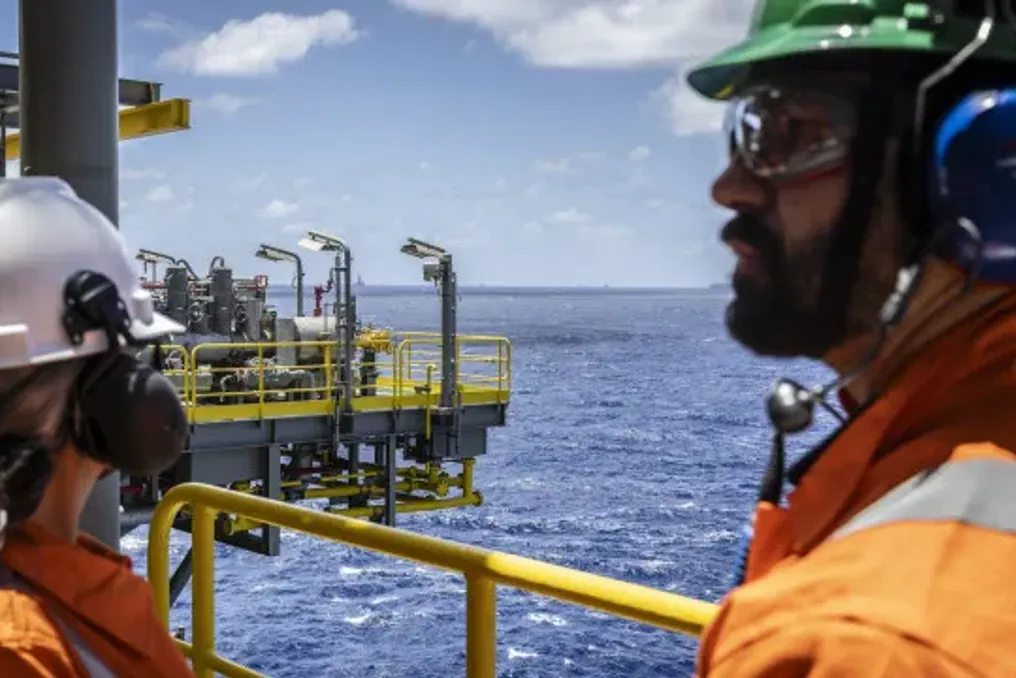
According to data from the National Agency of Petroleum, Natural Gas and Biofuels (ANP), Brazil achieved a record in oil production in June. Pre-salt (ultra-deep water oil reserves) accounted for over 80% of the total volume produced.
Oil production in June showed a 4% increase compared to May of this year. When summing up oil and natural gas, national production reached 5.842 million barrels of oil equivalent per day, and natural gas production was 217.35 million cubic meters per day, which is 19.7% more than in June of last year.
Specifically, pre-salt provided 4.788 million barrels of crude oil per day, corresponding to 82% of Brazilian production. This figure increased by 24% compared to June 2025 and was obtained using 198 wells.
According to ANP, in June, the natural gas utilization rate reached 97%, with 64.36 million cubic meters released to the market daily. Total natural gas consumption amounted to 6.63 million cubic meters per day, which is 10.1% higher than the same period, mainly due to the commissioning of the P-79 platform in the Bujios area.
Offshore fields accounted for 98.1% of oil production and 87.6% of natural gas production. Furthermore, Petrobras, operating independently or in a consortium, was responsible for 87.08% of the national volume.
The Bujios field, located in the Santos Basin pre-salt, continued to be the largest oil producer in Brazil, supplying 1.02 million barrels per day. The Mero field led in natural gas production, producing 48.73 million cubic meters per day.
Last week, Brazil's tax and customs authority (Receita Federal) announced a 1,629% increase in tax collection in the oil and natural gas sector in real terms compared to June 2025. This growth occurred against the backdrop of rising 'commodity' prices on the international market, driven by the conflict in the Middle East.
Additional government revenues from oil are used to finance temporary measures, such as subsidizing fuel prices in the country to curb inflation driven by the consequences of the war in the Middle East. This war was triggered by attacks by the United States and Israel on Iran, which responded with attacks on American interests in the region.