The Casa Snider project, designed by architects Giannone Petricone Associates Inc., is a historic building dating back to 1828. This house is the oldest surviving structure in northern Toronto.
The Casa Snider project, designed by architects Giannone Petricone Associates Inc., is a historic building dating back to 1828. This house is the oldest surviving structure in northern Toronto.
Originally, Casa Snider was built as a brick Regency Cottage farmhouse, situated amidst extensive meadows and orchards. Over the subsequent 180 years, the surrounding area underwent changes, and the house itself was expanded and modified. These transformations led to the disappearance of the veranda and the division of the interior space to accommodate various residents.
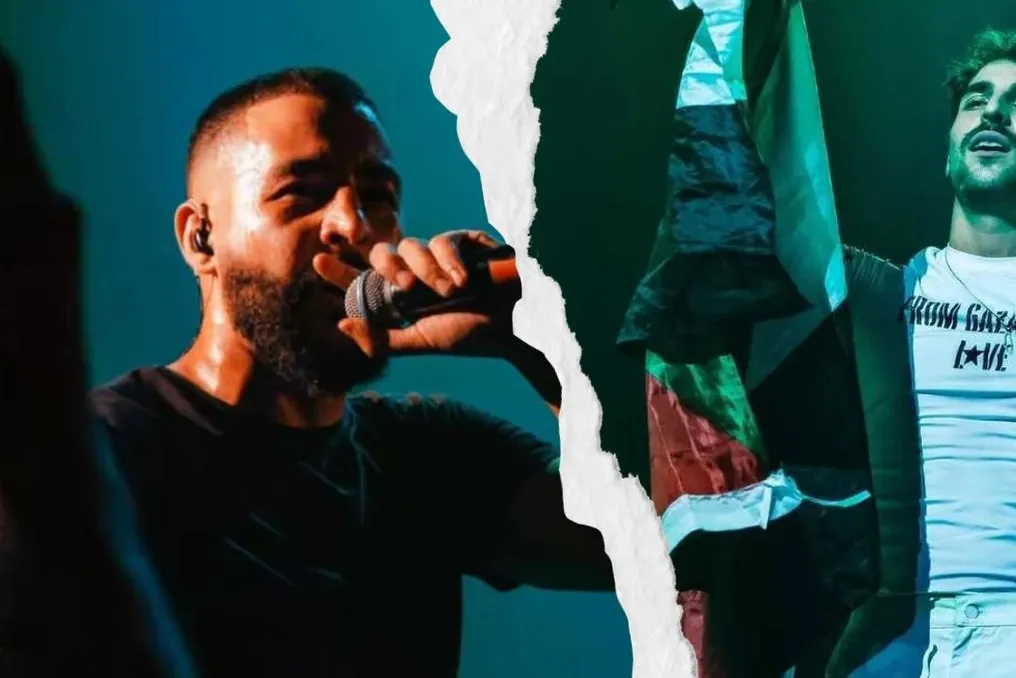
When Palestinian rapper Shabjdeed released the track 'SLV' on Saturday, which is a harsh diss track aimed at his colleague Saint Levant, listeners initially perceived it as the start of another celebrity feud.
However, within a few hours, the discussion went beyond musical battles and rivalry. Palestinians on social media began discussing something much larger: whether Palestinian identity has become a brand, if suffering grants an artist greater legitimacy, and what audiences expect from cultural figures representing a people undergoing war and occupation.
The conflict between Saint Levant and Shabjdeed is compared to the Arab analogue of the Drake and Kendrick Lamar confrontation. The timing intensified the situation: both artists scheduled separate concerts in Amman, Jordan, for August 13th, leading to speculation about the possible influence of competing performances on the creation of the diss. Neither artist publicly linked the track to these concerts.
In less than two minutes, Shabjdeed criticizes Saint Levant's carefully constructed public image. He begins by acknowledging: 'Sometimes I respect your ability to achieve goals,' but quickly moves to criticism, stating: 'I will teach you a lesson through this diss track.'
A significant part of the song questions Saint Levant's public persona. The artist repeatedly asks: 'Why is your name like that?', joking that given the frequent mentions of women and romantic relationships in his music, he might be better known as 'Saint Women.' Later, he accuses Saint Levant of 'mixing Palestine with every speck of flattery and European lust,' reducing Palestinian symbolism to aesthetics, and sings about 'a bunch of watermelons on my hips, just so you know how much I love my country.'
These lines reflect criticism that has followed Saint Levant throughout his rise to fame. Saint Levant was born in Jerusalem to a Palestinian-Serbian father and a French-Algerian stepmother; he spent part of his childhood in Gaza, and then moved between Jordan and the US for his studies. His music blends English, Arabic, and French, often exploring themes of love, nostalgia, and diaspora, complemented by high-quality aesthetics.
On the other hand, Shabjdeed emerged from the Palestinian underground rap scene after growing up in Kafr Aqab and is currently based in Ramallah. His work draws inspiration from life in occupied West Palestine, local slang, and realities of Israeli occupation, checkpoints, and restricted mobility, offering a perspective rooted within Palestine itself.
This contrast lies at the heart of the debate. For some listeners, Shabjdeed voiced frustrations they had long felt. One supporter wrote: 'Shabjdeed, my dear!! Thank you for finally speaking out.' Another user stated that they were 'not surprised by the negative reaction' to Saint Levant, asserting that they had 'never been convinced by his activism,' as it seemed 'very different from the image he previously presented.'
Some argued that Saint Levant's multilingualism, international background, and collaboration with a luxury fashion house made him more appealing to Western audiences than artists working from inside occupied Palestine. One Instagram user wrote: 'The industry rewards voices that are easiest to package: multilingual, aesthetically polished, commercially appealing, and culturally familiar to the West,' adding that when one artist becomes 'the face of Palestine on the international stage,' other Palestinian experiences risk being overlooked.
At the time of publication, Saint Levant had not publicly responded to the track or commented on Shabjdeed's criticism. However, many social media users spoke out against this negative reaction, stating that Palestinian art should not be limited to themes of resistance and suffering.
For them, the question was not whether Saint Levant was 'Palestinian enough,' but how Palestinian identity is packaged and consumed internationally. In response to the argument that Palestinians are 'allowed to write love songs,' one user noted that the issue was not whether Palestinians should create such music: 'Palestinians have the right to sing, write, and think whatever they want. There is no problem with that at all. What Shabjdeed pointed out about Saint Levant is much deeper than any event or love songs.'
Others warned against reducing Palestinian identity to a single narrative. One commentator wrote: 'The Palestinian diaspora is extremely diverse.' They continued: 'Palestinians from Syria have absorbed the resilience and soul of Syrian camps, while those living in Lebanon, Jordan, Europe, and the US carry a unique experience shaped by their place of residence.' They added that 'diversity is a sign of strength and cultural richness, not weakness,' arguing that Palestinian representation 'is not limited to one genre, one tone, or one rigid framework.'
Not everyone supported Shabjdeed's approach. Some criticized the lyrics as misogynistic, especially his references to women and Saint Levant's female collaborators. Others deemed the diss unnecessary, stating: 'Great artists should be remembered for what they create, not for whom they attack,' while others defended the track as part of rap culture.
The discussion also raised questions about whether Palestinians should even focus on music amid the ongoing genocide in Gaza by Israel. Journalist Faten Elwan shared a video showing an unborn baby found among the rubble after an Israeli strike, writing: 'I hope you spread this just as you spread Shabjdeed's and Marwan's nonsense.'
Her comments drew criticism. Some argued that discussing culture alongside documenting destruction in Gaza is not mutually exclusive, and that Palestinians should not only talk about death to be considered legitimate voices. Perhaps this is why 'SLV' resonated outside of hip-hop. The track became a broader debate about class, diaspora, authenticity, and visibility. At its core lies a question that goes far beyond rap: who has the right to represent Palestine?
} , 3.Microsoft announced the first titles that will be added to the Xbox Game Pass catalog during August 2026. Currently, six games have been confirmed to be available throughout the month for console, PC, and cloud platforms.
More game announcements are expected in the coming weeks, which could increase the variety of new content for service subscribers.
On August 4th, two games enter the catalog: 'Beast of Reincarnation', an action RPG set in a post-apocalyptic scenario, available to Game Pass Ultimate and PC Game Pass subscribers on Xbox Series X|S, PC, and Cloud; and 'Heretic & Hexen', classic first-person shooters, accessible via Game Pass Premium for console, PC, and Cloud.
On August 6th, 'Monsters Are Coming!' will be released, an action title with tower survivor elements, playable on Xbox Series X|S and Cloud by Game Pass Ultimate and PC Game Pass users.
August 13th will bring 'Sandustry', a game focused on automation, exploration, and factory building, intended for PC and available on Game Pass Ultimate and PC Game Pass.
On August 14th, 'Grave Seasons' will be added, combining farm simulation with mystery, allowing players to manage a rural property while investigating murders, arriving on Xbox Series X|S, PC, and Cloud.
Finally, on August 27th, 'Resonance: A Plague Tale Legacy', a new chapter in the A Plague Tale universe, will be released for Xbox Series X|S, PC, and Cloud, with a Game Pass Ultimate and PC Game Pass subscription.
Microsoft has not yet provided information on which games will be removed from the catalog in August. The company customarily releases an initial list of removals during the first two weeks of the month and a second list at the end of the period.
Additionally, Amazon Prime was mentioned, which offers benefits to players, such as exclusive monthly items, free games, a free Twitch.tv subscription, and other extras, with the possibility of a 30-day free trial.
For those who wish to improve the home's sound quality without major difficulties, this is the opportune moment. Three excellent soundbar options available on Amazon have been gathered, covering brands such as JBL and Samsung, ideal for those looking for high-quality sound with ease of use.
The JBL Cinema SB180 offers an accessible and wireless home cinema experience. With a 2.1 channel configuration and a 6.5-inch wireless subwoofer, it ensures powerful bass and immersive sound via Bluetooth, making it perfect for movies, series, and daily music.
There is also the black version of the JBL Cinema SB180, which maintains the same solid performance of the line, featuring Bluetooth connectivity, a 6.5-inch wireless subwoofer, and a 2.1 channel configuration, but presents an elegant design that harmonizes with any room arrangement. It is a practical option for those who demand sound quality without sacrificing aesthetics.
The Samsung HW-B450F provides a powerful system for those seeking a significant advancement in residential audio quality. This model has 300W of power, supports Dolby Audio, includes a wireless subwoofer and Bluetooth, delivering detailed and wide sound, whether for intense cinematic scenes or richer musical listening.
It is important to note that the stock of these offers is subject to change at any time, so it is recommended to access the links immediately to ensure acquisition. All these soundbars are good choices for those aiming to transform their home audio experience in a simple way.