On a Tuesday morning, 16-year-old Bhumika was preparing flatbreads, demonstrating slow and uneven hand movements due to cerebral palsy. Her sister helped her while Bhumika cooked. This is how her mornings are now, and she eagerly awaits the chance to return to the center that helped her learn these skills.
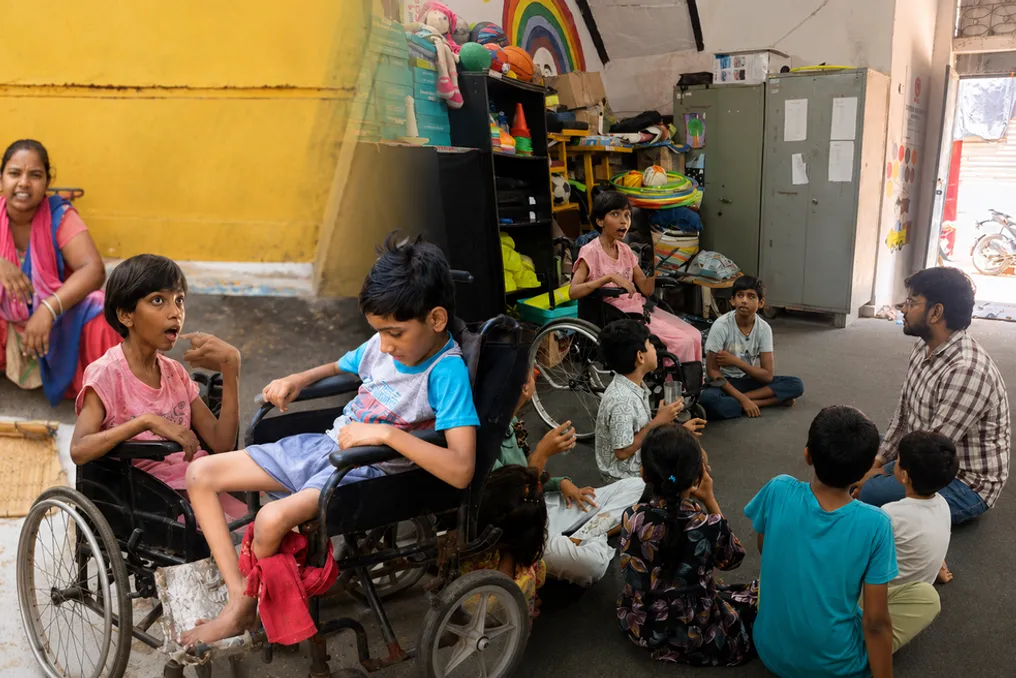
Previously, Bhumika attended an inclusive educational center twice a week, located near her home in Mazdoor Camp, Okhla Phase 2, Delhi. This center was run by the non-profit organization ASTHA India, which focuses on educating children with disabilities. Bhumika noted that she was treated well there and enjoyed learning how to use a computer.
In addition to computer lessons, which she liked, she especially looked forward to weekly football and basketball sessions. On other days, she spent time at the local government school, attending four days a week, and spent the remaining two days at the center.
How the fire happened at the center
However, this center has been closed for over a week. The fire broke out on the evening of July 23, 2026, around eight o'clock in the evening. Since the center was already closed for the day, no one was inside. Neighbors noticed smoke, opened the doors, and began putting out the blaze with water.
One community volunteer, Lakshmi, was among the first to learn about the incident. When she arrived with water, the smoke was too thick, and there were not enough people to quickly control the fire. Approximately 30 members of the local community remained on site for three to four hours, using available fire extinguishers and saving what they could.
Lakshmi and another mother whose disabled children attend the center stayed there all night without pay or being asked to do so. Pratik Agarwal, the NGO's executive director overseeing daily operations, noted that they stayed because the center is vital for these families who struggle to access help.
No one was injured, but almost everything inside was destroyed. By morning, the premises were black with soot, although a rainbow drawing created by the children was still faintly visible on one wall.
What 85 children lost overnight
For Bhumika, this class was where she first learned to use a computer, which she hoped would help her become a teacher. She aspires to be like Monu Ma'am, her special educator, who conducts daily classes, creates individual lesson plans, and treats every child as if they are capable of anything.
The fire destroyed wheelchairs, specialized chairs, massage mats, sensory tools, whiteboards, cabinets, as well as all stationery and educational materials for each child. Six wheelchairs and five specialized chairs designed to support children who cannot sit independently were destroyed. Two rollators, a full set of writing supports, and therapeutic and floor mats used in every session for posture and core muscle strengthening were also ruined.
Weighted blankets and sensory stimulation kits, which helped children with sensory needs calm down, turned to ash. Without them, some children find it difficult to concentrate during lessons. Whiteboards where teachers recorded lessons disappeared along with the cabinets storing each child's personal files and materials. Three laptops and desktop computers that the children used to learn operating systems melted along with the annual textbooks, stationery for all 85 children, and the water purifier they used between sessions.
Monu Ma'am explained that a child who cannot sit without support cannot do anything else; they just lie there looking at the ceiling all day without these basic materials. The equipment that helped children sit, move, learn, and participate in activities was completely destroyed by the fire. A wheelchair helps a child sit, a rollator supports the first independent step, and a sensory kit allows a child to stay engaged during a lesson. The fire took away these small bridges to independence.
A center built on trust
ASTHA was founded in 1993 and has managed its centers in the most challenging and inconspicuous areas of Delhi for 33 years. Initially, these were special schools, and in recent years, they have become NGOs working with various types of disabilities free of charge and directly within families who have no other options for help.
Between 20 and 30 percent of the organization's staff are people with disabilities or family members of such individuals, which is why families trust the center. This center is located in the Mazdoor Camp area, along the Okhla industrial zone, where migrant families live in the shadow of factories, near new elite apartments.
Currently, the center hosts 85 children and youth aged 8 to 18, including Bhumika. All of them have lost their classes this week. Pratik explained that these families mainly consist of daily wage laborers who work from dawn till dusk and cannot always be present with children with special needs. Consequently, siblings drop out of school to care for them, assisting with hygiene and feeding, as well as teaching small habits.
He added that many of them are single mothers whose husbands left upon learning of the child's condition. Nevertheless, the mothers try very hard and do everything possible to support their children. In times when support is withdrawn, they face difficulties. For 33 years, these families had a door they could approach for help. Today, they need your help to reopen that door and bring their children back to where they know, love, and rely on.
Disrupted routines
However, the rhythm of the center, which was previously built around routine, has fallen silent in a way that is easily noticeable from the outside but impossible to miss if you are one of the families who relies on it. Morning and daytime group sessions have stopped. Lakshmi's son, Shivansh, is one of the children currently deprived of these vital activities.
Lakshmi shared that he has speech impairments, and outside of school hours, the center was a place where he could be among people who understood him. At school, that understanding was not always there. Now that the center is closed, his days outside of lessons have become empty. Although ASTHA educators continue to visit families at home every morning, instead of conducting full sessions with individualized care, they now conduct only three or four visits before late morning.
For 15-year-old Zeenat, who has cerebral palsy and speech impairments, support was initially hard to access. Her mother, Kushbu, recalls people telling her, 'Nobody considers this child worth the effort. Don't waste your mind on her. Plan for your other child.' Despite this, she fought against those voices and eventually moved to Delhi to give Zeenat a chance.
Even securing a spot in the local Anganwadi was difficult. Discrimination followed them both: other parents would not allow their children to sit with Zeenat or play with her. Kushbu remembers, 'For years, Zeenat was afraid to leave the house. Crowds scared her, and the outside world seemed like something to be avoided. Only after she started attending ASTHA did the fear begin to fade. Slowly, she made friends and started looking forward to leaving the house instead of fearing it.'
The fire destroyed part of this progress. Kushbu says, 'We received so much help from ASTHA. So much. But now it has stopped, and we are worried.' When Zeenat was in the village for a month and a half, she missed the center so much that she constantly talked about what she would do once she returned—games, materials, people. Now there is none of that.
For children with disabilities, missing these sessions can mean losing the routine that supports their progress. Progress for children like Bhumika and Zeenat is formed session by session, week by week, through small, repetitive movements until they become natural. The longer the center remains closed, the harder it is to restore this rhythm, and every week of delay pushes back the opening and routines of 85 children.
Zeenat learned to leave the house without fear, and Bhumika learned to use a computer and began dreaming of becoming a teacher. They have come too far to lose this progress. Your help can bring them back to the routines, friends, and classrooms that helped them achieve this.
How you can help rebuild the center
ASTHA plans to resume operations within one to two weeks, by the beginning of August. The total cost of restoration is 792,900 rupees and is divided into three parts.
543,900 rupees
for replacing burned equipment: wheelchairs, specialized chairs, massage mats, sensory kits, as well as stationery and educational materials for all 85 children.
99,000 rupees
for safety works that simple whitewashing will not cover: proper earth leakage protection electrical panel, grounding, fire extinguishers, smoke detectors, and cleaning of burnt carpet.
150,000 rupees
for strengthening the center with equipment it lacked before the fire: laptops, printer, and projector for computer lessons for older children who attended.
The first two parts, totaling 642,900 rupees, are necessary just to reopen the doors. A donor wishing to donate only to what was destroyed by the fire can direct their contribution only to the first part, and this will be enough for the center to operate.
To put it in perspective: 10,000 rupees replaces one child's wheelchair. 12,000 rupees replaces a sensory kit necessary for a child's self-regulation during a session. 50,000 rupees covers the annual supply of stationery and educational materials for all 85 children. No donation is too small to be counted towards one of these items.
Pratik notes: 'Nothing is happening at the center right now. We do not want to lose touch with the families. But there are limitations because the team is small, and we are doing our best to reach as many people as possible.' Every week the center is closed, this gap widens—more home visits are missed, more sessions are lost, and it becomes increasingly difficult for children like Shivansh, as they have nowhere to go and nothing to do.