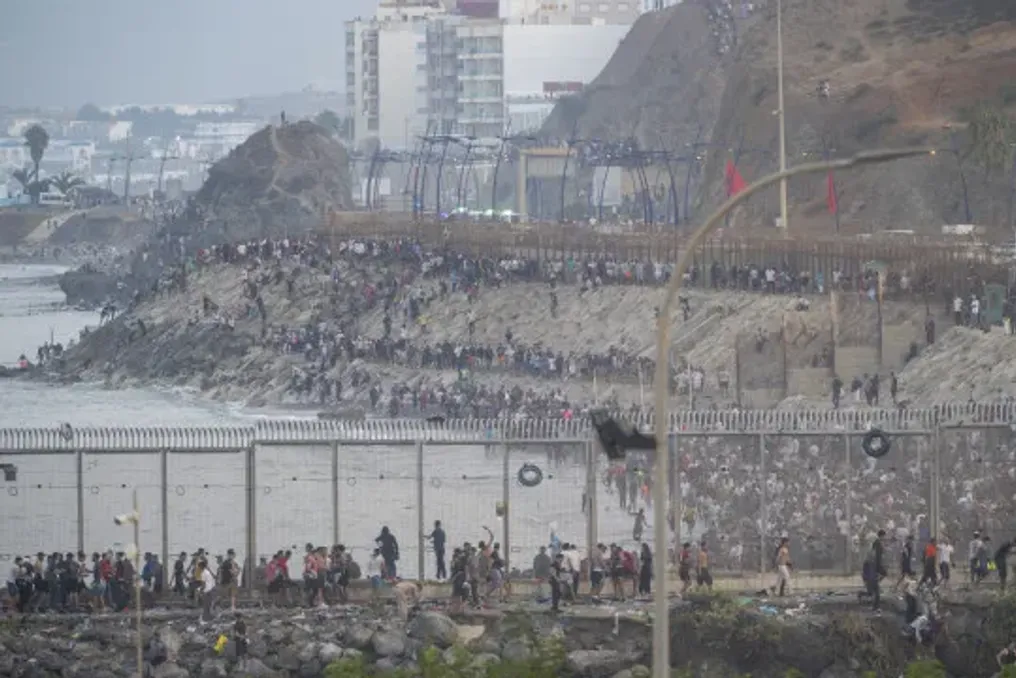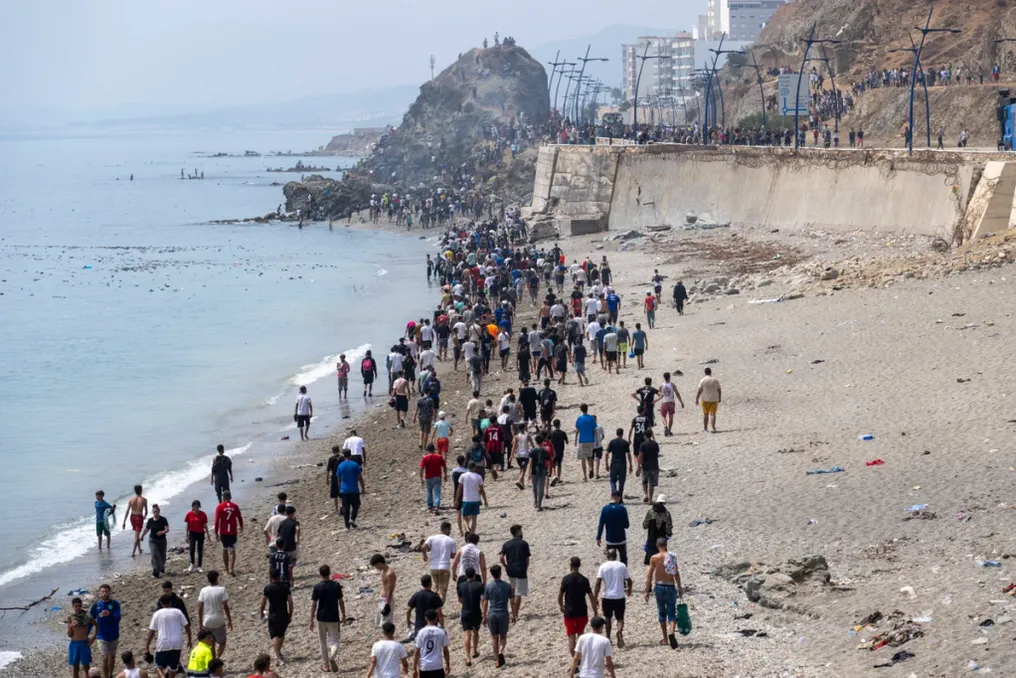
The Moroccan Ministry of Interior reported that the large number of attempts by migrants to enter the Spanish exclave of Ceuta was caused by the spread of false information on social media, as well as a misunderstanding of a Spanish court ruling.
The Moroccan Ministry of Interior reported that the large number of attempts by migrants to enter the Spanish exclave of Ceuta was caused by the spread of false information on social media, as well as a misunderstanding of a Spanish court ruling.
According to the department's data, the influx of people was provoked by publications and video materials on platforms such as TikTok, where information circulated that the border with Spain was supposedly open. Furthermore, the Moroccan Ministry of the Interior pointed to an erroneous interpretation of the Spanish court's decision, which concerned the ban on immediate repatriation of migrants detained at sea.
Meanwhile, Spanish law enforcement agencies presented their version of events. According to their information, shortly before the mass breakthrough, Moroccan border guards left their posts, and migrants who reached Ceuta claimed that there was no active resistance when crossing the border from Morocco.
Moroccan authorities state that measures to control the situation and combat illegal migration are continuing. It has been reported in Spain that most arrivals have returned, but the Moroccan Ministry of the Interior informs that about 2,5 thousand Moroccan citizens are still in Ceuta.
It is worth noting that the crisis in Spanish Ceuta began at the end of July, when more than 50 thousand migrants attempted to cross the border from Morocco. To stabilize the situation, Madrid called upon military forces, and Prime Minister Pedro Sánchez qualified this event as a violation of the country's territorial integrity, which led to stricter border control by neighboring European Union countries.
The Moroccan Ministry of Interior attributed the events that occurred in Ceuta to the spread of disinformation on social media, as well as the operation of human trafficking networks and a misunderstanding of legal and administrative regulations. This confusion led individuals to believe that access to European territory would be simple and without legal implications.
The ministerial body reported that authorities implemented a proactive and comprehensive strategy from the beginning, focused on early detection, increased surveillance, and strengthening the response capacity of security services. This approach allowed for the management of the events, protection of lives, maintenance of public order, and ensuring border security, as reported by the Hespress newspaper.
According to data collected by monitoring and tracking systems on site, about 40,000 people attempted to make the irregular crossing to Ceuta, while 1,135 individuals tried to do so towards Melilla. The Ministry emphasized that all those who reached Melilla were returned to their country of origin.
The entity also pointed out that recent decisions made by Spanish judicial authorities regarding the limitation of immediate repatriation of certain irregular migrants intercepted at sea contributed to the situation. The incorrect interpretations and misleading dissemination of these measures reinforced the belief among some aspiring emigrants that they could avoid immediate return.
Morocco referred to a decision by the Supreme Court of Spain, issued in early July, which stipulates that people arriving in Spanish territory by sea and illegally cannot be immediately returned to the authorities of another state. Such handover is only applicable to those entering Spain by overcoming border containment devices, such as fences, as decided by the court.
Additionally, the statement mentioned a single case of accidental death, which occurred after a fall in a rocky area near Ceuta, and ten deaths by drowning. According to the Ministry's perspective, the short distance to cover, less than 70 meters, and the limited depth of the water in certain areas, barely exceeding two meters, led some migrants to underestimate the dangers, believing that the crossing would be easy.