The flagship Russian passenger jet MC-21, entirely manufactured from domestically produced materials, successfully completed its first test flight.
The flagship Russian passenger jet MC-21, entirely manufactured from domestically produced materials, successfully completed its first test flight.
Following the test flight, which took place several days after President Vladimir Putin's surprise visit to the company's assembly plant in Siberia, test pilot Roman Taskaev noted that 'the first aircraft produced by the assembly line showed good results, and the flight plan was fully executed.'
Vadim Badekha, CEO of United Aircraft Corporation, which manufactures the aircraft, announced that the company is preparing the first batch of 18 such airliners. Furthermore, following Putin's visit on July 24, the government approved additional orders.
Originally introduced in 2009, the aircraft was planned to begin mass production in 2016, but deadlines were constantly postponed due to sanctions and difficulties in replacing foreign-made components.
The state defense conglomerate Rostec intends to complete the certification of the MC-21 by the end of 2026, provided all components are Russian, with the start of commercial flights planned for several months later.
Horizon3, a San Francisco-based company specializing in artificial intelligence-driven cybersecurity, has secured $250 million in Series E funding. The funds will be used to further expand its platform internationally across the globe. Following this round, the company's valuation exceeded $2 billion.
This valuation is more than triple the approximately $600 million achieved during the previous funding round a year ago. The investment is intended to support Horizon3's native cybersecurity expansion into international corporate markets and client operational activities.
The funding was led by NightDragon and NEA, with participation from existing and new global strategic investors. The company plans to accelerate innovation and strengthen proactive cybersecurity capabilities for enterprises facing increasingly complex, AI-driven threats.
The raised capital will be utilized for global sales development, marketing expansion, market growth, and initiatives to develop autonomous cybersecurity technologies worldwide. Horizon3 intends to increase its presence in Europe and enter the Singaporean and Australian markets through strategic international expansion.
The company will increase R&D investments to enhance its NodeZero platform and AI-based security agents. These autonomous agents are capable of effectively and automatically detecting and remediating vulnerabilities within enterprise IT systems.
The investment will also go towards strengthening the proactive AI security platform and accelerating the innovation process. This financing follows growing enterprise demand for protection against AI-driven cyber threats and evolving regulatory compliance requirements.
Snehal Antani and Anthony Pillitiere, former colleagues from JSOC, founded Horizon3 with the goal of automating penetration testing via NodeZero. NodeZero continuously attacks client networks using self-guided penetration testing technology to proactively detect cybersecurity vulnerabilities.
Unlike annual audits, the platform safely tests live production environments using fully automated continuous security testing capabilities. This helps enterprises identify attack vectors, prioritize security weaknesses, and quickly and efficiently implement remediation measures.
The company reported conducting over 310,000 security tests in client production environments globally. Unlike traditional testers, Horizon3 assesses the entire enterprise infrastructure while production systems continue to operate uninterrupted.
The platform also incorporates intelligent honeypots that help organizations detect active attackers targeting enterprise systems in real time. Currently, the platform is used by over 7,000 enterprises across sectors such as banking, healthcare, public administration, and Fortune 10 companies worldwide.
The rapid adoption of AI has changed the approach to how security issues arise. For instance, an attacker with the right automated approach can quickly identify weaknesses and initiate complex attacks faster than manual methods, which reinforces the automation of security assessment.
Horizon3 reported a year-over-year recurring revenue growth of approximately 120%, noting that its annual recurring revenue approached $100 million last year. The company serves between 7,200 and 7,300 clients globally, including managed service providers and some of the world's largest corporations.
The new funding will also support the development of AI training loops, allowing AI defense systems to continuously improve by analyzing new attack methodologies. This should support enterprises' efforts to move from simple vulnerability awareness to the ability to automatically mitigate the most severe security threats.
Given that new cyber threats emerge at 'machine speed' and with high sophistication, the company asserts that AI-based security testing is indispensable for enterprises seeking to protect critical assets and confidential data.
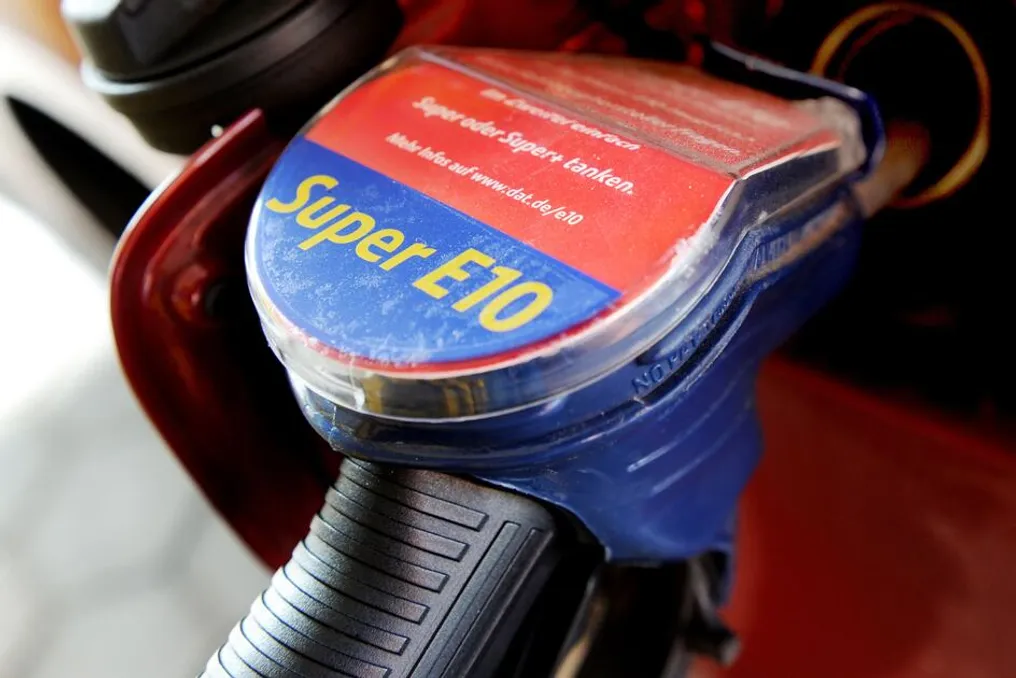
With the approval of E32 gasoline in July 2026, with an initial validity period of 180 days, Brazil resumed increasing the content of anhydrous ethanol in gasoline. For most vehicles, especially flex-fuel ones, this change is almost imperceptible, although there may be an increase in consumption.
The government claims that E32 can prevent the importation of about 900 million liters of gasoline annually, which represents a benefit to the trade balance, the dollar, and national energy policy. The use of ethanol contributes to the reduction of fossil fuels, improves the octane rating of the mixture, boosts domestic production, and decreases the carbon footprint.
However, the challenge arises that not all cars registered in the country were designed to operate with mixtures containing 25% or 32% ethanol. There is a small but significant and growing group, composed of old imported cars, vehicles brought in through independent imports, and notably, premium models and supercars whose fuel systems were designed for E5 or E10 gasoline.
For some of these vehicles, the currently available E25 premium gasoline already represents a considerable deviation from the original specification, and E32 makes this distance even greater. Current premium gasoline has been maintained at E25 as an exception for this automotive segment. When the content of regular gasoline was increased in 2015, the automotive industry requested that premium maintain a lower proportion of ethanol, citing the existence of a restricted fleet of high-performance imports whose manufacturers explicitly recommended fuels with lower alcohol concentration.
The McLaren Artura manual, for example, indicates that the vehicle is compatible with fuels containing up to 10% ethanol and should not be fueled with mixtures exceeding this content. This restriction is also observed in the documentation of other models from the same brand, such as the 720S.
Although modern electronic injection systems can compensate for variations in fuel composition under different operating conditions, this does not equate to manufacturer approval for the use of E25. The car continues to operate outside the specifications for which it was designed.
In this scenario, a legislative suggestion was presented on the Federal Senate's e-Citizenship portal. The proposal aims to allow the commercialization of pure gasoline (E0) and E10 gasoline, in addition to the current E25 and E32. After surpassing more than 20,000 supports in the public consultation, the initiative was transformed into a Legislative Suggestion and will be sent to the Commission on Human Rights and Participatory Legislation (CDH), which may turn it into a bill for processing in the National Congress.
The objective of the proposal is not to abolish E25 or E32, but rather to allow gas stations to offer E0 and E10 as complementary alternatives, which is seen as a positive measure. Brazil should indeed have at least one gasoline suitable for cars designed to withstand a maximum of 10% ethanol.
However, mere permission to sell is the simplest step. It is not enough to simply remove part of the alcohol from existing gasoline and put it in another nozzle; ethanol does not only serve to increase the volume in Brazilian gasoline, it directly contributes to the octane rating of the mixture, and this is where the complexity lies.
Ethanol has high resistance to detonation. When incorporated into gasoline, it helps increase the octane rating of the final fuel. This implies that a pure gasoline with an octane rating of 87 RON is not identical to the base gasoline used to produce an E32 with 87 RON. This occurs because E0 must reach 87 RON without the aid of ethanol. In contrast, the gasoline A used in the E32 formulation can start from a lower octane rating, as the 32% anhydrous alcohol helps raise the anti-knock index of the fuel delivered at the station.
The same principle applies to E25. Since it contains less ethanol than E32, its base gasoline needs to cover a larger share of the final octane rating. According to technical studies by the National Petroleum Agency (ANP), every three percentage points of ethanol added to the base gasoline can increase the RON octane rating by approximately one point in the final composition (RON is the arithmetic mean of RON and MON).
Thus, it would be unfeasible to simply reduce the ethanol content of the A gasoline used in E32 to 10%. Depending on the base gasoline formulation and its MON, an improvised mixture could fall below 80 RON. Such fuel would be more susceptible to detonation, especially in modern engines that use high compression ratios, forced induction, and ignition strategies developed to better resist detonation.
In other words, decreasing the ethanol proportion without modifying the base gasoline would result in fuel inadequate for the very cars that E10 should serve. This points to a fundamental problem: a Brazilian E10 would have to be formulated from an A gasoline itself, enriched with high-octane components obtained through processes such as catalytic reforming and alkylation. Thus, it would be a distinct product from E32 and E25.
This differentiation could make it more expensive than E25 gasoline of equivalent octane rating.
In theory, most Brazilian automobiles that do not exclusively rely on ethanol could operate with E10, including flex-fuel models. However, this does not guarantee that they are all homologated or calibrated specifically for E10, nor that their owners would have a financial incentive to choose it. The target audience for the new gasoline would be more specific.
E10 would primarily be directed at owners of gasoline-only vehicles that were not designed for Brazilian ethanol proportions, or those who, even using E25 or E32, remain outside the manufacturer's specification. An example cited is the Chevrolet Vectra B, sold in Brazil between 1996 and 2003, whose manual stipulates a maximum alcohol limit of 22% (E22).
To estimate the potential demand for E10 or E0, the latest report from Sindipeças is used, which estimated a circulating fleet of 47.12 million automobiles in 2023. Of this total, 11.5% were gasoline-only, corresponding to about 5.42 million units. The other 76.2% were flex. However, these 5.42 million represent only the upper limit of gasoline vehicles, not the actual demand for E10.
Much of this fleet was manufactured in Brazil during a period when gasoline already had proportions close to E20 or E25, given that Brazil has not marketed E10 since 1978. This means that carbureted engines from the 1980s and 1990s and injected models before the popularization of flex-fuel tolerate E25. A carbureted engine adjusted for E22 or E25, for example, might only require a simple adjustment to run on gasoline with a lower ethanol content, often being more economical to adjust the carburetor than to continuously refuel with specialized fuel.
Thus, for these vehicles, E10 would not be a clear advantage. The most likely audience for E10 is divided into three main groups. The first comprises old imported cars, particularly European, American, and Japanese models originally made for gasoline without ethanol or with up to E10. For them, reducing the alcohol can mitigate compatibility issues, moisture absorption, degradation during storage, and operational difficulties after long periods of inactivity.
The second group consists of independent imports that did not undergo adaptations made by Brazilian subsidiaries and maintain the fuel specification of their country of origin market. The third group includes recent supercars and premium automobiles whose manufacturers define E10 as the maximum limit.
The challenge is that there is no public statistic that directly identifies this fleet. Existing databases record the fuel, age, make, and model, but do not indicate which vehicles were independently imported, which received adaptations for Brazilian fuel, or what the maximum ethanol content specified in each car's manual is.
Any estimate, therefore, requires approximation. The Sindipeças report indicates that imports constituted 14.3% of the circulating fleet in 2023, totaling about 6.75 million units. Applying this percentage to the universe of 5.42 million gasoline-only vehicles, we arrive at approximately 775,000 imported gasoline vehicles. This is a simplification, as the real proportion may vary, given that many imports are flex, diesel, hybrid, or electric, and a considerable portion of older imports are gasoline-only.
Additionally, these 775,000 vehicles include officially imported and adapted models to Brazilian fuel, foreign popular cars, vehicles already compatible with E25, and vehicles that would not gain practical benefit from switching gasoline. This number does not reflect the incompatible fleet, but rather a universe for commercial scenarios.
If only one-fifth of these gasoline imports required E10, we would be talking about about 155,000 vehicles. This group would include original classics for unleaded or low-ethanol gasoline, independent imports, and recent models that expressly limit to E10. In a broader projection, if half of this universe of 775,000 vehicles used E10 for conservation, long-term storage, or caution, the market would reach about 387,000 vehicles. Although this number seems modest compared to the Brazilian fleet, it is not insignificant for a specialized fuel, especially considering it involves owners of old cars, premium imports, and supercars—a public willing to accept higher costs when the product solves a genuine technical need.
Here lies a reality factor for many consumers: gasoline with only 10% ethanol would probably cost more than E25. Anhydrous ethanol is more accessible than gasoline and helps reduce the cost of the final fuel, which motivated the increase in ethanol content.
Furthermore, as mentioned, ethanol contributes significantly to the mixture's octane rating. Consequently, gasoline with only 10% alcohol would require a specific formulation and would be produced on a smaller scale for E10. One option would be to create an E10 close to 87 or 88 RON, equivalent to the range of regular gasoline, using the A gasoline from E25 as a base. Commercially, however, this would be little advantageous, as it would cost the same as premium gasoline but without offering premium characteristics.
What would make commercial sense would be an E10 classified as premium or super-premium. A version with an octane rating between 91 and 93 RON would meet the needs of most imported classics, premium, and modern sports cars. Another, close to 95 RON, would be aimed at more demanding engines, making it the most specialized and consequently the most expensive gasoline on the market.
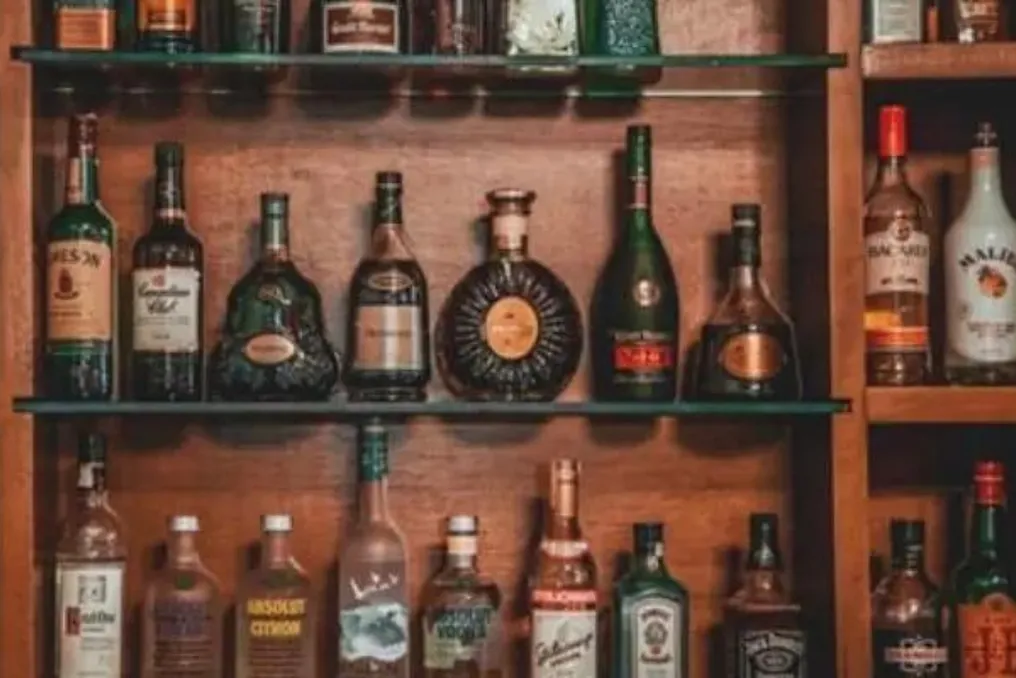
The Food Safety and Standards Authority of India (FSSAI) has ruled that alcohol beverage manufacturers are not permitted to add 'rum flavoring' to rum or 'whiskey flavoring' to whiskey and sell them as standard products.