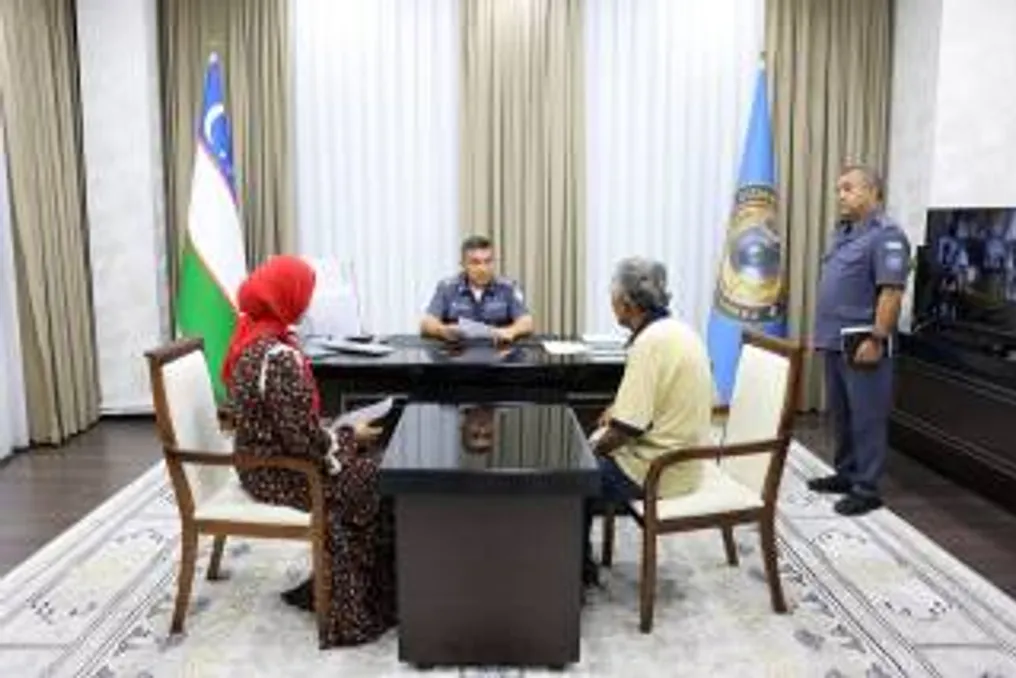
To listen to citizens' appeals, find solutions to their concerns, and strengthen open dialogue between the population and government bodies, internal affairs bodies regularly organize outreach reception points.
To listen to citizens' appeals, find solutions to their concerns, and strengthen open dialogue between the population and government bodies, internal affairs bodies regularly organize outreach reception points.
Such meetings contribute to a comprehensive study of every appeal received from the public, the protection of legitimate interests, and the resolution of existing issues in the shortest possible time.
The last such event took place under the leadership of the Minister of Internal Affairs, Lieutenant General Aziz Toshpulatov. Deputy ministers, heads of sectoral services, and responsible employees participated. Special attention was paid to reviewing appeals from individuals and legal entities, determining practical measures, and finding clear legal solutions for each issue.
The outreach reception point was organized in a convenient format for citizens. Residents of Tashkent city and Tashkent region could meet with the leadership in person. Citizens residing in the Karakalpakstan Republic and other regions were able to participate in the reception via video conferencing to directly state their problems.
A total of 526 appeals were registered during the event. Of these, 320, or 61%, were resolved positively during the reception. The remaining 206 appeals were sent to relevant sectoral services for further study, as they required additional checks.
In receptions organized by the leaders of the internal affairs bodies of the Karakalpakstan Republic, Tashkent city, and regions, another 440 appeals were accepted. In 211 cases, they were resolved, and for 229 appeals, measures were taken to conduct an additional check and legal assessment.
In the context of the modern world, marked by geopolitical instability and ethnic conflicts in various parts of the globe, maintaining stability and social cohesion has become a crucial task for any state. On the occasion of Peoples' Friendship Day, the President sent festive greetings to the people, which are not just words of gratitude but reflect a clear vision and strategic approach to a united and cohesive society in the country.
As the President emphasized, the idea that 'Our strength lies in unity and solidarity' has ceased to be an empty slogan; it has transformed into the daily lifestyle of millions of citizens and the driving force of society. The land of Uzbekistan has always been a meeting place for various civilizations, cultures, and beliefs, making it a cradle of tolerance.
The values of a people who, in difficult times, welcomed representatives of others onto their land and shared their bread have today been elevated to the level of state policy. In New Uzbekistan, ensuring interethnic harmony is implemented on an institutional basis. Adopted regulatory legal acts and the concept of state policy in the field of interethnic relations serve as a reliable shield guaranteeing the rights and freedoms of more than 130 peoples and ethnicities, as well as 16 religious confessions residing in the country.
Representatives of various nationalities living in this tolerant environment feel this daily. For example, a teacher belonging to the Russian people noted that all conditions have been created for free communication in Russian, quality education of children in their native language, and the celebration of national holidays. He also stressed that the system of teaching in seven languages in 157 national cultural centers and schools of Uzbekistan is a vivid testament to the high attention and respect for representatives of different nations.
Furthermore, cultural demonstration occurs through broadcasts in different languages in the mass media, as well as through the publication of newspapers and magazines, which contributes to the preservation of each nation's culture. The diversity of cultures is demonstrated by the pavilions of national cultural centers in the capital, the 'Garden of Tolerance' in 'New Uzbekistan' park, and ethnographic and tourist villages in the regions.
Reforms in this area are not limited only to the cultural sphere, but are also reflected in social and political life. Dozens of deputies, senators, state and public figures, renowned scientists, artists, and entrepreneurs from different nationalities have achieved success. The fact that about 2 thousand such people have been awarded high state orders and medals shows that human value is paramount.
Art serves as the most powerful force uniting different cultures. The President's initiative to create the professional ensemble 'Friendship' from representatives of different peoples is an important creative step in service of universal unity and cohesion. The model of Uzbekistan in matters of interethnic harmony plays a significant role not only within the country but also in strengthening the atmosphere of good neighborliness, openness, and mutual trust throughout the Central Asian region. The liberalization of movement and the expansion of economic and humanitarian ties testify to the realization of the eternal dreams of the peoples of the region.
A Kazakh representative shared his opinion on regional friendship and the future: 'We well know that the peoples of Central Asia lived based on common goals since ancient times. In recent years, the opening of borders with neighboring countries and the establishment of free movement have strengthened the ties between our families and peoples. We have united on the path to a common future and goal.'
Peoples' Friendship Day is not just a holiday or an external formality, but a sacred human value that is a reliable guarantee of peace, freedom, and prosperity of our country. The unification of all representatives of different peoples around a common goal and the feeling of Motherland will play a key role in achieving the heights of New Uzbekistan.
From January to June 2026, the average nominal wage in Uzbekistan was 7.09 million soms, with the highest figure recorded in Tashkent.
The wage for January-June 2026 reached an average of 7,911 thousand soms nationwide. This figure exceeds the same period last year by 18.4%. For comparison, in January-June 2022, the average wage was 3,551.6 thousand soms, which represents an almost twofold increase in the average salary over four years.
When comparing by region, the highest average wage level was noted in the city of Tashkent, where it reached 12.014 million soms. Following in terms of income level is the Navoi region, where the average salary amounted to 8.723 million soms.
The lowest values for the average wage were registered in the Kashkadarya region, where it was 4.865 million soms, as well as in the Surkhandarya region, where the indicator reached 4.937 million soms.
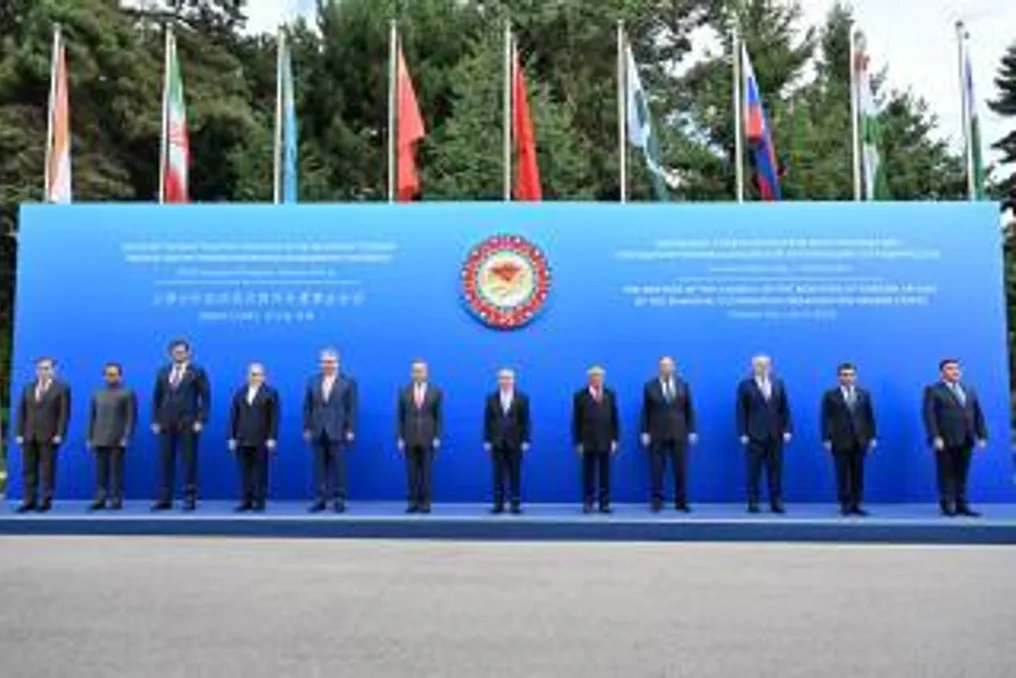
Today, another meeting of the Council of Foreign Ministers of the member states of the Shanghai Cooperation Organisation (SCO) took place in the city of Cholponat, Kyrgyzstan, which was attended by the Minister of Foreign Affairs of Uzbekistan, Bakhtiyor Saidov.
The meeting discussed current issues related to strengthening the Organization's activities, developing multilateral cooperation, expanding economic and transport-logistical ties, as well as ensuring regional security and sustainable development in preparation for the upcoming SCO summit. A number of documents were signed as a result of the meeting.
In addition, officials participated in a ceremony to create a symbolic tapestry together with the heads of delegations within the framework of the forum.
In his Telegram channel, the head of the foreign policy department wrote that this initiative reflects the general desire to strengthen the spirit of mutual trust, friendship, and good neighborliness in the SCO space.