Special attention is being paid in Namangan to supporting local producers, as the city has been recognized by the President as a center for small business, entrepreneurship, and industry of the republic.
Special attention is being paid in Namangan to supporting local producers, as the city has been recognized by the President as a center for small business, entrepreneurship, and industry of the republic.
Currently, there are 72 small industrial zones and two free economic zones operating in the province, where thousands of citizens find permanent employment and income.
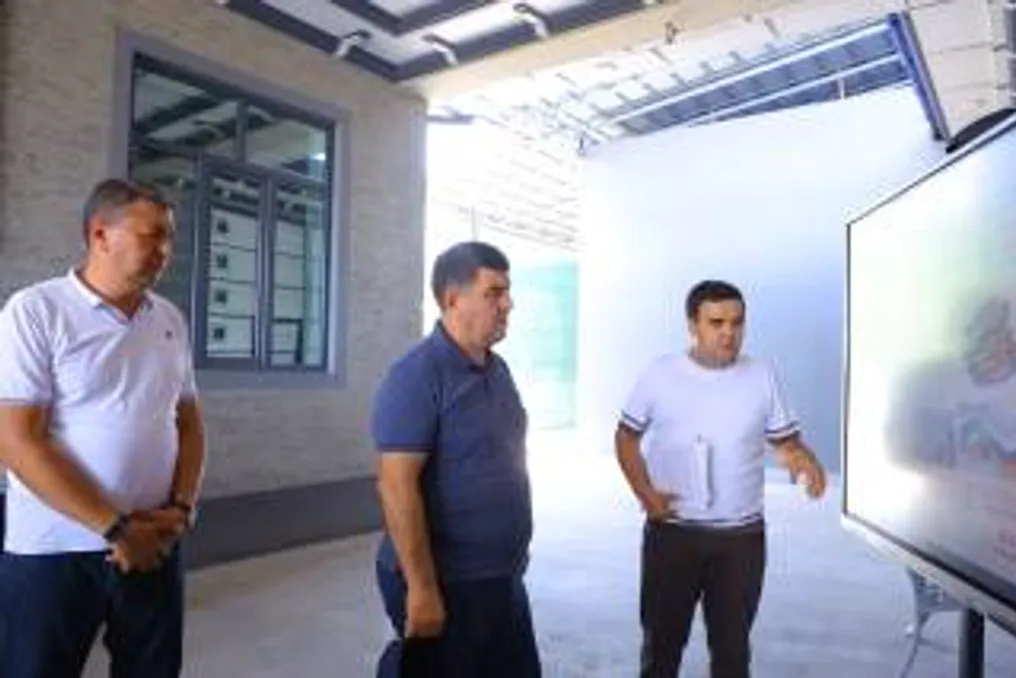
As part of the continuation of these positive efforts, Senator and Head of the Namangan Region, Shavkat Abdurazzokov, reviewed the project for the small industrial zone 'Barkamol Avlod-2', which is planned to be created on the territory of the Barkamol Avlod mahalla in the city of Namangan.
According to the presentation by Muzaffar Ahmadjonov, Deputy Head of Namangan City for Investment, Industry, and Foreign Trade, this promising project will be implemented on an area of five hectares. The total cost of the project is 800 billion soums, and it will launch 39 different projects.
The implementation of the project is expected to allow for the production of goods worth 450 billion soums, attract $29 million in foreign investment, and, most importantly, create 2500 new jobs.
In addition, the project plans to create modern production facilities in the footwear, furniture, textile, and handicraft sectors, as well as provide the territory with necessary engineering and communication infrastructure.
It is assumed that these works will lead to budget collection of 30 billion soums, export volume reaching $10 million, and an expansion of import-substituting production.
During the presentation, the regional head gave instructions to responsible persons regarding the comprehensive development of the territory, the creation of favorable conditions for investors, and the high-quality completion of construction and infrastructure works within the established deadlines.
President Shavkat Mirziyoyev presented the main points of his statement to media representatives following the state visit to Kyrgyzstan.
During the visit, it was noted that Kyrgyzstan is experiencing stable economic growth and ensuring the well-being of the population. The parties reached an agreement to establish an Interstate Council chaired by the presidents.
The international significance of Kyrgyzstan was emphasized by the fact that the country was elected as a non-permanent member of the UN Security Council for 2027–2028, which indicates the strengthening of Central Asia's voice on the world stage.
One of the important outcomes of the visit was the signing of a partnership agreement. Numerous new projects were concluded in fields such as energy, electrical engineering, pharmaceuticals, agriculture, and textile industry.
Furthermore, the parties announced their intention to develop trade and logistics infrastructure along the 'China – Kyrgyzstan – Uzbekistan' railway. The process of signing the agreement for the Kambarota-1 HPP will be accelerated.
Uzbekistan is ready to continue supporting the reform program in Kyrgyzstan. The main goal named by both countries is the rapprochement of the two brotherly peoples. Over the past years, mutual trade turnover has increased almost tenfold, and it is planned to bring it to 2 billion dollars next year.
It was also announced that the first Forum of Regions in a new format will take place in Uzbekistan by the end of the year, and in 2028, the 100th anniversary of Chingiz Aitmatov's birth will be widely celebrated.
A fundamental shift is occurring in global demography. While concerns several decades ago were focused on excessive population growth, the primary threat today is the sharp decline in birth rates and population aging.
To maintain demographic stability and prevent natural population decline, an average rate of 2.1 children per woman is required. However, more than half of the world's population lives in countries where this safe rate is lower.
The most serious consequences of the crisis are visible in Asia and Europe. In South Korea, which was considered an absolute record holder for the process, the fertility rate hovers around 0.7. High real estate costs, intense competition in the labor market, and the expenses of raising children force young people to forgo starting a family and having children.
In Japan, which has become one of the oldest nations, this figure is approximately 1.2, and the country's population is shrinking by hundreds of thousands annually. China, which long pursued the 'One child, one family' policy, has also fallen into a severe demographic trap: the fertility rate reached 1, and the population began to decrease. As a result, India has taken the position of having the largest population.
The situation in Europe is also critical: the average birth rate across the continent is 1.46. For example, Italy (1.2) and Spain (1.16) are facing serious population aging. In the USA, the rate is 1.6, and the demographic balance is mainly maintained through external immigration.
The sharp drop in birth rates worldwide is linked to several interconnected factors. Firstly, urbanization and the high cost of living in cities place significant pressure on family budgets. Secondly, as women receive higher education and have more opportunities for career advancement, the age of marriage is noticeably postponed. Thirdly, family and personal values are changing: among the younger generation, the tradition of living without children or limiting themselves to one child is becoming popular.
The demographic crisis entails serious economic and social consequences. The reduction in the workforce and the increase in the number of pensioners create unprecedented strain on state budgets and pension systems. Economic growth and innovation rates are slowing down, and due to a lack of children, schools and kindergartens are closing, while the demand for nursing homes is increasing.
Despite developed countries (South Korea, Japan, and European countries) allocating huge financial resources and providing tax incentives to stimulate birth rates, these efforts have not yet yielded the expected results. In regions such as Central Asia, including Uzbekistan, and in Africa, high birth rates persist. Consequently, a sharp change in the balance of economic power in the world and the direction of global labor migration is possible in the near future.
The head of state stressed that a change in the worldview and consciousness of leaders of organizations that apply sanctions is necessary. He also noted that all conditions are being created for people to start businesses and enter exports.
Currently, 51 ministries and departments have the authority to impose financial fines in 322 areas. Over the period 2024–2026, approximately three trillion sums in fines were applied.
The President emphasized that leaders of organizations applying penalties must learn to provide opportunities for entrepreneurs and guide them correctly before imposing punishment.
The issue of reducing payments and fees for producers and exporters amid increased competition in external markets was also raised. An example was given where exporting one truckload of agricultural products requires spending up to 5 million sums on additional costs, including customs duties, fumigation, certification, and declarant services.
All ministers and sector heads have been instructed to submit proposals to the Presidential Administration for a sharp reduction in bureaucracy, fines, payments, and fees within one week, as well as for improving the business climate.