The Indian university ERA is considering the possibility of opening a specialized clinic in the Republic of Karakalpakstan. This clinic would be intended for the early detection, diagnosis, and treatment of tuberculosis.
The Indian university ERA is considering the possibility of opening a specialized clinic in the Republic of Karakalpakstan. This clinic would be intended for the early detection, diagnosis, and treatment of tuberculosis.
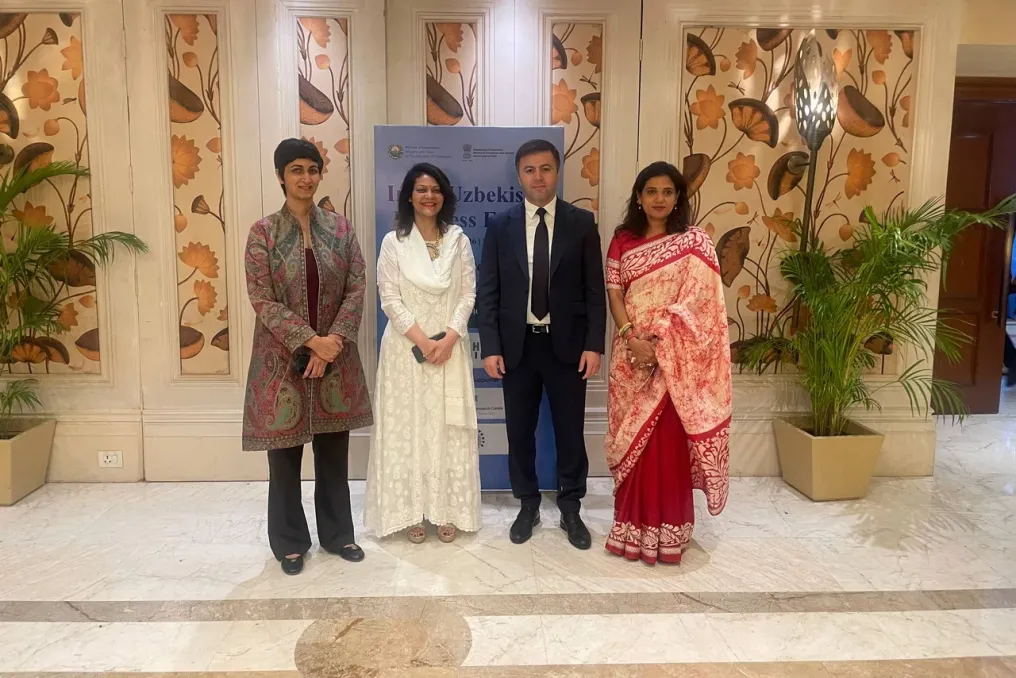
The issue was raised during a meeting between Abdullah Azizov, Director of the Agency for Pharmaceutical Industry Development under the Ministry of Health of Uzbekistan, and the university's management and representatives.
The negotiations took place as part of an official visit of the Uzbek delegation to India, which coincided with the India-Uzbekistan Business Forum.
The parties discussed the potential for cooperation in the fields of medicine, medical education, and scientific research, as well as issues of improving the quality of medical training and implementing joint projects.
During the meeting, representatives of ERA University put forward a proposal to open a modern specialized clinic in Karakalpakstan, which would focus on the early detection, diagnosis, and treatment of tuberculosis.
Furthermore, the participants examined opportunities to launch joint educational programs in medical and pharmaceutical specialties, develop academic exchange, conduct scientific research, and improve specialists' qualifications.
After the meeting concluded, all participants confirmed their readiness to expand practical cooperation in the field of medicine and medical education, jointly implement promising projects, and strengthen bilateral ties.
Women from South Africa have many reasons to be proud of their resilience. However, this resilience can become a burden if it requires constantly being the person everyone else relies on.
Mornings often begin with a list of tasks: preparing children, packing lunches, completing work assignments, responding to messages, and checking on parents. This can be compounded by long commutes to work, difficult conversations at the office, or the need to maintain order at home upon returning.
For many South African women, constant activity is an integral part of life, as is the expectation that they must cope with difficulties, whether directly or indirectly.
August is observed as Women's Month in South Africa, a time when the country celebrates the achievements and strength of women. Nevertheless, alongside these celebrations, it is necessary to discuss what happens when strength becomes an expectation rather than a choice. It is important to understand that exhaustion does not mean failure, and struggling with anxiety, sadness, or stress does not make a person 'too emotional.'
Mental health issues affect residents of South Africa across all age groups, social classes, and income levels. A study conducted on a representative national sample in South Africa showed that probable depression was observed in 25.7% of surveyed adults, with this figure being higher among women—26.7%.
This does not mean that every woman who feels down suffers from depression. However, these data underscore the need for open discussions about women's mental health. Sometimes anxious signs do not manifest dramatically: it can be constant fatigue, sleep problems, unusual irritability, loss of interest in favorite activities, or the feeling of merely going through the motions of one's duties.
Because women are often expected to maintain order at home and at work, it is easy for them to keep going without stopping to check if everything is alright.
South African women have many reasons to be proud of their resilience, but this resilience turns into a heavy burden when it implies constant support for others. A mother may care for her children while also assisting an elderly parent. A full-time working woman may still bear the primary responsibility for meals, appointments, school events, and household decisions.
Another woman might care for her family while facing unemployment, financial pressure, or an unsafe home environment. None of these pressures exist in isolation. Financial issues also play a role: access to private psychological help is unaffordable for many, while public mental health services face significant demand.
This means that recognizing the need for help and actually receiving that help are two completely different processes. Furthermore, some women face additional pressure related to pregnancy, motherhood, and menopause. Hormonal changes at different stages of life can affect mood and mental well-being, and pregnancy and the postpartum period can bring their own mental health challenges. These conditions are not signs of a woman's weakness; they are reasons why she needs support.
There is a long history of physical and psychological complaints from women being ignored as mere expressions of emotion. Although medicine has changed significantly, attitudes have not entirely disappeared. Women can still hesitate to talk about their symptoms, fearing judgment, misunderstanding, or being labeled as overreacting.
This is especially dangerous when emotional suffering is treated as something a woman should simply endure. Feeling anxious for several weeks is not something that needs justification. The same goes for persistent sadness, overwhelming exhaustion, or the feeling of being unable to handle daily responsibilities. Mental health deserves the same seriousness as physical health.
There is no single solution for the problems women face, and advising an exhausted woman to take a bubble bath is unlikely to help. However, there are small changes that can make a difference. Start by honestly acknowledging the load you are carrying. If you are doing all the housework, ask what can be shared.
If work becomes unbearable, talk to someone you trust about what is happening. Also, pay attention to your behavior: are you sleeping poorly? Have you stopped enjoying things? Are you constantly anxious or angry? Are you withdrawing from people you usually turn to? This could be a sign that it is time to seriously address your mental health. Sometimes the most important thing a woman can do is admit that she needs help. This help can start with a conversation with a trusted friend, family member, general practitioner, psychologist, or counselor.
There is nothing wrong with celebrating strong women during Women's Month. But perhaps we should broaden the definition of what strength looks like. Strength can be asking for help. It can be knowing how to say 'no'. It can be admitting tiredness. It can be scheduling an appointment with a mental health professional instead of waiting for a crisis point.
South African women have been told for generations to keep moving forward. Perhaps a more helpful message this Women's Month is that they do not have to carry everything alone.
If you or someone you know is struggling, help is available. SADAG provides a suicide helpline: 0800 567 567. Cipla also offers a mental health helpline: 0800 456 789.
LifeLine South Africa has a national counseling line: 0861 322 322. If you are in immediate danger or believe someone may harm themselves, seek emergency medical help immediately.
Doctors in Delhi successfully treated a woman who was diagnosed with an extremely rare form of pregnancy. This pregnancy developed outside the uterus, deep in the abdominal cavity, near the kidneys.
The treatment was performed using minimally invasive surgery known as laparoscopy (keyhole surgery).
Mattia Maestri, an Italian youth, passed away at the age of 13. He had been placed in a coma after consuming a piece of contaminated cheese.
The incident occurred on June 5, 2017, when Mattia, who was only four years old at the time, ingested a slice of cheese made with raw milk. Shortly thereafter, he developed hemolytic uremic syndrome (HUS), a serious condition linked to certain strains of Escherichia coli (E. coli).
After receiving initial care in hospitals, the child was transferred to various health centers. The family alleged that a misdiagnosis and several medical decisions worsened his clinical condition, leading to him entering a coma.
Since then, Mattia remained in a vegetative state for nine years, receiving constant treatment involving 47 daily medications and continuous home care.
The boy's death was announced by his father, Giovanni Battista Maestri, this weekend. He expressed gratitude for the help received, saying: 'Our Mattia has left us, and in his name, I thank you for helping to make his departure less painful,' as reported by La Sicilia.
As a result of this tragedy, the father founded a consumer association focused on the 'risks associated with intrinsically dangerous food products.' Giovanni Battista Maestri stated: 'I cannot save my Mattia, but I will ensure that Mattia can save other children.'
The family initiated legal proceedings to prove the causal link between the contaminated food and Mattia's health condition. Consequently, the Italian judiciary held the former president of the cheesemaking facility and the master cheesemaker responsible for the severe damage caused. Furthermore, the pediatrician who, according to the family, refused to treat the child, was accused of failing in her public service obligations.
Giovanni Battista Maestri chose not to accept financial compensation, dedicating his efforts to promoting legislative changes. He published a book about the dangers of cheeses made with unpasteurized milk and participated in the Italian Parliament to advocate for mandatory visible health warnings on these products, directed at vulnerable groups such as children, pregnant women, the elderly, and immunocompromised individuals.