For those planning a trip to Egypt, the country offers numerous attractions, from the newly opened Grand Egyptian Museum and picturesque beaches of the North Coast to the historic mosques and churches of Old Cairo.
For those planning a trip to Egypt, the country offers numerous attractions, from the newly opened Grand Egyptian Museum and picturesque beaches of the North Coast to the historic mosques and churches of Old Cairo.
Starting August 1, 2026, a new system for obtaining an arrival visa has been implemented in Egypt. This measure aims to optimize the entry process into the country and stimulate tourism, which is a key source of foreign currency for the Egyptian economy.
Before the introduction of the new system, citizens of over 70 countries, including the USA, the UK, Canada, Australia, New Zealand, Japan, South Korea, and EU countries, received a single sticker at the airport upon arrival. Additionally, foreign nationals holding a valid residence permit in the Gulf Cooperation Council (GCC) countries can obtain an arrival visa if their residency permit is valid for at least six months.
The pilot phase of a fully automated arrival visa issuance system was launched on August 1. This is part of Egypt's digital transformation strategy aimed at improving the overall tourist experience. The first stage of this system operates in all arrival halls at Cairo International Airport.
The new system is designed to simplify and speed up the visa issuance procedures, as well as reduce waiting times. Visitors can now receive a QR code for their entry visa instead of the traditional paper sticker. Upon receiving this code, tourists can proceed directly to immigration counters to complete the necessary procedures.
During this transition period, the pilot automated system will operate parallel to the existing paper visa system, ensuring a gradual and safe transition to the new digital platform. Egypt's Minister of Tourism and Antiquities, Sherif Fathy, stated that the initial phase of the e-visa on arrival will allow authorities to assess its effectiveness before expanding its use to other airports and entry points across the country.
There are three ways to obtain the QR code: download the 'Visa On Arrival' mobile application; use self-service kiosks at Cairo International Airport; or visit the official online portal Visaonarrival.gov.eg dedicated to this service.
After selecting a method, you must fill out the application form, providing your passport number, nationality, date of arrival, arrival airport, and email address. After paying the fee, the applicant will receive the QR code via email and can proceed directly to the immigration counters to complete the entry procedure.
Authorities clarified that the obtained QR code will be valid for seven days from the date of issue. Tourists can obtain this code before departure, during travel, or immediately upon arrival at Cairo International Airport. This allows them to go through passport control directly, bypassing the need for a traditional paper visa. Furthermore, accredited tour operators can process QR codes for tour groups through the new system, which helps streamline the arrival process for organized tours.
The new digital service includes a separate service charge in addition to the standard arrival visa fee. The cost of the service in the mobile application is 36 US dollars.
After an initial period of snow scarcity, conditions for winter sports such as skiing and snowboarding have significantly improved at Chilean ski resorts. The first major precipitation, which usually occurs between late May and June, only intensified in mid-July, postponing the full opening of slopes and operations at several resorts.
A strong cold front hit the region between July 14th and 22nd. Although this event guaranteed the expected snow accumulation, it also forced the preventive closure of access to locations such as Portillo, Valle Nevado, and Farellones, due to avalanche risk and precarious road conditions.
However, starting from July 23rd, the main roads began to reopen progressively, with circulation returning to normal—although still subject to time checks and the mandatory use of winter equipment on certain sections—allowing the season to continue under ideal conditions for tourists.
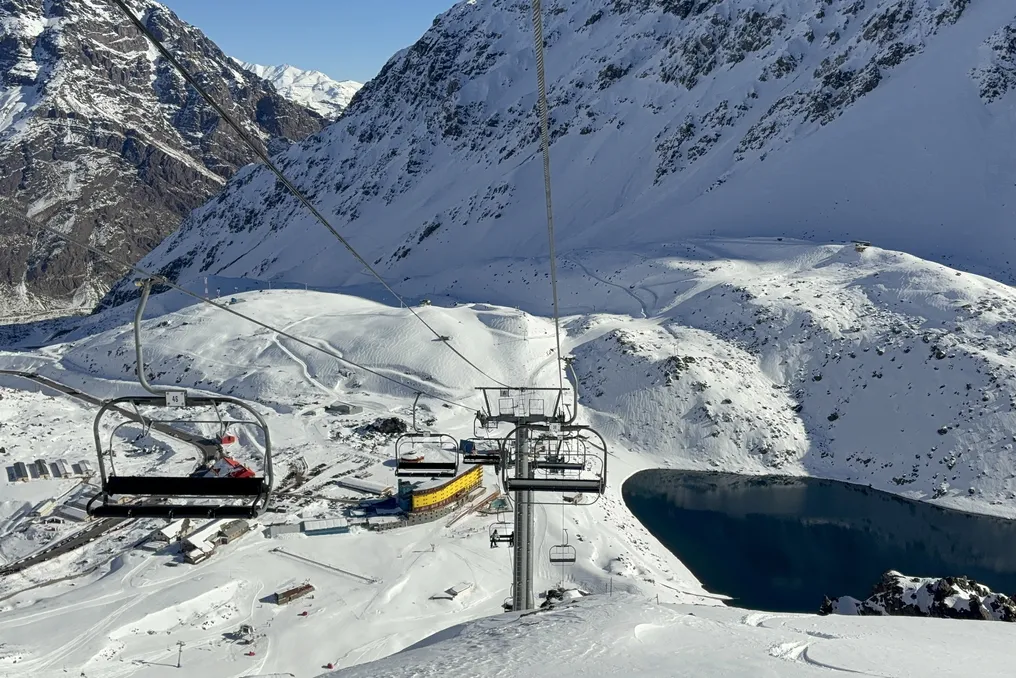
Portillo confirmed the resumption of its winter season last Saturday. The Chilean resort recorded an accumulation of 6.96 meters of snow since the beginning of the season, presenting a base of 2.55 meters in the Hotel Portillo area, which is favorable for skiing and snowboarding.
Local teams dedicated themselves to the preparation and safety of the mountain, carrying out tasks such as removing excess snow, monitoring avalanches, and preparing slopes and cable cars.
In the last 24 hours, the resort received 8 centimeters of snow, and the total accumulated over the last seven days reached 94 centimeters. In the higher areas of the slopes, the snow depth is close to 2.8 meters.
Weather forecasts indicate a change in climate in the coming days. A new cold front is expected to reach the region between Wednesday (5th) and Thursday (6th), promising intense snow and keeping temperatures below zero in the following days.
Located approximately two hours from Santiago, in the center of the Andes Mountains, Portillo is recognized for having a lower concentration of skiers, offering vast off-piste skiing area, and possessing a stunning landscape surrounded by the mountains that form Laguna del Inca.
The resort's infrastructure comprises 34 slopes with different difficulty levels, 14 lifts, and about 500 hectares of terrain suitable for skiing. Furthermore, the facility offers a ski and snowboard school, equipment rental services, a pool, dining options, cinema, gym, and multi-sport gymnasium, along with spaces dedicated to children.
Accommodation options available include Hotel Portillo, the Octagon and Inca lodges, and chalets. Tourist packages are sold in Ski Week format, lasting seven nights, and Mini Week, which lasts three or four nights, covering accommodation, four daily meals, access to lifts, and complex facilities.
The caves of South Africa offer much more than just impressive rock formations. Some open up panoramic views of mountains, others frame dramatic coastal landscapes, and some combine breathtaking natural beauty with the fascinating history of humanity.
These natural formations, from mountain shelters overlooking vast valleys to sea caves framed by crashing waves, provide opportunities to see some of South Africa's most spectacular landscapes. If you are looking for a hike with an unforgettable reward, these caves deserve a place on your travel list.
Located in the Silvermine Nature Reserve, Elephant's Eye Cave is one of the most pleasant destinations for day hikes in Cape Town. The trail is relatively accessible, passing through fynbos before leading visitors to a sandy cave with views of False Bay and the surrounding mountains.
The cave received its name from a distinctive rock formation resembling an elephant's eye and has become a favorite picnic spot for tourists. While the cave itself is impressive, it is the expansive view stretching to the coast that keeps visitors lingering long after they catch their breath.
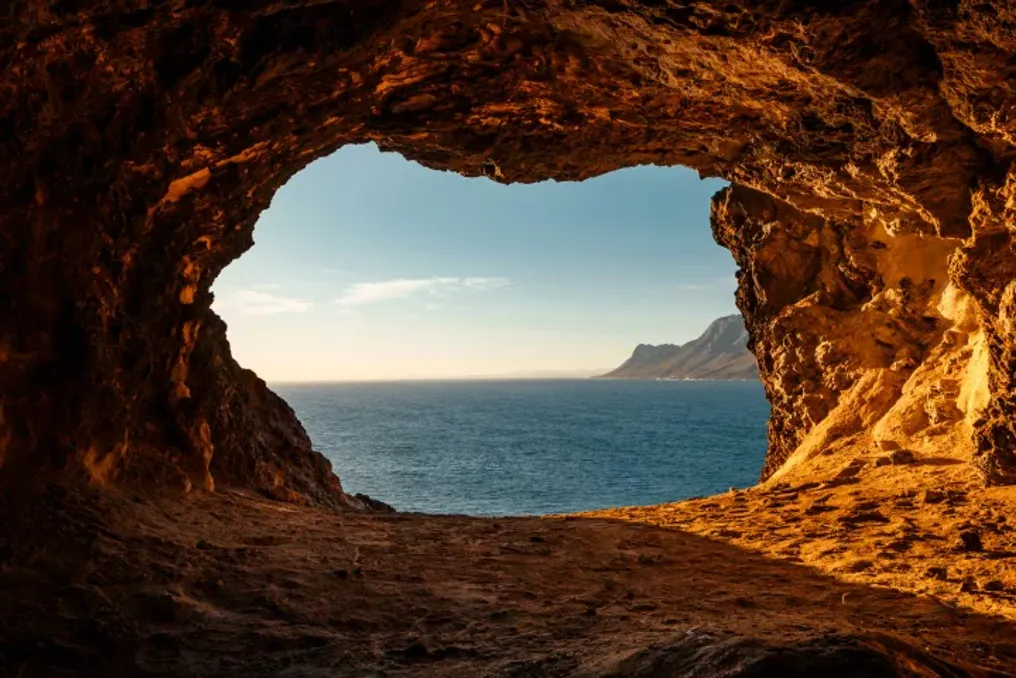
Timing is crucial when visiting Wenkhoeskrans Cave. It is only accessible at low tide and is a massive sea cave located near Arniston on the West Coast. According to local legend, it is so large that it could accommodate full wagons of oxen, which gave it its Afrikaans name meaning 'rocky house for wagons.'
A short walk along the beach to the cave is part of the experience, but inside visitors enjoy dramatic views back to the ocean as waves crash into the entrance. This is one of those places where changing tides constantly transform the landscape.
Situated above Walker Bay near De Kelders, Klipgat Cave combines stunning coastal scenery with a remarkable human history. Archaeological findings indicate that the cave was inhabited by people of the Middle Stone Age thousands of years ago. Today, visitors walk along a short wooden boardwalk through the Walker Bay reserve before entering the cave, which offers unobstructed views of the bay.
During whale season, there is even a chance to see southern right whales from the cave entrance, making it one of the few places where ancient history and world-class wildlife viewing come together.
Not every cave needs stalactites to make an indelible impression. Tarn Cave, hidden in the Southern Drakensberg, is a popular overnight stop for tourists traversing the region's mountain trails. Located high above the valleys, it offers panoramic views of rolling peaks and dramatic cliffs.
Watching the sunrise from the cave entrance is a reason enough for the climb. The cave has become a favorite spot for experienced hikers wishing to immerse themselves in one of South Africa's most picturesque mountain landscapes.
Near Wilderness, Caimans Grotto offers a completely different cave experience. The cave is accessible via an old railway line near the Caiman River; it opens onto the Indian Ocean from under a rocky overhang. The site has also attracted attention due to its unusual history, as a long-time resident, Clifford Brandon, converted it into an improvised museum and shelter.
Whether it is the cave's history or the continuous ocean views that attract visitors, this location offers a memorable stop along the Garden Route. Tourists should exercise caution when visiting this area, especially near the old railway bridge.
Aasvuelkrans Cave proves that sometimes the best views require extra effort. One must descend a steep staircase to reach it, and the cave opens onto a stunning waterfall hidden in the Mpumalanga landscape. The combination of the cascading waterfall, towering rocks, and sheltered cave creates one of the province's least known scenic spots.
For tourists exploring the surrounding reserve, it is an ideal place to take a break for a picnic before continuing the route.
Many of South Africa's most scenic caves are located in protected areas or along hiking trails, and conditions can change depending on weather, tides, and seasonal access. Coastal caves should only be visited during safe low tide periods, while mountain caves require appropriate hiking gear and careful planning. Always check local conditions before heading out and, if possible, stay on marked trails.
The caves of South Africa offer much more than dark chambers and ancient rock formations. Some open up to vast mountain views, others frame endless ocean horizons, and some combine natural beauty with millennia of human history. Whether you are chasing the sunrise in the Drakensberg or watching waves crash against a sea cave on the coast, these underground viewpoints remind us that sometimes the best views are right inside the entrance.
Spices are always an integral part of Indian cuisine, lending dishes a special flavor. Cinnamon, being a dry spice, is widely used in most Indian homes. Most often, it is used to enhance the taste of pulaos, biryanis, vegetable dishes, sweets, or tea.
However, this small spice is not limited to food; it is a useful remedy that can be applied in many household chores due to its aroma and natural properties. If you have cinnamon in your kitchen, you can use it to solve various minor tasks.
Homemade Air Freshener
If you want to achieve a light scent in a room without using chemical products, you should boil water in a pot, adding 2-3 cinnamon sticks, a little clove, and orange or lemon zest. This way, you can create a homemade freshener whose spray will provide a fresh smell throughout the house.
Reducing Odor in the Refrigerator and Cupboard
During the rainy season, unpleasant odors often appear in cupboards and refrigerators due to old vegetables. In such cases, you can place a cinnamon stick or a little of its powder in a small piece of cloth or a bowl and place it in the refrigerator or cupboard. This will help maintain a light and natural aroma, although regular cleaning remains necessary.
Deterring Ants
Cinnamon can also repel ants because they avoid its scent. Traditionally, people used cinnamon powder in areas where ants appear. Its strong aroma can help keep insects away from certain paths, although the effectiveness of this method may vary depending on the location and situation.
Enhancing the Taste of Tea and Coffee
If you regularly drink tea or coffee, adding a small piece of cinnamon or a pinch of powder can give the drink a new accent in taste and aroma. This enhances the flavor of the drink without extra effort, giving ordinary tea or coffee a richer and more pleasant taste, comparable to restaurant quality.
Use in Holidays and Decor
Cinnamon sticks are also used to decorate candles, potpourri, gift wrapping, and table settings. Its natural aroma and beautiful appearance make the decor even more special.
To make potpourri, you can collect dried flowers, orange zest, cloves, and cinnamon sticks in one bowl. This helps not only to decorate the room but also to maintain a light aroma.
Important Points to Consider