During the weekend, several relevant topics in Science and Technology were addressed. A highlight was the entry into force of a new phase of the Artificial Intelligence Act in the European Union (AI Act).
During the weekend, several relevant topics in Science and Technology were addressed. A highlight was the entry into force of a new phase of the Artificial Intelligence Act in the European Union (AI Act).
Although the regulation was formally implemented in August 2024 and some standards were already active since 2025, most of the AI Act's guidelines became valid starting this Sunday (2). This legislation categorizes AI systems based on the level of risk they present, imposing distinct obligations for each group. With this new implementation stage, companies that create and use such technologies face stricter requirements, including the need for transparency in AI-generated content and the start of supervision of general-purpose AI models by the European Commission.
In another piece of news, Google decided to reverse and begin disabling an artificial intelligence feature in Google Earth, just one day after its launch. The tool, introduced on Thursday (30), allowed for the creation of AI-generated images overlaid on real satellite, aerial, and 3D photos from the platform, using text commands. The decision was communicated on Friday, following reports from users sharing materials that, according to the company, violated its policies.
This feature used the Nano Banana 2 model and was designed to stimulate creative uses of geography. However, the functionality quickly received criticism due to its potential to generate fictional scenarios about real locations, which raised concerns about the spread of fake news.
Another notable case involves Germany, where the Federal Court of Justice began analyzing a case last week. This case questions whether the leak of private WhatsApp messages constitutes a violation of data law in the European Union. The situation began with the end of a friendship, when messages exchanged by an employee of a medical clinic with a friend, complaining about the boss, ended up reaching the boss's wife, who also worked at the location. Subsequently, the employee was fired.
The main controversy lies in determining whether the forwarding of these messages constitutes an infringement of the General Data Protection Regulation (GDPR), which is the European equivalent of Brazil's LGPD.
In space, SpaceX released a new video captured by Starlink V3 satellites, showing the Starship in full flight during the 13th rocket test, conducted on July 24. Six of the launched satellites were equipped with cameras to monitor the performance of the upper stage's heat shield. The material also exposed operational details of the flight, such as the functioning of parts of the engines and attitude control systems during the mission.
Additionally, NASA admitted that its most advanced spacesuit is not suitable for Mars. This conclusion was reached by a team of engineers from the agency and industry during a presentation at the 55th International Conference on Environmental Systems (ICES). The suit in question, called the Exploration Extravehicular Mobility Unit (xEMU), was developed for the Artemis missions on the Moon. Despite being a modern engineering feat, weighing 170 kg, it offers resistance to large pressure differences, wide mobility, and is modular. However, in Martian gravity, which corresponds to 3/8 of Earth's, it would add 64 kg to the astronaut. On the Moon, where gravity is 1/6 of Earth's, the same suit would only weigh 28 kg.
The astronomical calendar for August promises interesting events for celestial observers, including two eclipses—one solar and one lunar—in addition to the peak of the Perseid meteor shower. Besides these phenomena, there are other astronomical events scheduled for the month.
Weekly, Olhar Digital publishes a special on YouTube to delve deeper into topics of Science or Technology. On this occasion, the focus was on the search for extraterrestrial life, which is entering a new phase. The video demonstrates how NASA plans to increase the chances of detecting signs of life in the Universe through two ambitious missions: the Nancy Grace Roman telescope, which will be launched soon, and the future Habitable Worlds Observatory (HWO), designed to search for biosignatures on Earth-like planets.
To explain how these observatories can revolutionize astrobiology, there was an exclusive conversation with Raíssa Estrela, a researcher at NASA's Jet Propulsion Laboratory (JPL) and a member of the Habitable Worlds Observatory team. During the report, she detailed the inherent challenges in detecting life outside of Earth, the technologies under development, and why the HWO could mark a turning point in space exploration.
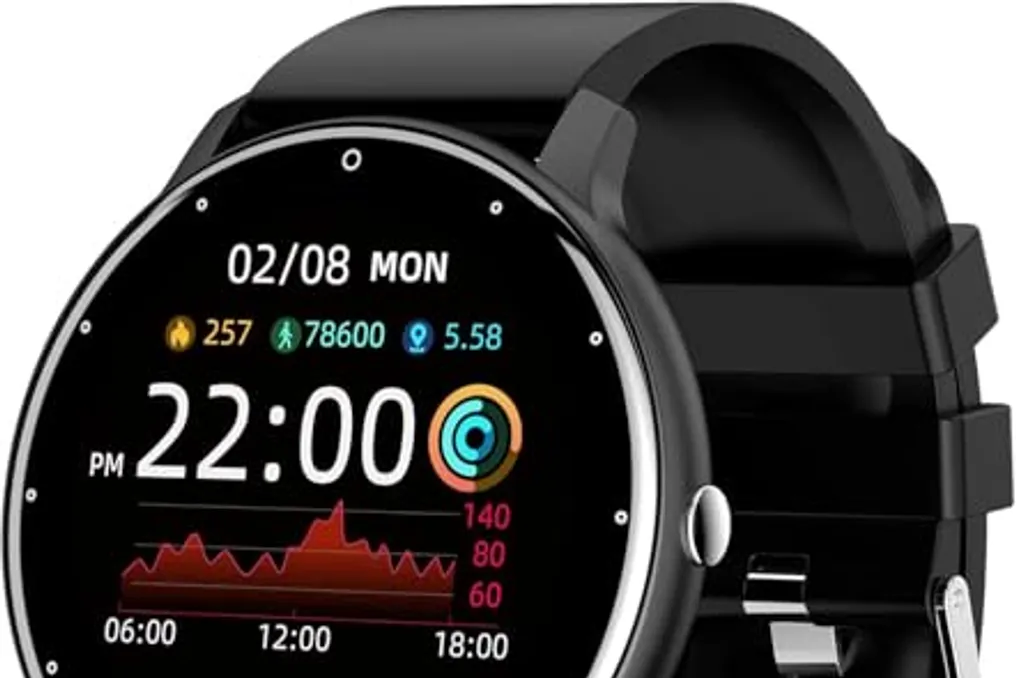
If the consumer is considering purchasing a smartwatch, this is an opportune moment to check the offers available on Amazon. Three options have been selected that meet different needs, ranging from basic users to those who require advanced health monitoring and integration with artificial intelligence.
The Haiz HZ-ZL02D model features a 44mm case and has an IP67 water resistance certification, positioning it as an accessible entry-level option in the smartwatch market. It includes physical activity monitoring and notifications from the smartphone, making it ideal for those seeking daily practicality without complexity.
The PEJE offers a 1.28-inch HD touch screen, has IP68 certification, and the functionality to make calls via Bluetooth. Furthermore, its battery can last between five and seven days. This device is compatible with both iOS and Android systems and includes an extra strap, offering over 123 sports modes for those who like to diversify their exercises.
For those seeking the most modern, there is a smartwatch that incorporates ChatGPT directly on the wrist. Its 1.43-inch AMOLED screen provides a crisp image, and the 3ATM resistance allows for use in aquatic environments. This device monitors heart rate and sleep, supports one hundred sports modalities, and comes equipped with two straps—one graphite and one blue—to vary the style.
It is important to note that promotions like these tend to change rapidly, and availability and sales conditions may change at any time. If any of these models pique your interest, it is recommended to visit the product page before the stock runs out or prices increase.
Second-generation ethanol (E2G), which is generated from sugarcane residues, offers an alternative to expanding biofuel production without requiring more cultivated areas. Unlike traditional ethanol, this type of fuel uses materials remaining after the production of sugar and first-generation ethanol.
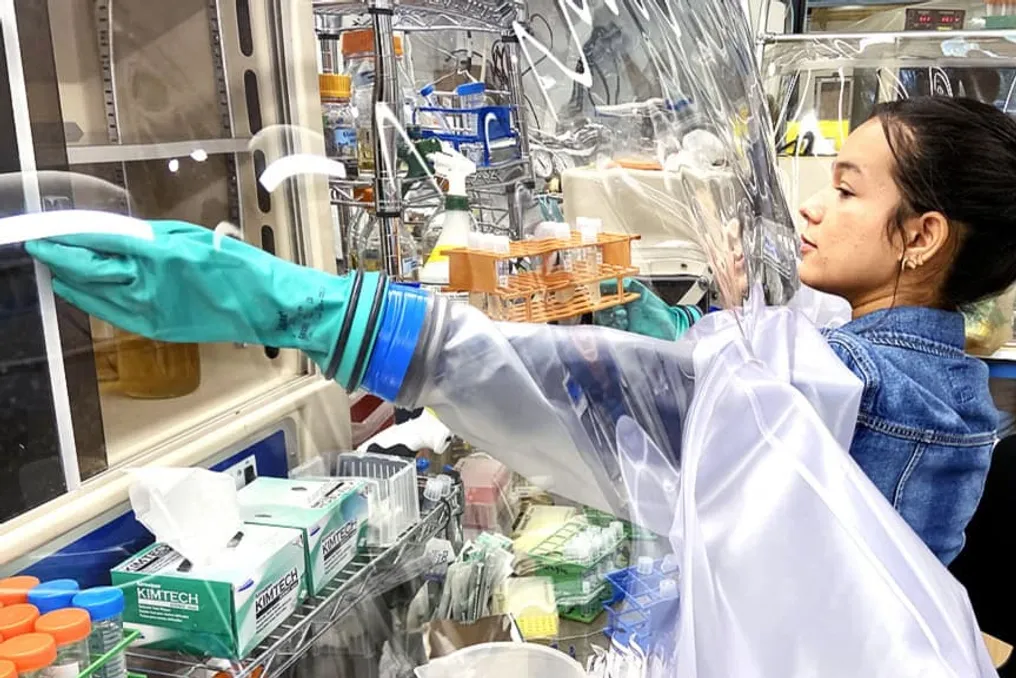
Research conducted at the State University of Campinas (Unicamp), in collaboration with institutions in the United States, aims to overcome one of the biggest hurdles for this technology: the costs and efficiency of the production process. The study focused on creating bacteria that underwent genetic modifications, with the goal of increasing ethanol production yield.
This work was carried out at the Center for Molecular Biology and Genetic Engineering (CBMEG) at Unicamp and resulted in a patented and licensed technology for the American company Terragia Biofuel. Preliminary tests demonstrated a yield increase of up to almost 30% compared to unaltered bacteria.
E2G uses bagasse and other vegetable debris remaining from sugarcane processing as raw material. These materials contain sugars trapped in fibrous structures, which can be released through treatments and hydrolyses to produce more ethanol.
The fundamental distinction from first-generation ethanol lies precisely in the utilization of this residual material. While the classic model primarily focuses on sugarcane juice, the second generation seeks to convert previously discarded parts into an extra energy source.
In addition to increased biomass utilization, E2G has a lower environmental impact. This is because its greenhouse gas emissions can be up to 80% lower than those of common ethanol and up to 93% lower than gasoline.
Despite these advantages, industrial-scale production still faces financial difficulties. The usual method of producing E2G depends on biomass treatment phases and the use of enzymes to release the sugars necessary for fermentation, which increases operational costs.
The research conducted by Unicamp proposes a distinct approach, called Consolidated Bioprocessing (CBP). This strategy employs thermophilic anaerobic bacteria capable of decomposing biomass and performing fermentation in a single step, reducing the need for prior procedures.
The study involved the bacterium Clostridium thermocellum, known for its ability to decompose cellulose, and Thermoanaerobacterium thermosaccharolyticum, a microorganism with high efficiency in ethanol generation. The researchers' intention was to combine complementary attributes of these organisms through genetic engineering.
The doctoral research by Layse Costa de Souza, developed at Unicamp's CBMEG, investigated which proteins were linked to the high performance of the ethanol-producing bacteria. Based on this identification, the genes relevant to these proteins were incorporated into the bacteria used in the CBP process.
The result was a modified strain with expanded production capacity. In laboratory tests, one of the created versions showed a yield increase of 59.8% to 88.5% of the theoretical maximum after the inclusion of a specific hydrogenase.
The study also provided a new perspective on the role of hydrogen in the metabolism of these bacteria. The team found that an enzyme called HfsD, previously considered a potential competitor to ethanol production, participates in crucial mechanisms for the chemical balance required in biofuel formation.
This discovery may help improve future metabolic engineering tactics, as it indicates that optimizing ethanol production is not just about intensifying the activity of certain proteins, but also about controlling the balance of molecules involved in cellular reactions.
The experiments are still limited to bench scale and require further evaluations before being applied industrially. Future challenges include testing the performance of the modified bacteria in bioreactors and confirming whether the results obtained in the laboratory hold up at larger volumes.
The project was developed at Unicamp's Second Generation Advanced Biofuels Laboratory, involving Brazilian and American scientists. The technology has been granted patent protection and will proceed to expansion phases supervised by the licensed company.
The administration of President Donald Trump is developing new regulations aimed at blocking the entry of Chinese components into the United States that are used in data centers. This proposal, being conducted by the Federal Communications Commission (FCC), seeks to strengthen the protection of essential infrastructure for the functioning and development of artificial intelligence systems.
The initiative was reported by Reuters on Tuesday (4), and if it progresses, it could be published as early as 2026. The plan establishes limitations on the import of optical transceivers manufactured by Chinese companies, which are crucial devices for high-speed data transmission through fiber optic cables within processing centers.
Sources familiar with the matter indicate that the main objective is to mitigate risks related to national security, preventing sensitive equipment from being integrated into the American technological chain before becoming a fundamental part of the country's infrastructure.
The proposal under review by the FCC specifically focuses on optical transceivers, vital components for transporting information via fiber optic cables in data centers. Such equipment is indispensable both for communication between servers and for the operation of structures used in training and executing artificial intelligence models.
According to sources consulted by Reuters, the government assesses that these devices can create points of vulnerability, facilitating data theft, the insertion of malicious software, or even the paralysis of strategic services.
The report emphasizes, however, that the restriction has not yet received official approval. People close to the debates confirmed that the proposal is still in the drafting phase and may undergo changes or be discarded before publication.
Divyansh Kaushik, an artificial intelligence policy expert at the consultancy Beacon Global Strategies, commented that supply chain protection must keep pace with the growth of data centers. He told Reuters: “Transceivers definitely represent a risk. As data center expansion scales up, it is necessary to ensure the supply chain is secure from the beginning.”
The apprehension by US authorities lies in preventing a recurrence of a situation similar to that experienced with Huawei equipment. Government members believe that the widespread use of this company's products in telecommunications infrastructure made the replacement process slow, costly, and incomplete after the imposition of sanctions by the United States.
Although the FCC has a history of independence, Reuters recalls that a decision by the US Supreme Court, issued in June, reinforced President Donald Trump's powers over certain regulatory bodies, validating the dismissal of a Democratic member of the Federal Trade Commission.
If the measure is implemented, one of the corporations most susceptible to being affected is the Chinese company Zhongji Innolight, identified as one of the largest global suppliers of optical transceivers. This company was included in June in the U.S. Department of Defense list of organizations accused of maintaining ties with the Chinese military sector.
Data cited by Reuters shows that Innolight holds about 27% of the global market for these data center equipment and generates approximately 90% of its revenue outside of China.
In contrast, American manufacturers such as Coherent and Lumentum are among the companies that could benefit from the regulatory change. However, a report by the Foundation for American Innovation points out that these companies do not yet have sufficient capacity to fully replace Chinese suppliers.
Reuters also indicates that cloud computing companies, such as Amazon Web Services (AWS), may face increased costs if they need to switch to other manufacturers.
This possible ban is part of a set of recent actions adopted by the FCC against Chinese equipment deemed sensitive. The agency had already announced restrictions covering drones, routers, robots, and inverters, using the so-called “Covered List,” created by the American Congress to prevent the future commercialization of items classified as a threat to national security.
The article also mentions that the Department of Commerce had suspended, following a trade truce signed the previous year, a set of measures that also targeted Chinese equipment for data centers. Given this landscape, the FCC assumed a central role in implementing new restrictions targeting the sector.
In response, the Chinese Embassy in Washington declared that the United States should take into account the opinions of the business community of both countries and cease attacks on Chinese companies through accusations and sanctions. The diplomatic mission added that Beijing will take the necessary measures if its interests suffer material damage.