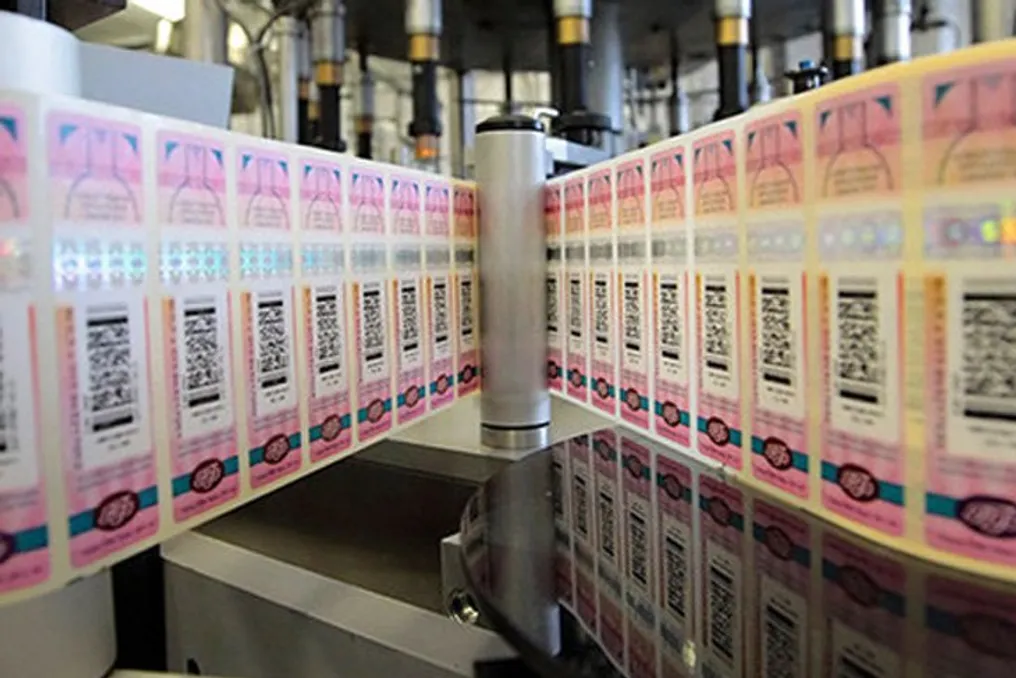
A proposal has been put forward in Uzbekistan to change the excise tax system for alcoholic beverages, which involves increasing excise duties while simultaneously lowering final retail prices.
A proposal has been put forward in Uzbekistan to change the excise tax system for alcoholic beverages, which involves increasing excise duties while simultaneously lowering final retail prices.
The Institute suggests increasing the excise rate from 63 to 70 thousand soums in 2027, but taking into account the projected alcohol rate, which is estimated at 25 thousand soums. Thanks to this change, the cost of one liter of vodka could potentially drop to 45 thousand soums.
Furthermore, due to the increase in excise taxes next year, including fortified wine (increasing from 12,000 to 12,600 soums), natural wine (from 10,000 to 10,500 soums), and beer (from 4,000 to 4,200 soums), the country's budget could receive an additional 62.1 billion soums, according to the institute's calculations.
For the successful implementation of these measures, it is proposed to make corresponding amendments to the Tax Code and develop a special support program for entrepreneurs. This program should include duty-free import of equipment, provision of preferential loans, and simplification of the certification procedure. Analysts also recommend publishing excise rates for a three-year period in advance.
It was previously reported that in 2026, Uzbekistan will begin the phased equalization of excise rates for both domestic and imported alcohol and tobacco, in line with WTO requirements.
The Institute for Reducing the Share of the Shadow Economy, Improving Tax and Customs Administration, and Fiscal Analysis at the Ministry of Economy and Finance has put forward an initiative to unify the approach to paying the social tax for individual entrepreneurs (IEs) and self-employed individuals in Uzbekistan. This idea was presented during a fiscal dialogue on July 30th.
Currently, both categories use the same basic calculation unit (BCU) of 412 thousand soms, which will increase to 440 thousand soms starting September 1st. However, the frequency of payments differs.
According to Part 1 of Article 408 of the Tax Code, IEs are obliged to pay the social tax monthly in an amount of no less than one BCU, equivalent to 5.28 million soms per year. Self-employed individuals, according to Part 2 of the same article, have the option to voluntarily pay 1 BCU per year to count this period towards their employment record. After the BCU increase, their annual payment will be 440 thousand soms, which is approximately 36.7 thousand soms per month.
The presentation noted that the financial burden on an individual entrepreneur is twelve times higher than the burden on a self-employed person. This difference is partly due to the fact that IEs, unlike self-employed individuals, can hire up to five employees and conduct retail trade, giving them a broader scope of activity and additional opportunities.
The Institute recommends abandoning the existence of two parallel systems with significant differences in payment amounts and transitioning to a single category of self-employed individuals. International experience is cited as a reference, where contributions are usually tied to declared income or minimum wage.
The proposal is to calculate the minimum social tax based on the minimum wage (MW) rather than the BCU. Applying the basic rate of the social tax established by Article 405 of the Tax Code to an MW of 1.36 million soms would result in a monthly payment of 163.2 thousand soms, or almost 1.96 million soms per year.
At the same time, the proposed amount would be approximately 4.45 times higher than the current voluntary payment of self-employed individuals (about 36.7 thousand soms per month), but it would be 2.7 times less than the minimum payment that IEs would have to make after the BCU increase.
The Institute does not insist on introducing a one-time targeted payment. Instead, it proposes starting with a monthly contribution of about 50 thousand soms, followed by a gradual increase to 163.2 thousand soms according to an approved schedule.
It is important to note that this initiative represents an analytical proposal from the Institute and does not yet have the status of an adopted legislative act or bill.
As of July 1, 2026, 375.1 thousand individual entrepreneurs were registered in the country. The number of self-employed individuals varies across sources—from 2.8 million to 5.5 million.
Economist Otabek Bakirov stated that the principle of equality when revising the social tax should apply not only to IEs and self-employed individuals but also to enterprises that benefit from 1% preferential or reduced rates. He suggested considering the introduction of a minimum mandatory payment for such beneficiaries, similar to the procedure for paying land tax and property tax by some exempted legal entities. Bakirov emphasized: 'Strength becomes justice only when it is applied equally not only to the weak and small, but also to the strong and large. Only then does trust in such justice appear.'
Furthermore, it was learned in mid-July that the authorities plan to make pension contributions mandatory for self-employed individuals. Currently, 2.8 million self-employed individuals are registered in Uzbekistan, but only about 800 thousand people, or 30%, voluntarily make the corresponding contributions. The existing system allows a self-employed person to pay one BCU—412 thousand soms—and receive one year of service for pension purposes.
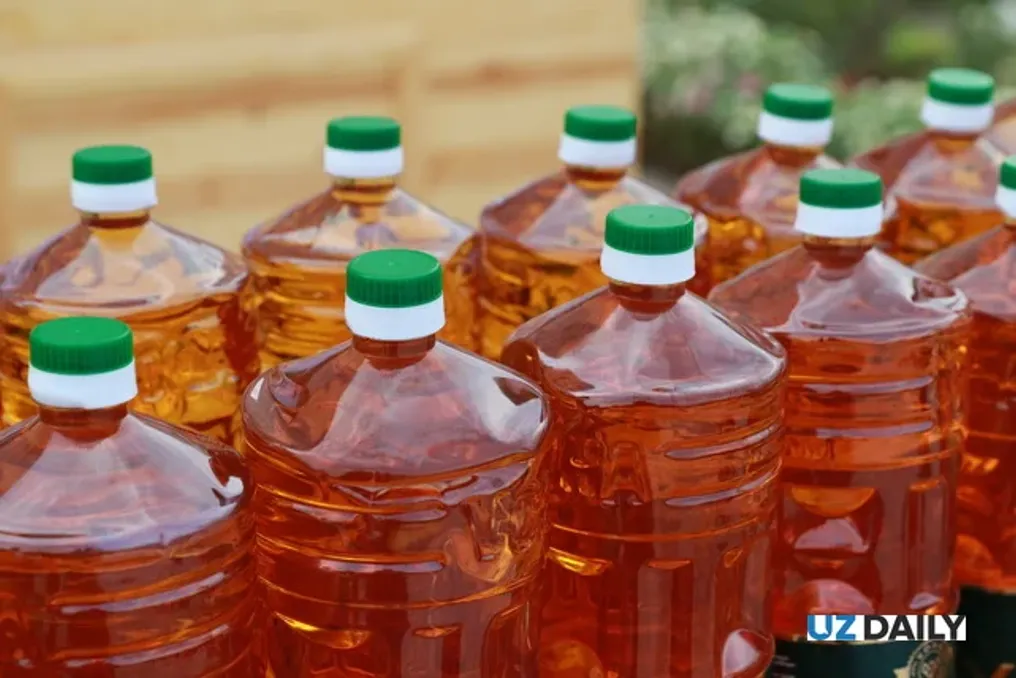
A proposal has been put forward in Uzbekistan to introduce an excise tax on imported palm oil. This initiative was presented by the Institute for Reducing the Shadow Economy, Improving Tax and Customs Administration, and Fiscal Analysis under the Ministry of Economy and Finance. The proposal was voiced on July 30 during a fiscal dialogue.
The Institute suggests setting a specific excise rate of 139 US dollars per ton, equivalent to approximately 1.7 million soums. The initiative's authors calculated that this rate would account for about 10% of the average cost of importing palm oil in 2026, which is estimated at 1388 US dollars or 16.93 million soums per ton.
According to calculations, with an annual import volume of 12.8 thousand tons, the introduction of the new excise tax could supplement the state budget with approximately 21.7 billion soums in additional revenue.
The developers justify this initiative by stating that the market price of palm oil does not reflect the social costs associated with its consumption, including healthcare expenses. The presentation notes that in economic theory, such taxes are considered a tool for accounting for negative externalities.
The authors also believe that consumers are not always aware of the potential risks associated with consuming products high in saturated fats. Since palm oil is often used in processed food ingredients, the institute believes that labeling is insufficient, and pricing mechanisms can serve as an additional means of regulating consumption.
The presentation cites recommendations from the World Health Organization, outlined in its 2016 report 'Fiscal Policy for Diet and Prevention of Noncommunicable Diseases,' according to which taxing foods high in saturated fats can be considered a measure to prevent noncommunicable diseases. Furthermore, the authors refer to the World Bank's position that such excises can simultaneously influence consumption patterns and provide additional budgetary revenues.
The Institute also points out that current tax benefits and zero rates create a price advantage for certain types of fats compared to alternative products. The developers believe that introducing an excise tax will help partially eliminate this imbalance. The materials from the event where the proposal was presented for discussion within the framework of the fiscal dialogue did not contain information regarding a decision on its implementation.
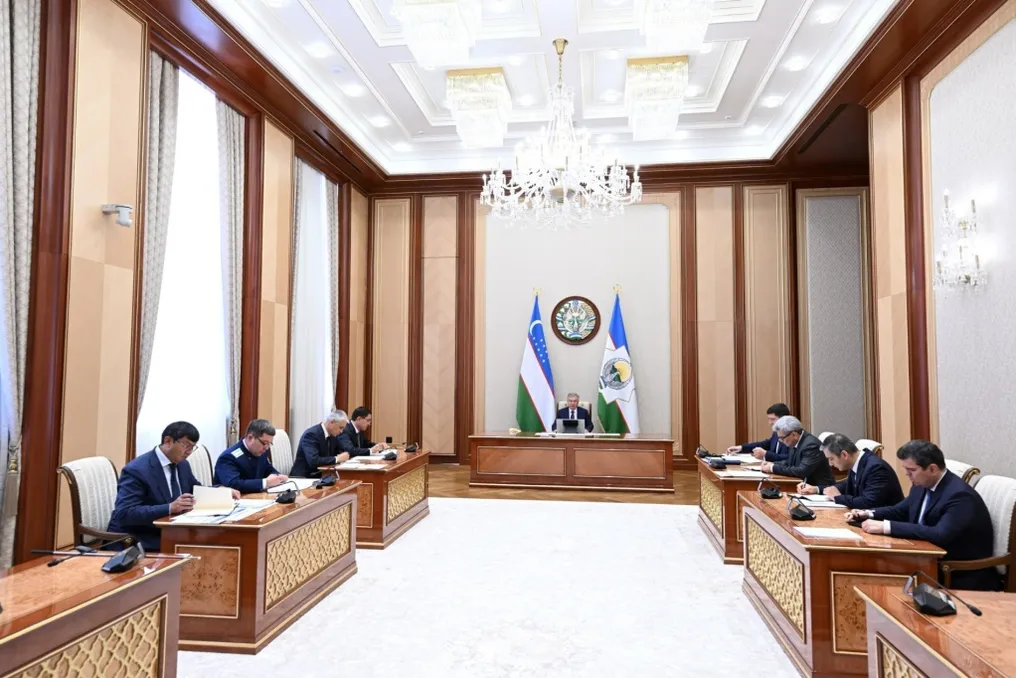
Additional funding of $1.3 billion has been planned in Uzbekistan for the further development of water supply and sewage infrastructure. The President of Uzbekistan, Shavkat Mirziyoyev, participated in a presentation dedicated to the development of drinking water supply and wastewater disposal systems.
In the coming years, state bodies aim to raise the coverage of centralized water supply to 90% and the urban sewage system to 80%. Over the past years, investments in this area have increased tenfold, reaching a volume of $2.7 billion. Thanks to these investments, the share of the population provided with centralized drinking water supply has grown from 63% in 2017 to nearly 83%.
During this period, 7.7 million residents gained access to water for the first time, the quality of supply improved for 11 million people, and 1.1 million residents were connected to the sewage system. The total length of constructed and repaired networks includes 39 thousand kilometers of water pipelines and 3,200 kilometers of sewage networks.
To achieve the set goals, additional funds of $1.3 billion need to be attracted. However, the president noted that the current system for preparing and implementing projects does not provide sufficient operational speed to solve accumulated problems. For example, 107 billion soms were recently allocated to address sewage problems in Andijan, and work has begun in the Sergeli district of Tashkent to install modern filters to combat unpleasant odors.
Special attention is paid to the project of supplying drinking water from the Tupalang reservoir. Water pipelines have already been extended to Termez, and by the end of the year, it is planned to supply Sherabadsky, Muzrabadsky, Angorsky, and Jarkurgansky districts of Surkhandarya region with water. At the meeting, the task was set to provide centralized water supply to another 513 mahallas and improve the water supply quality in 3,000 mahallas. Authorities also intend to replace 232 thousand water distribution columns with direct household connections to the networks.
By the end of the current year, projects totaling $600 million are expected to be implemented in the country. These projects include the construction of 1,600 kilometers of water pipelines and 387 kilometers of sewage networks, as well as the construction of 80 water supply facilities and 29 sewage facilities. As a result of this work, 310 thousand residents of 107 mahallas will receive centralized drinking water supply for the first time, and the water supply quality for 2.5 million people in 453 mahallas will significantly improve.
Furthermore, the president ordered the acceleration of the implementation of a $217 million project related to supplying drinking water from the Ghissarak reservoir in Kashkadarya region. After the completion of this project, residents of Kamashinsky, Guzarsky, and Karshinsky districts, as well as the city of Karshi itself, will be provided with quality water supply. It was also ordered to accelerate the signing of credit and grant agreements for projects in Fergana, Surkhandarya, and Jizzakh regions, and to complete negotiations with foreign partners on six projects totaling $317 million by September 1.