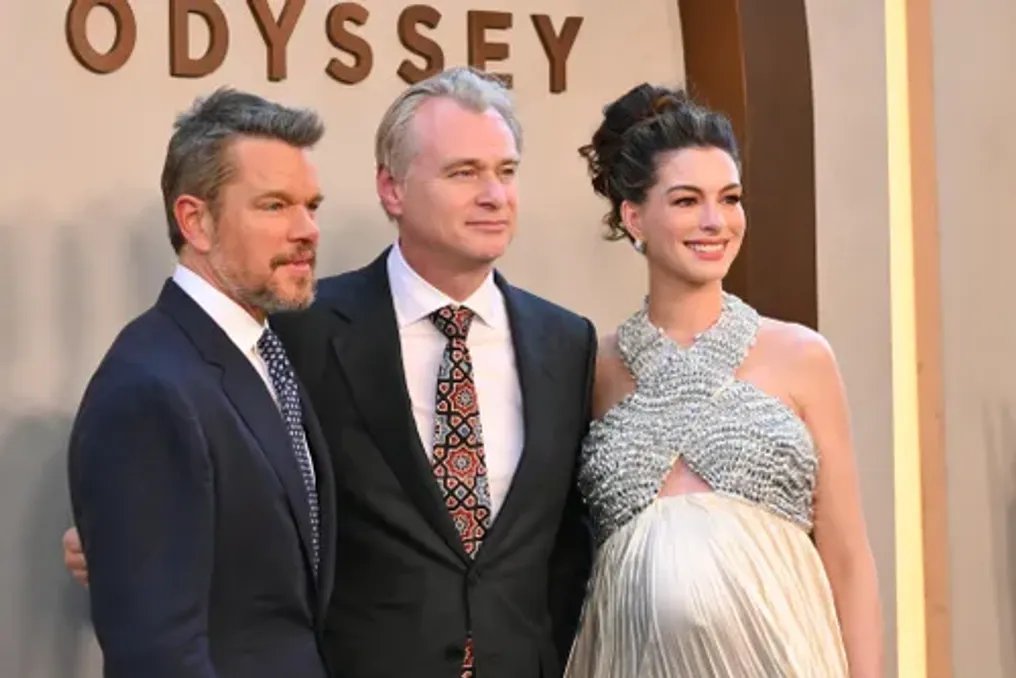
Christopher Nolan's film 'Odyssey' not only revived interest in Homer's epic but also inspired travelers to visit the real landscapes that formed the basis of the story on screen.
Christopher Nolan's film 'Odyssey' not only revived interest in Homer's epic but also inspired travelers to visit the real landscapes that formed the basis of the story on screen.
Instead of relying heavily on studio sets, the Oscar winner filmed in some of the world's most impressive natural and historical locations, including Greece, Sicily, Morocco, Iceland, and Scotland. The result was a cinematic journey through ancient castles, volcanic coasts, secluded beaches, and age-old settlements that fans can now experience themselves.
Below are the real filming locations of 'Odyssey' that you can add to your travel bucket list.
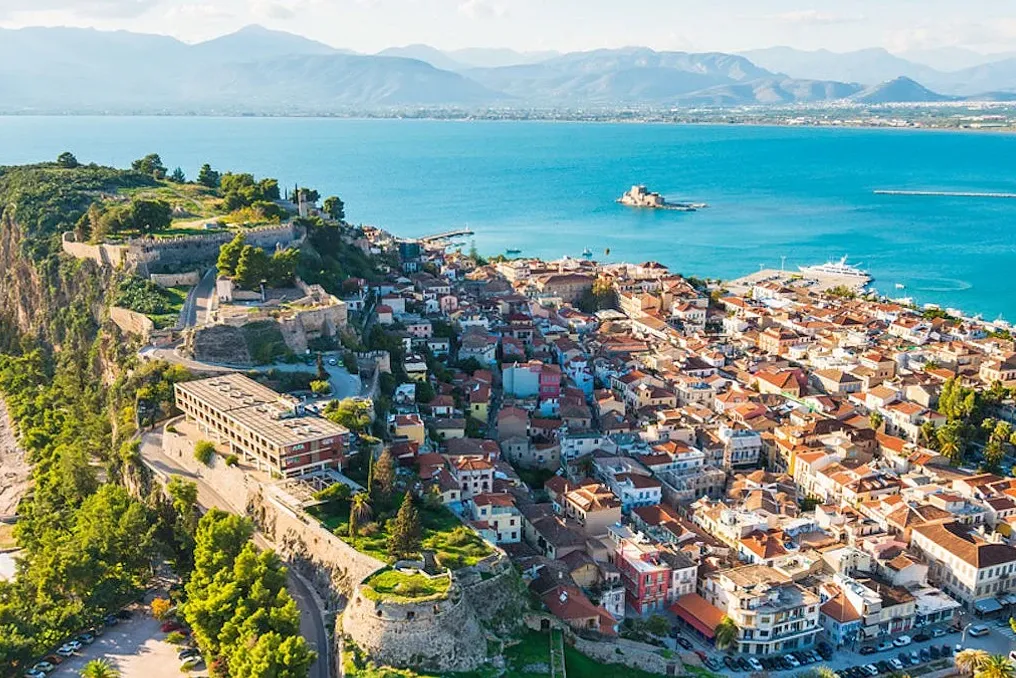
The Peloponnese served as one of the film's most important backdrops. Scenes were shot at the famous Watergully Beach, Nestor's Cave, and the medieval Metoni Castle. This region, known for its turquoise waters, archaeological sites, and rugged coast, offers visitors the opportunity to explore some of Greece's most iconic landscapes while tracing Odysseus' legendary journey.
In Polyphemus' cave, the Cyclops, Odysseus blinds the giant before escaping. A shipwreck scene was also filmed near Watergully Beach.
Christopher Nolan filmed in both western and eastern Sicily, capturing the island's dramatic coastline and volcanic landscapes. On Favignana, located off the west coast of Sicily, the crystal-clear water and rocky cliffs helped create some of the scenes set on the island. In eastern Sicily, the volcanic landscapes and views around Taormina and the nearby Aeolian Islands added another layer to the mythical adventure. This island also serves as Ithaca, where the fortress is used as Odysseus' palace and place of return.
The ancient architecture and desert landscapes of Morocco were transformed into the city of Troy for the film. Filming took place in the vicinity of Marrakech, Essaouira, Ouarzazate, and the UNESCO World Heritage site of Ait Benhaddou—a fortified village that has appeared in many Hollywood productions, including 'Gladiator' and 'Game of Thrones'. It was here that Troy was recreated, including the Trojan Horse and the final moments of the city after the war.
Iceland
Iceland's dramatic black sand beaches, volcanic terrain, and winding rivers provided some of the most otherworldly visuals for 'Odyssey'. The country's raw natural beauty has long attracted cinematographers, and visitors can explore lava fields, waterfalls, and geothermal landscapes that seem almost mythical. The black sand beaches and volcanic scenery depict Hades (the Underworld), where Odysseus goes in search of the prophet Tiresias.
Scotland also holds an important place in the film, especially the Mòre coast, where Findlater Castle and nearby beaches created a rugged backdrop for several scenes. The dramatic ruins on the cliff edge overlooking the North Sea remain one of Scotland's most picturesque historical attractions, accessible to visitors year-round.
Film-motivated travel continues to grow as fans seek to see the real locations behind their favorite movies and TV shows. According to luxury travel company Matt Concierge, which recently highlighted destinations featured in 'Odyssey', many travelers are increasingly looking for bespoke itineraries that combine cinematic spots with cultural experiences and luxury accommodation.
Mathew Shaw, founder of Matt Concierge, stated: 'Cinema has an incredible ability to make people want to personally visit a certain place, but our clients rarely look for a standard tour.' He added: 'They want to explore privately, comfortably, and in a way that feels completely personal. With proper planning, the landscapes shown in 'Odyssey' can be an exceptional journey in themselves.'
Christopher Nolan's film 'Odyssey' is a magnificent interpretation of Homer's ancient Greek epic poem, which remains relevant throughout the centuries. However, no adaptation can fully convey the depth and complexity of the original source. Nolan reinterprets many key myths of the poem and touches upon some of Homer's main themes. The film, released in theaters this week, will likely appeal to most viewers, although it may displease those who expected a more faithful adherence to the original.
The story of Odysseus in Nolan's version begins as a retelling. The King of Ithaca, played by Matt Damon, participates in the ten-year war of the Greeks against the eastern city of Troy. After this, he spends another ten years overcoming incredible obstacles on his way home to his devoted wife Penelope, played by Anne Hathaway, and their son Telemachus, played by Tom Holland. In Homer's original poem, much of these events are already presented as memories. Odysseus himself recounts the most famous moments of his journey, such as meeting the monstrous Cyclops who eats men, or being tested by the deceptive sorceress Circe. In the poem, he asks himself: 'What should I tell first?' and 'What should be last?'
Homer posed a question to artists about the correct way to narrate this story. From the 8th century BCE, presumably when the poem was created, creators constantly restructured and rewrote its main plotlines. Any film adaptation, whether it was the silent film of 1911 featuring three directors, including Giuseppe De Nigro, or the 2000 sitcom by the Coen brothers 'O Brother, Where Art Thou?', faces similar tasks and opportunities. Like Odysseus, anyone recreating the 'Odyssey' must decide what to include, what to exclude, and where to begin.
Nolan's transformation of the poem has been subjected to intense scrutiny for over a year. Tech magnate Elon Musk previously stated that Nolan 'desecrated the Odyssey' by casting trans actor Elliot (formerly Ellen) Page as one of the Greek heroes and Black actress Lupita Nyong'o as the legendary beauty Helen of Troy. Despite the sharpness of these attacks, there is some truth to them. Many classical works have recently been subjected to inaccurate adaptations by creators who desire the prestige of classics but despise their content. Rachel Ziegler, star of the flop Disney film 'Snow White' (2025), condemned the original as 'extremely outdated regarding ideas about women in leadership roles.' Because 'The Odyssey' is so enduring, many people remain fierce defenders of the work.
However, all the pre-premiere hype seems insignificant once Nolan's film begins. The director does not attempt to make a statement about race or gender, except for a few fleeting remarks about Penelope's frustrations. What dominated online aggression turns out to be negligible in the film itself. Instead, Nolan is most captivated by the scenic sketches from the story, which he brings to the screen with captivating mastery. He does not shy away from the supernatural; the scene where Circe turns Odysseus's crew into pigs is a stunning and insane moment. Homer's grandeur is evident in the panoramic views of the ocean and the majestic interiors of the palaces.
Nolan is also interested in some thematic questions raised by Homer, especially concerning the subtle social contract that prevents civilization from descending into barbarism, as well as the interconnection between personal responsibility and fate. The goddess Athena, played by Zendaya, is present in Odysseus's subconscious, raising the question of whether the suffering and death pursuing him are the result of human or divine actions. The screenplay, also written by Nolan, is ambiguous. One preliminary critic notes that Nolan is more visual than verbal, and his language is not just simple, but conversational. It lacks Homer's complex wordplay, and some changes Nolan made to the plot succeeded better than others. His Odysseus suffers remorse for his role in the Trojan War, whereas Homer's story focuses more on the wild, yet just, rage of a warrior who needs to curb his anger and integrate into domestic life.
Nevertheless, Nolan does what many before him did: he highlights those aspects of Homer's story that resonate with him personally. The ability to retell the 'Odyssey' from such different perspectives is explained by the fact that the poem is an inexhaustible source. It simultaneously represents a deep psychological study of self-knowledge and a grand adventure story about restoring order in a fallen kingdom. No adaptation can fit all these elements onto the screen. Even if Nolan managed to convey some parts admirably while missing others, he did the maximum he could. The great tragedian Aeschylus supposedly said that his works were merely 'slices from Homer's feast.' And whether critics remain dissatisfied or new fans become interested, it is a great reason to return to the poem itself, which remains unsurpassed. Nolan created a beautiful version for modern times, but Homer's version exists forever and always.