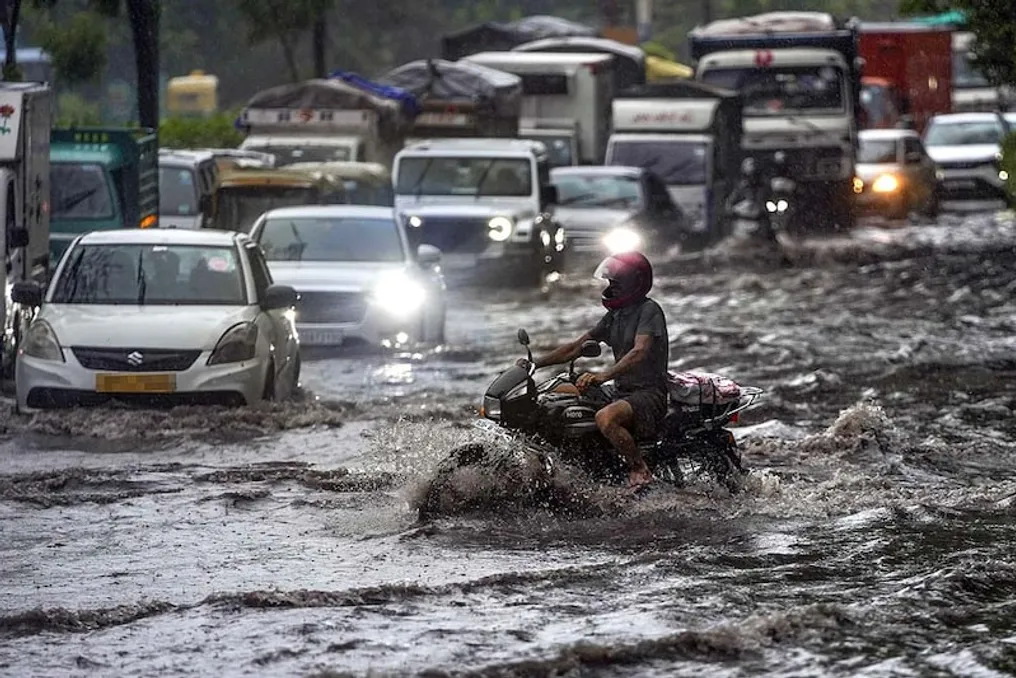
Despite good rainfall observed in July, the deficit created in June has not yet been compensated for. Between June 1 and August 2, 2026, the country received 410.1 mm of precipitation, compared to an expected 463.6 mm. This means that the total rainfall in the country is currently 12 percent below the norm.
The latest data from the meteorological service indicates that precipitation was distributed extremely unevenly. Central India recorded more precipitation than average, while the greatest decrease was noted in eastern and northeastern India. In the coming weeks, this may affect agriculture, reservoir levels, and water availability.
The start of the monsoon season in June was slow. For the entire month, the country received 106.8 mm of precipitation against a norm of 165.3 mm, representing a decrease of 35.4%. All major meteorological zones in the country recorded less precipitation than average. The largest decrease was recorded in central India (by 50.3%), as well as in northwestern India (by 31.6%), eastern and northeastern India (by 30.1%), and southern India (by 19.9%).
In July, the pace of rainfall accelerated. During this month, the country received 283.3 mm of precipitation against a norm of 280.5 mm, slightly exceeding the norm by approximately 1%. However, the deficit accumulated in June could not be compensated even by the good rains of July. This is why the total rainfall amount as of August 2 remains 12% below the norm.
In July, the highest amount of precipitation was registered in central India, where 426.8 mm fell, which is 33% more than the norm. Nevertheless, the situation in other regions was different: in eastern and northeastern India, there was also 29% less rainfall in July, in southern India—25% less, and in northwestern India—4% less.
The beginning of August was favorable: the first two days saw 19.4 mm of precipitation against a norm of 17.8 mm, which is 9% more. In these two days, central India recorded an increase of 33%, and southern India—an increase of 71%. However, northwestern India experienced a decrease of 46%, while eastern and northeastern India saw a decrease of 20%. Thus, the monsoon continues to have a heterogeneous impact on all parts of the country.
According to data from June 1 to August 2, central India is the only region where more precipitation than average fell, reaching 542.2 mm, which is 5.7% above the norm. Northwestern India shows a deficit of 13.3%, and southern India—19.9%. The largest deficit was recorded in eastern and northeastern India, where rainfall is lacking by 29.3%.
Meteorologists note that the next few weeks are crucial. If heavy rains follow, it could improve the water reserves for agriculture, reservoirs, and drinking water supply. At the same time, weather in areas where rainfall remains scarce will be closely monitored.