The Financial Times reported, citing three sources close to the process, that the New York Federal Reserve conducted an unusual operation on Friday, selling euros to acquire yen on behalf of the Treasury, in collaboration with Japan.
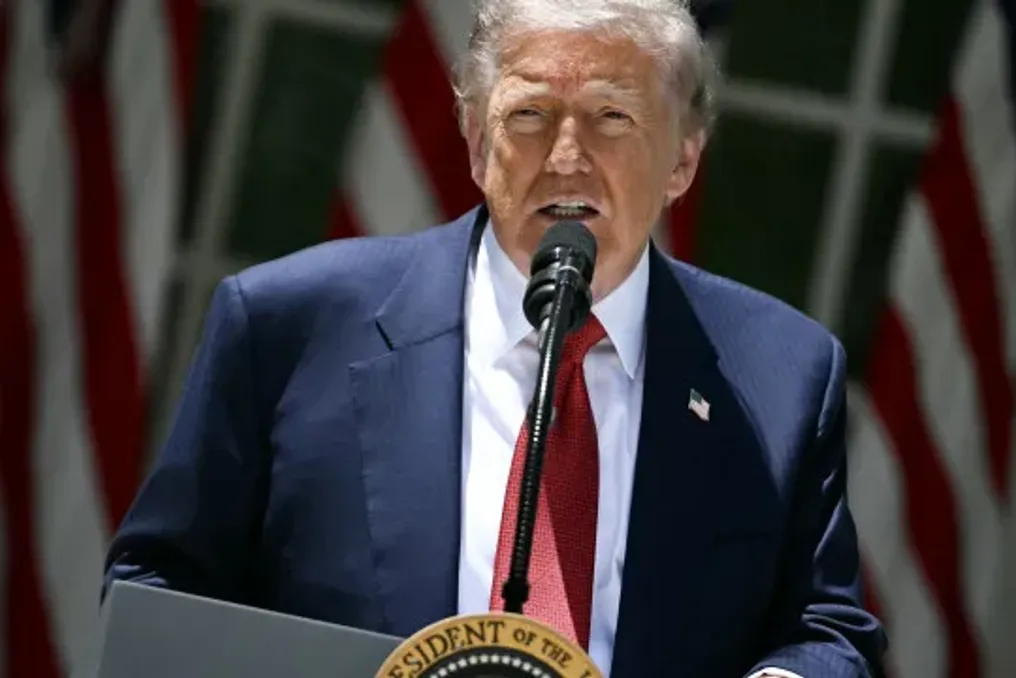
When questioned aboard Air Force One about the reasons why Washington invested funds to support the Japanese currency in the foreign exchange markets, Donald Trump attributed the action to the good relationship between the United States and Japan.
The American president stated that the United States would gain a 'financial benefit' from this decision, but emphasized that it was primarily a 'gesture of friendship.' He added: 'We are very, very solid financially. They, as you know, have a weakening yen and needed a little help. And we are always here for Japan. Japan has been very good to us, with the exception, of course, of Pearl Harbor.'
This intervention occurred at a time when the Japanese currency was experiencing a sudden recovery, reaching its lowest levels since December 1986 in July, when it reached 163.24 yen per dollar, being pressured by differences in interest rates between Japan and the United States.
This second cycle of consecutive recovery, after the Bank of Japan (BoJ) kept short-term benchmark interest rates at 1%, raised suspicions that Tokyo had carried out a currency intervention.
In Tokyo, Japanese Finance Minister Satsuki Katayama validated the mutual intervention of the two countries, informing that her ministry had 'bought yen in coordination with the US Treasury Department' on Friday.
Katayama stated in a press release that 'this joint action (...) allowed to contain excessive volatility and disorderly movements of the yen in recent months (...) We will not hesitate to carry out other joint interventions.'
For his part, US Treasury Secretary Scott Bessent commented on social media platform X that American authorities would also be willing to participate in future coordinated interventions, mentioning economic security and the Japan-US alliance as justifications for such a measure.
According to analysts cited by the Financial Times, the Japanese intervention was around $52.8 billion (equivalent to 45.7 billion euros), while the economic newspaper Nikkei estimated the value between $37.5 billion (32.5 billion euros) and $44 billion (38.1 billion euros).
The same British newspaper pointed out that this would be the first coordinated initiative between the United States and Japan to support the yen since 1998.
The Prime Minister's government, led by Sanae Takaichi, and the BoJ conducted currency market interventions between April and May of the previous year, which resulted in the appreciation of the Japanese currency from 160 units per dollar to 155 during the first days of May.
However, the impact of these stabilization operations, totaling 11.73 trillion yen (63 billion euros), according to data from the Japanese Ministry of Finance, was mitigated, even after the BoJ raised short-term benchmark interest rates to 1% in mid-June, the highest level in over three decades.
A sharp depreciation of the yen mechanically raises import costs for Japan, especially hydrocarbons priced in dollars ($0.87 euros), at a time when oil prices have risen significantly this year, fueling persistent inflationary tensions in the archipelago.