For a 19-year-old youth battling testicular cancer, survival was only part of the fight; another part concerned his personal life. After surgeons removed his only remaining testicle, a team of 10 specialists from Sir H N Reliance Foundation Hospital in Mumbai gathered on July 25, 2026, with one goal: to meticulously examine the nearly dead organ for any surviving sperm cells.
Although the orchiectomy saved the teenager's life (his identity was kept confidential at the family's request), it threatened to end his chances of becoming a biological father. The odds that the team of surgeons, urologists, andrologists, fertility specialists, and embryologists would find any surviving sperm cells in the removed testicle were extremely slim. However, after hours of careful searching, they succeeded—they discovered 23 viable sperm cells, which were frozen and preserved for future use. What began as an attempt to save a life ended with hope for the birth of a new life in the future.
The teenager's medical journey began long before the cancer diagnosis. He was born with cryptorchidism—a condition where both testicles do not descend into the scrotum before birth and remain in the abdominal cavity. Since normal sperm production requires a cooler environment, this condition can impair fertility and is associated with an increased risk of testicular cancer.
When he was just one year old, he underwent orchiopexy to bring his testicles into the scrotum. Nevertheless, one testicle had already sustained irreversible damage and was removed. The other was successfully lowered into the scrotum. Several years later, this surviving testicle began to enlarge. Examinations revealed a large tumor affecting almost 95% of the organ. Removal of the cancerous testicle was necessary to save his life, but for the teenager, this operation had a devastating consequence—it permanently stopped his body's ability to produce sperm.
Dr. Firuza Parik, Director of IVF at Well Women and Men’s Centre, Sir H N Reliance Foundation Hospital, noted: 'His case was extremely complex. We wanted to explore all possible options to preserve his fertility and give him a chance to become a biological father.'
Before the surgery, the patient provided two sperm samples. Both were analyzed using an advanced artificial intelligence-powered sperm detection system. Dr. Parik explained: 'We have the latest technology for finding sperm in cryptozoospermia—a condition where sperm is present in very small amounts and may not be detected during routine semen analysis, requiring microscopic examination to find it. This technology, the first of its kind in India, was developed in collaboration with the AZ-VUB IVF team in Belgium.'
Nevertheless, despite the advanced analysis, the results brought heartbreaking news—no sperm cells were found in either sample. This medical condition is called azoospermia, meaning the person ejaculates fluid that appears externally normal, but contains no sperm cells.
She added: 'It was a serious blow for us; the family was devastated... now the only remaining option was an attempt at Onco-TESE (oncological sperm extraction from the testicle)—a specialized fertility preservation technique used in patients with cancer.'
The team decided to perform the rare procedure of 'ex-vivo Onco-TESE extraction,' where sperm extraction is performed after the surgical removal of the cancerous testicle. The organ is examined outside the body in a controlled laboratory environment to identify any surviving tissue producing sperm that is not affected by the tumor.
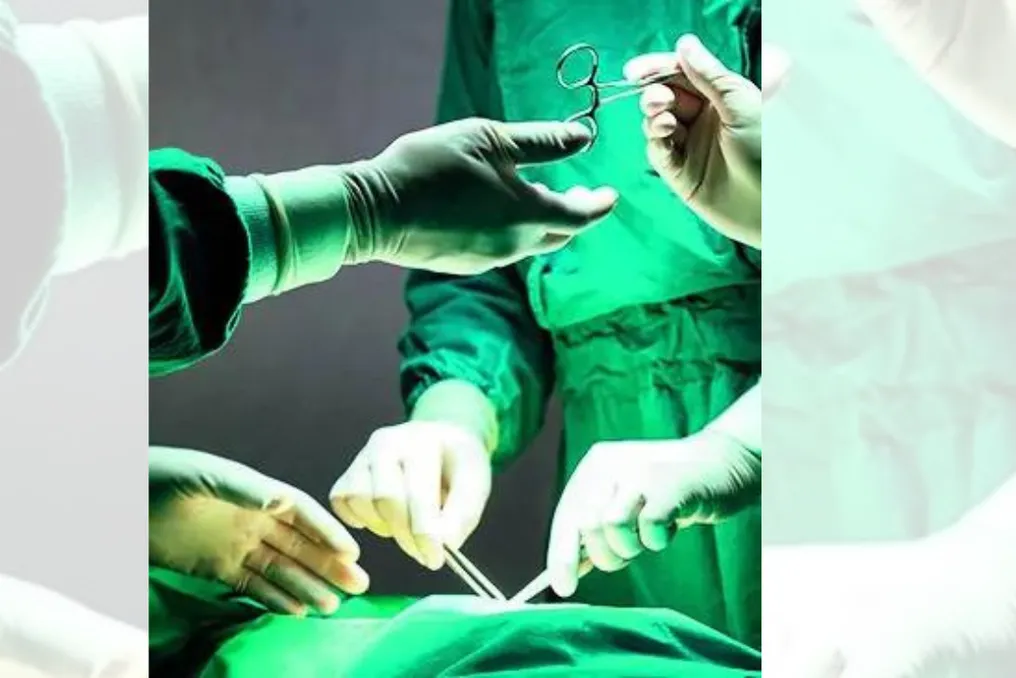
On July 25, oncological surgeons Dr. Raman Deshpande and Dr. Sumil Vyas removed the cancerous testicle. Now, the team had only five to six hours to find and extract the sperm cells.
Under the guidance of consultant andrologists Dr. Rupin Shah and Dr. Himanshu Gohil, the team dissected small pieces of tissue around the tumor in search of any surviving tissue. The doctors used ultrasound and MRI scanning to guide them to tiny areas that might still contain viable tissue.
These healthy tissues were then sent to the hospital's IVF laboratory. 'Healthy tissue fractions were carefully separated. Once the necessary tissue fractions were identified, they were placed in a special sterile transport medium to maintain tissue viability and preserve any potentially viable sperm cells. Timely processing is crucial as it gives the best chance to preserve any surviving sperm cells.'
Embryologists led by Dr. Varshi Kuril spent five hours examining the tissues for signs of surviving sperm cells. When the team discovered the first viable sperm cell, they realized they were witnessing a special moment in medical history. By the time the work was completed, the team had identified 23 sperm cells, which were then cryopreserved.
Dr. Parik noted: 'Twenty-three may seem like a disappointingly small number in the world of sperm counts, where a healthy man can produce millions of sperm cells. But in this case, every cell was a victory—every cell represented a possibility that cancer almost took away.' She added that the doctors 'will wait for the time when this young man gets married and wants children. Then the sperm will be thawed and used for IVF.'
According to Dr. Tarang Janchandani, the hospital's CEO, this procedure became an important milestone for the institution. 'We have long been freezing eggs and ovarian tissue in women with cancer, but this was the first case where we were able to obtain testicular tissue from a testicle that was almost completely destroyed by cancer. And we achieved this only through the efforts of our team.'