President Cyril Ramaphosa gave his unequivocal approval to the first report by the Eskom Restructuring Working Group, thereby presenting the clearest vision for an Independent Transmission System Operator (ITSO).
President Cyril Ramaphosa gave his unequivocal approval to the first report by the Eskom Restructuring Working Group, thereby presenting the clearest vision for an Independent Transmission System Operator (ITSO).
Representatives of the South African business community have long insisted, despite resistance from Eskom itself, that an independent energy network operator is the only way to create a truly competitive electricity market. Such a market should ensure equal conditions for all power producers, gradually lower prices, and provide investors with the necessary confidence to commit capital. The President has now made this policy unambiguous, leaving no room for further debate.
The ITSO is fundamental to a competitive energy market. Without it, Eskom controls both generation and the grid, which is comparable to one airline owning both the airports. Private producers cannot compete on fair terms, new investments are limited, and the promise of lower electricity prices remains unattainable. On Friday, the President emphasized that the energy reform must lay the foundation for South Africa's growth, and the correct implementation of the ITSO is the way to fulfill this commitment.
The working group's first report proposes important interim steps before the complete separation of functions is finalized. It recommends strengthening the independence of the National Transport Company of South Africa (NTCSA), which will be established as part of the Eskom separation process. This must be achieved through fully independent boards of directors, without joint management with Eskom, and with the NTCSA board being responsible for appointing its own CEO and senior management. Furthermore, Eskom must transfer all energy market decisions to NTCSA, while NTCSA's finances and operations must be isolated.
These recommendations are sound because they form the institutional framework that the ITSO will ultimately inherit. It is particularly encouraging that the report directly addresses concerns about Eskom potentially continuing to influence transmission decisions indirectly; the proposals for isolation and separation of governance close off this possibility. These temporary measures are also vital for the current reform plan. Granting genuine independence to NTCSA paves the way for the launch of the South African Wholesale Electricity Market (Sawem), which is scheduled for this quarter. The launch of Sawem has already faced delays, but the President's approval and the working group's governance proposals eliminate the main institutional hurdle. This launch should now proceed on schedule.
The President's approval has a highly positive impact on the investment climate. Uncertainty over whether South Africa would proceed with energy market reform was a source of concern for both independent power producers and large industrial consumers. This uncertainty has now been significantly reduced, leading to the emergence of a long-term and sustainable energy market that allows investors to plan their actions.
The author wishes to thank Duncan Petersen, CEO of the national treasury, who leads the working group, and the team members for the first report. He has advanced the process at a critical juncture, and the President has used it to ensure clarity. The working group is now working on the second phase report, which will cover the deal structure and implementation plan, with a deadline of three months. This deadline must be met.
It is crucial that Eskom now fully adheres to the report's recommendations. The question of policy direction is no longer up for discussion. The author acknowledges that the deal will be complex—it will require bondholder consent, and restructuring of this magnitude demands meticulous management. However, these difficulties are surmountable. South Africa can leverage significant international experience in transmission system separation, and bondholders can be fairly accommodated through a well-structured process. Eskom must approach the second phase work as a constructive participant.
The working group also identified municipal debt owed to Eskom as the most serious threat to the utility's long-term sustainability and recommended establishing a task force to develop a consolidated action plan to resolve it. This recommendation is welcome and urgent. Municipal debts owed to Eskom currently exceed 114 billion rand. Measures are being taken, including the installation of smart meters, agreements with distribution agencies, and local government financial reform, but they are fragmented. A working group coordinating all this into a single plan with clear accountability and timelines would be beneficial. Eskom cannot establish a sustainable financial footing while this debt continues to grow.
As shown by the BLSA Energy Sector Reform Tracker two weeks ago, reform in some areas was lagging behind schedule, and in some, there was even a reversal. The progress update provided by Operation Vulindlela on Friday confirmed this. The President's approval has now given momentum to the process. A new moment has arisen that must be sustained. BLSA will continue to work with the National Energy Crisis Committee and all stakeholders to support implementation. The policy is clear; execution is now required. South Africa's prospects for growth depend on the proper execution of this task.
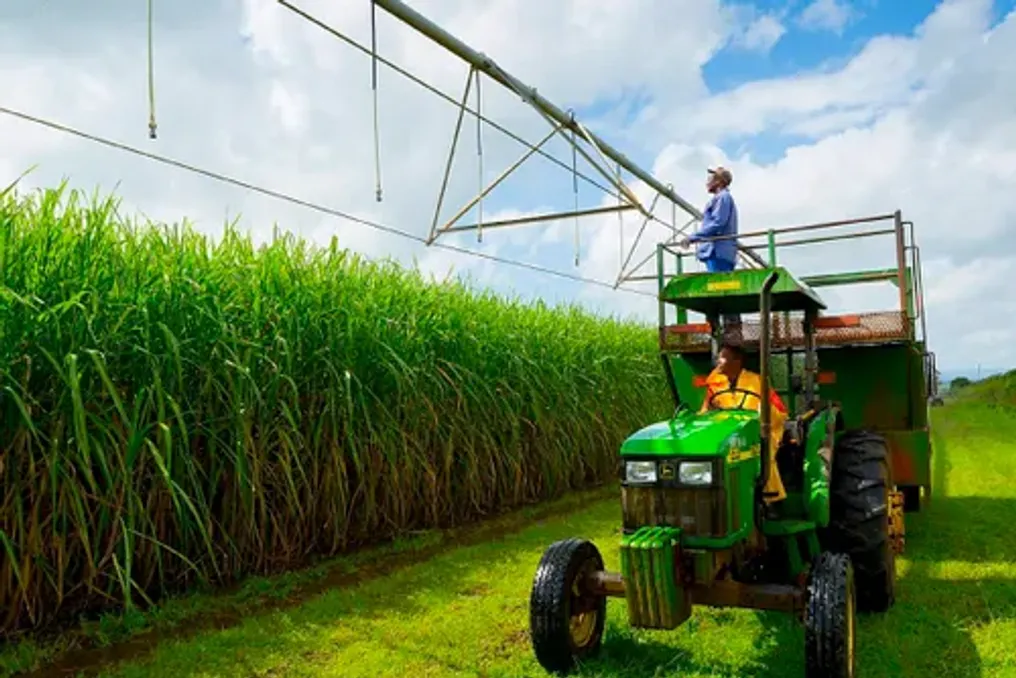
The South African sugar industry is in a critical situation amid alarming data showing an almost twofold increase in sugar imports during the first five months of 2026 compared to the same period last year. This influx of imported sugar is displacing local products from store shelves, forcing food and beverage manufacturers to increasingly rely on foreign supply sources, which raises serious concerns about the sustainability of local agriculture.
The industry body SA Canegrowers has strongly appealed to the Minister of Trade, Industry and Competition, Parks Tau, demanding decisive action. They insist on the immediate finalization of an updated tariff mechanism that aligns with current market conditions, emphasizing that this is necessary for the survival of the local sugar industry.
The International Trade Administration Commission (ITAC) is currently assessing whether the existing sugar tariffs reflect a competitive environment, following an application submitted by the industry over 18 months ago. However, the wait for action has been prolonged. According to the South African Revenue Service (SARS), 94,984 tonnes of sugar were imported between January and May 2026. This sharply contrasts with the 55,213 tonnes that entered the market during the same months in 2025. It should be noted that in the previous year, 2022, imports for this period amounted to only 1,491 tonnes, indicating a fundamental shift in the market influenced by weakened tariff protection.
The consequences of this import surge for domestic sales are worrying. According to the South African Sugar Association, from April 1 to June 30, local sales dropped to 255,015 tonnes, representing a loss of over 45,000 tonnes compared to last year. This sharp decline points to a destructive trend: before the tariff system began to fail, monthly sales peaked at 428,422 tonnes, leading to a massive loss of nearly 175,000 tonnes over just a few seasons.
Highlighting the severity of the situation, Higgins Mdluli, chairperson of SA Canegrowers, stated: 'Every tonne of local sugar displaced by imports is a direct blow to the producer's income, the mill's viability, and the stability of the rural community. The scale of what we are witnessing now is nothing less than a crisis.' Most of the sugar entering the South African market comes from countries such as Brazil, India, and Thailand, where producers benefit from generous government subsidies and integrated ethanol regimes that allow them to sell surplus sugar on global markets at prices lower than those of local producers.
Unfortunately, South African consumers are gaining no benefit from this influx of cheap sugar; every imported bag of sugar replacing a domestic one jeopardizes jobs, family incomes, and the survival of rural communities, all without lowering grocery prices. The structure of the South African sugar industry dictates that any unsold sugar must be exported, further complicating the already distorted global market. This, in turn, reduces the local industry's ability to profit from crushed and milled sugarcane, leading to a projected price decrease of more than 10% per tonne compared to last year, which currently stands at around 6,600 rand as of July.
Mdluli added: 'Every week of delay in adjusting the dollar base price costs the industry hundreds of millions of rand in lost sales. We are not asking for a special regime—we demand the correct application of the existing tariff mechanism to ensure a level playing field.' He also noted that 'the South African sugar industry supports over a million livelihoods, most of which are in the rural areas of KwaZulu-Natal and Mpumalanga, where sugarcane cultivation often serves as the sole source of stable income and economic activity for entire communities. Allowing it to be undermined by unfair imports due to a simple administrative change in tariffs would be unthinkable.'
Financial institutions in South Africa are forced to cope with an increasingly hostile cybersecurity landscape and must take urgent measures to protect their operations before new regulations come into effect.
As South African financial institutions prepare to implement the Conduct of Financial Institutions Bill (COFI Bill), concerns arise regarding their readiness not only to meet compliance requirements but also to counter the constantly evolving spectrum of cyber threats. This upcoming bill, awaiting Parliament's approval, aims to improve operational protocols in the sector, yet the pace of cyber threat development significantly outstrips the speed of legislative progress.
The Financial Sector Conduct Authority (FSCA) has strongly urged institutions to prepare well in advance for this major transformation, anticipating a transition period of about three years after the law is enacted.
Cybersecurity is under intense scrutiny, especially given a report from the South African Banking Risk Information Centre, which recorded an alarming 86% year-on-year increase in digital fraud within the banking sector. This led to nearly 100,000 incidents, with losses reaching a substantial amount of 1.888 billion rand. The emergence of AI-based attack tools allows vulnerabilities to be exploited at unprecedented speeds.
Rynier Schuman, a cybersecurity architect at Palo Alto Networks, emphasizes that threats remain pressing and acute, even as the regulatory framework is being finalized. He asserts that 'trust is the foundation of every financial institution' and notes that the information needed by criminals is often already publicly available, making it critical for institutions to recognize how convincingly attackers can impersonate legitimate clients.
Schuman lists five critical issues currently facing the financial sector:
Schuman warns that 'resilience cannot be tied to a single regulatory date.' He adds that institutions viewing readiness for COFI merely as a legal exercise may inadvertently overlook broader obligations related to technology and operations.
As the cyber threat environment continues to change rapidly, institutions must act decisively, integrating robust cybersecurity practices into their operational culture instead of passively waiting for legislative changes. Schuman concludes that institutions best prepared for the future will view compliance as a foundation for building dynamic and forward-looking security strategies.