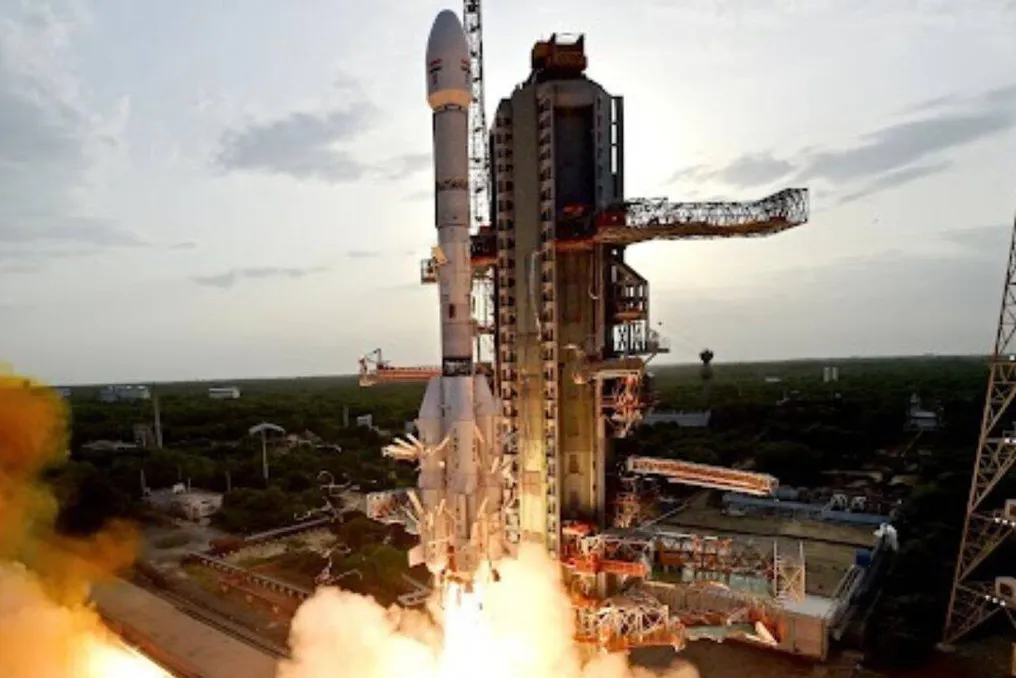
Two strategically important satellites, NVS-03 and Gisat-1A, have been at the Indian spaceport in Sriharikota for several weeks, awaiting official government permission for launch. Furthermore, the GSLV-Mk2 rocket is also awaiting clearance because the fueling process was halted after the launch approval was not received, several sources told TOI.
These delays occur against the backdrop of the government yet to release detailed findings from investigations into two PSLV missions—those held on May 18, 2025, and January 12, 2026—which have slowed India's launch program across all carrier families.
Sources specified that NVS-03, which is the next satellite in the second generation of India's NavIC navigation constellation, and GISAT-1A or EOS-05, an advanced geospatial satellite capable of monitoring Indian territory almost in real-time, have completed most of their pre-flight preparations and are ready for launch.
The GSLV-Mk2 rocket, located at the spaceport, was intended for one of these missions (NVS-03 or Gisat-1A). The suspension of launches followed a difficult year for ISRO. For instance, on January 12, PSLV-C62 failed to place its payload into orbit due to a malfunction in the third stage (PS3).
Eight months earlier, PSLV-C61 also failed, which ISRO described merely as 'pressure drop in PS3.' Beyond these brief descriptions, neither the Department of Space (DoS) nor the Government has published detailed reports on the failures.
Union Minister Jitendra Singh recently stated in Bengaluru that the failure analysis committee investigating the PSLV-C62 mission had determined the cause of the anomaly, but these findings 'cannot be made public.'
The visible caution extending beyond PSLV is confusing even DoS employees, who are already struggling with low morale. Employees familiar with the issue reported that no launches have been authorized while the government reviews the situation.
One insider noted that the identified problems relate exclusively to the PSLV's third stage and do not directly affect GSLV or LVM-3, stating: 'We don't understand the logic. It's like being told not to drive because our motorcycle had a problem on a previous trip.' This person countered that the GSLV and LVM rockets do not use components from the PSLV's third stage.
The delay is particularly significant as both satellites perform strategic functions. NVS-03 is expected to be a step toward reviving the currently non-functional NavIC navigation constellation. Even the government acknowledged last week that with only three operational satellites, the NavIC program could not provide navigation services due to a lack of assets.
Meanwhile, Gisat-1A resumes a mission that has repeatedly faced difficulties. The original Gisat-1, India's first geostationary Earth observation satellite designed for frequent coverage of the subcontinent, was first postponed in 2020 and subsequently lost during the GSLV-F10 mission in August 2021 after the cryogenic upper stage failed to ignite. The replacement is expected to provide near real-time imagery for disaster management, agriculture, forestry, environmental monitoring, and national security.
The government's caution is linked to another major failure that was thoroughly examined. In February this year, ISRO published partial findings on the NVS-02 anomaly from January 2025, concluding that the spacecraft did not reach its intended orbit because the control signal never reached the pyrotechnic valve in the oxidizer line during orbital insertion maneuvers. The agency reported that corrective measures have since been implemented and successfully tested on the CMS-03 mission launched aboard LVM-3 in November 2025. However, as of now, despite the equipment, satellites, and launch vehicles being ready at the spaceport, India's subsequent launches remain suspended, and there is no indication of when the government will authorize the resumption of launches.