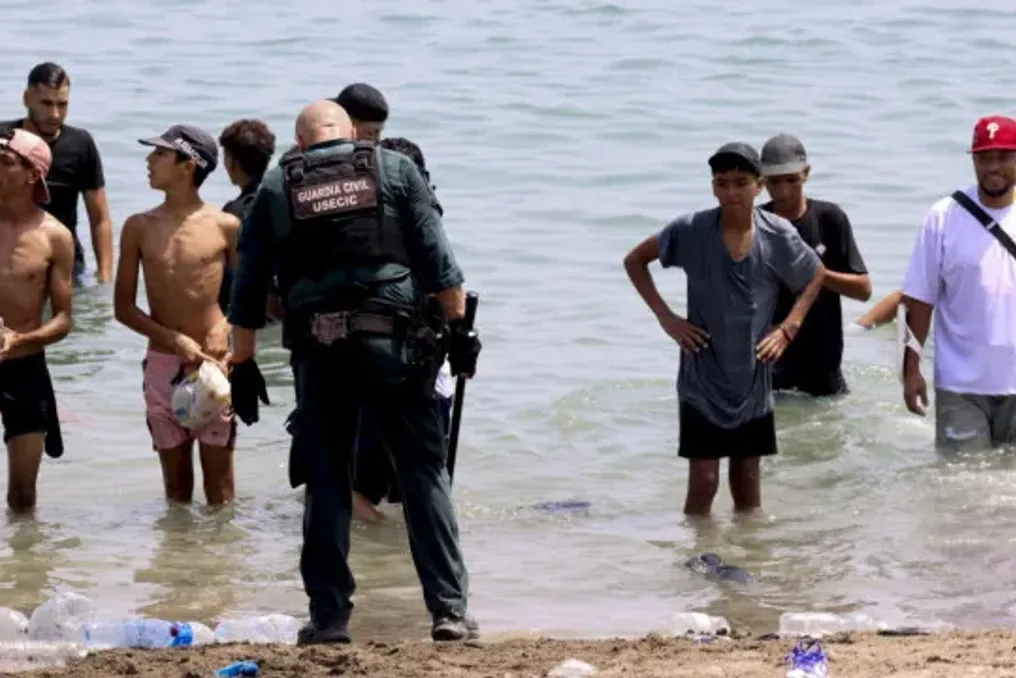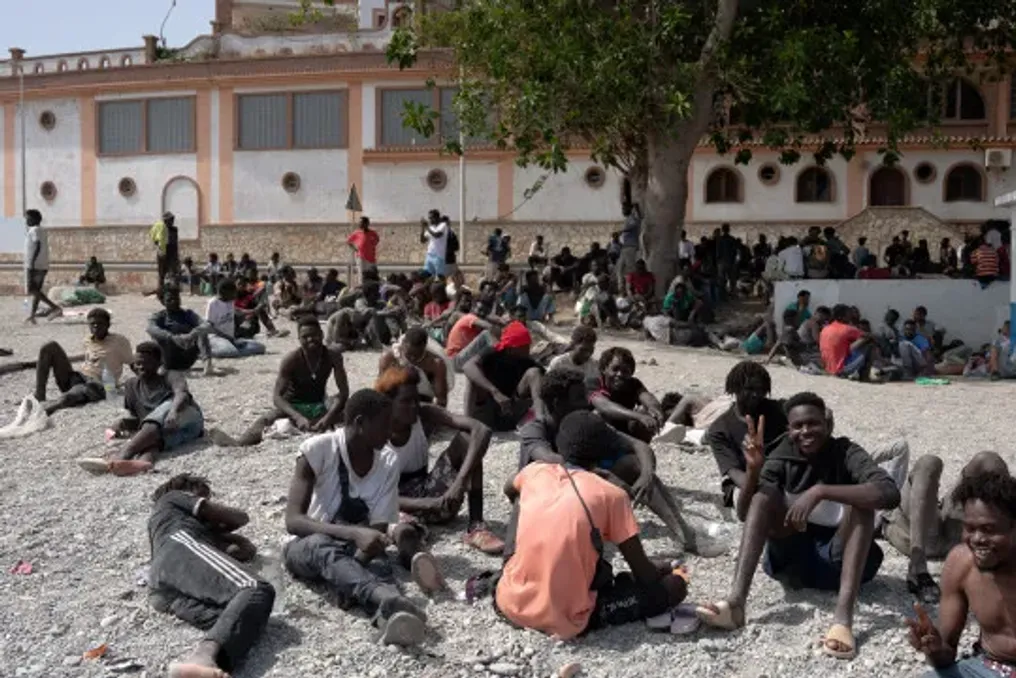
In an interview with the Spanish newspaper El País, Juan Jesús Vivás expressed deep regret over the 'tragedy' of these deaths that occurred 'on both sides of the border.'
The newspaper reported that Morocco is also searching for some bodies in the sea, and that 'not all died during the surge that happened on the breakwater last Thursday when people tried to reach the Spanish side of the beach en masse and desperately.'
The online version of El País states that 'some bodies are in a more decomposed state because arrivals on the coast of Ceuta have been continuing for more than two weeks, and during this period some migrants disappeared during dangerous night crossings of the sea, using barely anything more than a lifebuoy. Many of those who arrived en masse on Thursday could not even swim.'
Sources from the mortuary agency told the newspaper that among the bodies in the morgue were many teenagers, some women, Moroccans, and Africans from Sub-Saharan Africa.
The Spanish government had previously stated that at least 72 people had drowned in recent days while trying to reach Ceuta. Miguel Ángel Pérez Triano, the Government Delegate of Madrid in the region, confirmed at a press conference that the number of bodies recovered from the water on the Spanish side, near the El Tarajal pontoon, at the border between the autonomous city of Ceuta and Morocco, reached 72.
Sources from the Spanish police, cited by the EFE agency, calculated that about 73,500 people who were illegally in Ceuta left the city on Thursday. These figures, according to sources, may include people caught in the avalanche that hit the border with Moroccan Spanish enclave between Thursday and Friday, as well as those who had been in Ceuta from previous days.
Officially, the Spanish Government and the executive branch of the autonomous city of Ceuta stated that initial estimates showed that between 50,000 and 60,000 people entered the enclave during this mass invasion on Thursday and Friday.