A recent study revealed that the species Paranthropus boisei possessed a physical stature comparable to modern humans and exhibited a locomotion pattern in groups composed solely of males.
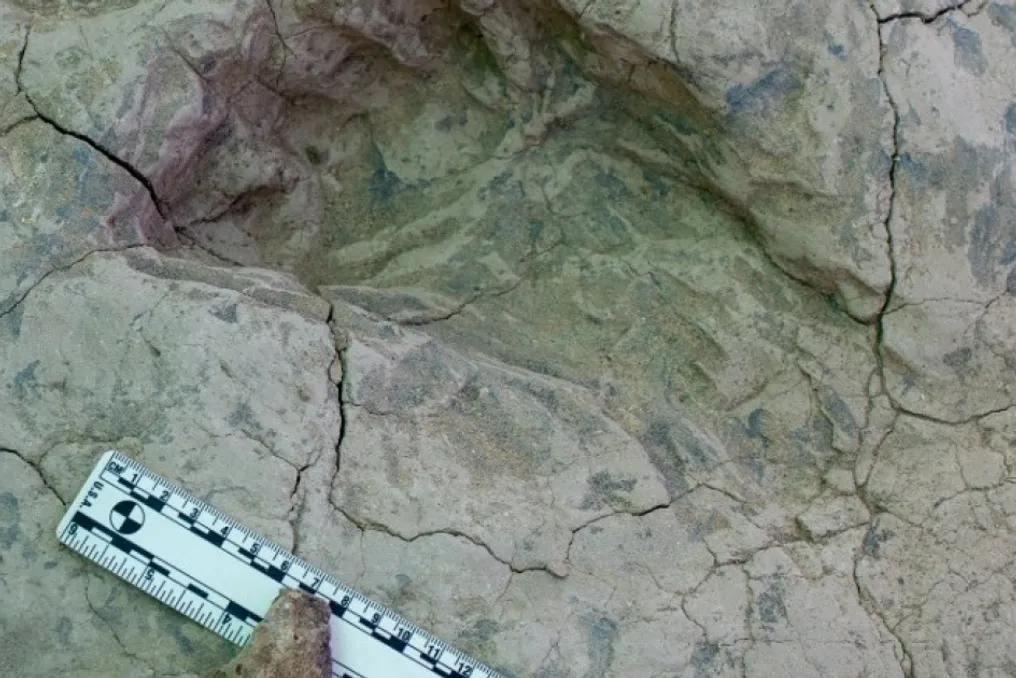
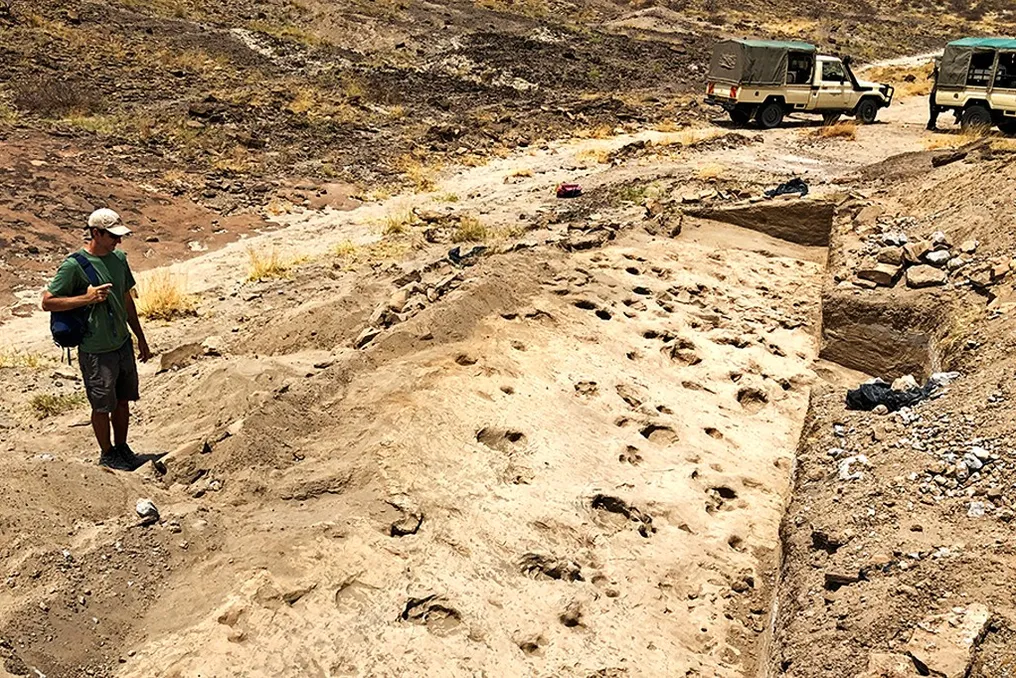
About 1.4 million years ago, a group of this primate walked along the shores of Lake Turkana, located in present-day northern Kenya. In this location, 21 footprints were found that have been preserved intact until today and were detailed in an article published in the journal Proceedings of the National Academy of Sciences.
The analysis of these fossil marks allowed scientists to gain new information about Paranthropus boisei, with the most notable aspect being its size, which exceeded previous estimates.
Kevin Hatala, a biology professor at Chatham University and co-author of the study, informed the Smithsonian that the size of the footprints suggested individuals with a human-like build, reaching up to 1.80 meters in height and weighing approximately 75 kilograms. Previously, it was estimated that the males of this species measured about 1.31 m and weighed an average of 49 kg.
It appears that these hominids traveled accompanied by other males, without the presence of females or young in the group. The authors suggest that this behavior points to a sophisticated social organization within the species, where males could live in large groups, competing for mates, but maintaining mutual tolerance to ensure safety in a dangerous environment; however, this remains only a hypothesis.
Although the fossil tracks are not new, having been identified by Kay Behrensmeyer in 1978 during excavations in the region, the new team of researchers reexamined the footprints and discovered unprecedented data about Paranthropus boisei.
Near Lake Turkana, several other species coexisted, such as crocodiles and elephants. At the same time, Paranthropus boisei shared the habitat with Homo erectus, a closer ancestor to modern humans, as well as Neanderthals and Denisovans.
Initially, archaeologists considered that the footprints might belong to members of the genus Homo, which were traditionally classified as substantially larger than Paranthropus boisei. However, the authors managed to attribute the footprints to the specific species based on the shape of the feet and the manner of walking.
The team used volcanic ash found in the adjacent rocks to determine the dating of the footprints, concluding that they belong to the Lower Pleistocene period, approximately 1.43 million years ago. It is estimated that Paranthropus boisei went extinct shortly thereafter, about 1.2 million years ago, possibly due to climate changes that could have impacted food availability.
The recently described footprints are part of a set of hundreds of tracks discovered along the shore of Lake Turkana, deposited over a period of more than 100 thousand years. For Behrensmeyer, better understanding the geology responsible for the preservation of these vestiges can help explain why the local hominids frequented the Turkana area, near the lake.
The team plans to return to Kenya later this year to continue investigations at these sites.