The Islamic World Citation Center (ISC) emphasized the need to expand scientific research, knowledge exchange, and establish long-term strategic partnerships with universities in Malaysia and Turkey.
The Islamic World Citation Center (ISC) emphasized the need to expand scientific research, knowledge exchange, and establish long-term strategic partnerships with universities in Malaysia and Turkey.
Alavianimer detailed the opportunities and missions of ISC over the past two decades, noting that the Center has become one of the benchmarks for ranking universities and institutions in the Islamic world.
He added that cooperation among leading scientific institutions contributes to improving research quality, stimulating innovation, solving global problems, and achieving sustainable development goals. By promoting partnerships with authoritative universities in Malaysia, Turkey, and other countries, the ISC Institute aims to strengthen its network of scientific cooperation in the Islamic world and Asia, paving the way for joint projects, knowledge exchange, and increasing the international prestige of academic institutions.
Key areas of cooperation were proposed during these meetings, including sharing expertise in scientometrics, research evaluation, and university rankings; conducting joint projects on science, technology, and innovation policy; joint analysis of scientific data and artificial intelligence; as well as the exchange of faculty, researchers, and students.
University representatives also discussed organizing conferences, seminars, courses, and specialized meetings, preparing strategic reports on the state of science and technology in the Islamic world and Asia, supporting innovative activities, and forming and strengthening scientific networks between scholars and universities from different countries.
For their part, representatives from Universiti Malaya and National University of Malaysia presented information on the global and regional rankings of their universities, as well as achievements in higher education, science, international cooperation, and innovation. The National University of Malaysia also presented a report on its educational, research, and international capabilities, emphasizing the importance of implementing joint educational programs, expanding global interaction, and increasing academic exchange.
Iranian and Turkish officials highlighted the necessity of developing scientific cooperation between the universities of the two countries.
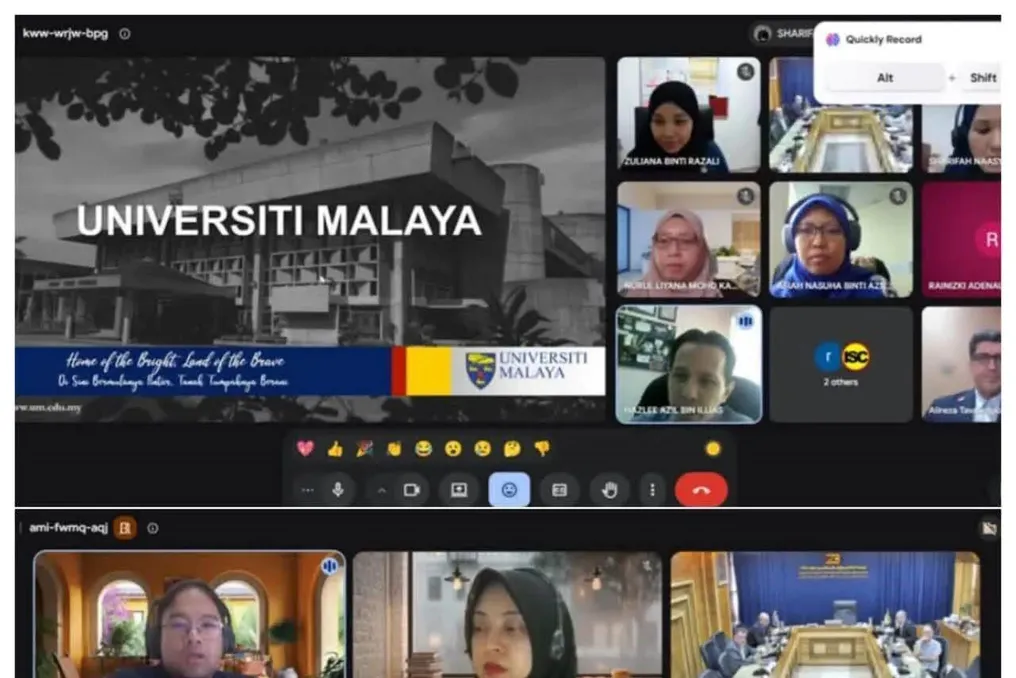
In May, Iran's scientific advisor for East Asia, Australia, and New Zealand, Alireza Tavakolpour, along with researchers from Universiti Malaya (UM), studied possibilities for expanding scientific and academic ties between Iranian universities and UM.
UM staff participated in this meeting, including Zulianah Razali, Director of the International Relations Center; Mohd Faizul Mohd Sabri, Deputy Dean for Research and Innovation at the Faculty of Engineering; and Fazliana binti Ismail from the Faculty of Medicine. During the negotiations, Malaysian representatives spoke about UM's scientific and research opportunities as one of Malaysia's oldest and best universities.
In turn, Tavakolpour outlined the Iranian perspective on expanding scientific diplomacy, presenting the potential of the Iranian elite and scientists, and sharing research areas that are priorities for the country. The parties agreed on further developing strategic cooperation within a joint action plan.
In July, an official representative of the Ministry of Science announced that Iran and Turkey plan to establish a joint innovation center and define a sustainable business model. In line with the implementation of megatechnology projects, the two countries have developed nine technological projects for joint implementation, according to IRNA citing Mohammad-Nabi Shahiki.
These statements were made at a meeting on July 20 dedicated to planning the Iran-Turkey Science and Technology Week. Emphasizing the role of science and technology parks in expanding international cooperation, Shahiki noted that the main goal is to transition from academic interaction to creating a synergistic network that includes research institutes, technology parks, and universities, for conducting joint projects in education, research, and technology, and achieving common strategic results for both sides.
According to the International Scientific Cooperation Center of the Ministry of Science, Research and Technology, the Iran-Turkey Science and Technology Week is scheduled for the second month of autumn in Urmia, West Azerbaijan Province, and Tabriz, East Azerbaijan.
In February, Kabul and the Turkish ambassador to Tehran, Hijabi Kırlangıç, discussed the possibilities, challenges, and future prospects of expanding scientific, research, and educational cooperation between Iran and Turkey. The parties agreed to intensify scientific diplomacy by organizing an Iran-Turkey Science Week, holding regular meetings of top universities, developing joint scientific projects, and establishing scientific and technological parks, especially in border areas.
During the meeting, Kabul stated: 'Our main task is to create a unified scientific ecosystem covering everything from higher education to applied research and modern technologies.' Another issue raised by the official was co-supervising dissertations, as Persian and Turkish students can help solve common problems between the two countries, conduct joint research, and ultimately enhance the scientific status of Iranian and Turkish universities in international rankings.
The official also proposed student exchange, provision of scholarships, conducting joint scientific competitions on common environmental, technological, and industrial issues, and developing joint curricula to strengthen cultural ties and localize education. Iranian officials, highlighting the capabilities of medical universities in the country, announced readiness to attract more Turkish students. Currently, over 130 Turkish students are studying medicine in Iran.
For his part, Kırlangıç emphasized the need to resolve issues related to visa issuance and equivalent certificates, stating that creating transparent mechanisms will increase trust among students and their families.
A meeting took place in Kuala Lumpur, Malaysia, between a delegation from Uzbekistan and the management of Dagang NeXchange Berhad. During this meeting, issues regarding the development of cooperation in high-tech manufacturing, particularly in the semiconductor industry, were discussed.
The parties reviewed prospects for joint work on forming a semiconductor ecosystem in Uzbekistan, attracting investment to this industry, implementing advanced technologies, and training qualified specialists.
During the negotiations, special attention was paid to the experience and technological potential of DNeX in the semiconductor production sector. Dagang NeXchange Berhad is recognized as one of Malaysia's major technology firms operating in the fields of digital technologies, information and communication services, energy, and semiconductors.
The company acquired a 60% stake in SilTerra Malaysia Sdn. Bhd. in 2021, which is one of the leading semiconductor manufacturers in the country.
At the conclusion of the meeting, representatives of both sides stated their readiness to continue mutually beneficial relations aimed at developing high-tech manufacturing capabilities, exchanging experience, and expanding investment partnerships. According to information from the Ministry of Economy and Finance's information service, this meeting is of great importance for strengthening technological partnership between Uzbekistan and Malaysia, as well as for implementing new joint projects in innovative industrial sectors.