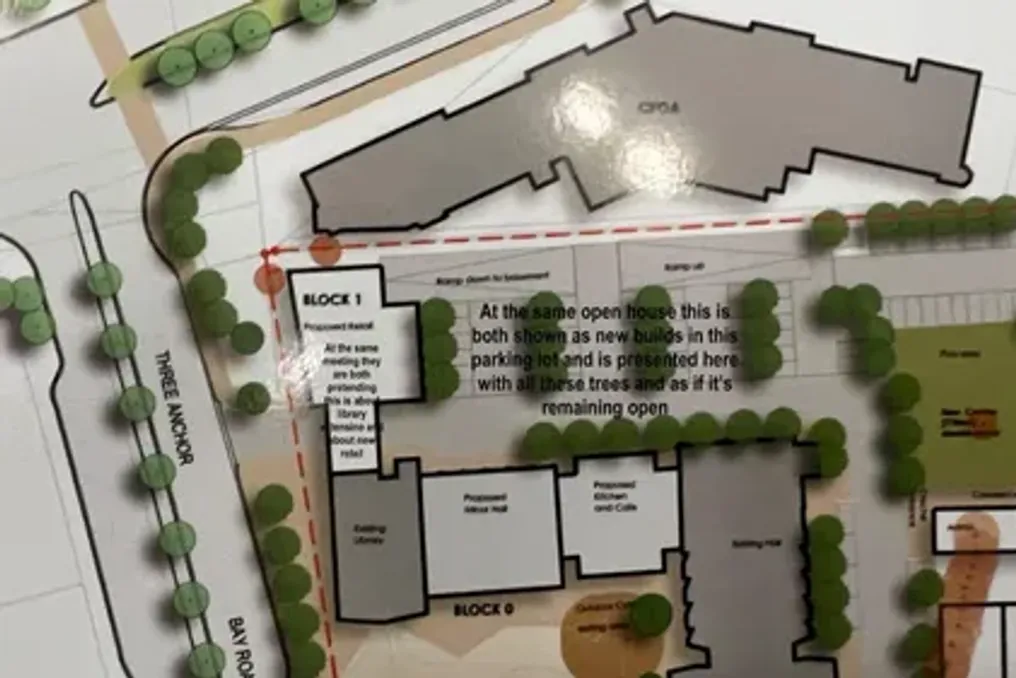
Residents of Cape Town have opposed the proposal to create a dense mixed-use complex in the Three Anchor Bay area, as they insist on preserving this territory as a public recreational space.
Public opposition to the project
More than 300 residents signed a petition against the plan proposed by the City of Cape Town. They argue that the land should remain a public recreational space and not be handed over for private development.
Details of the City Council's proposal
The proposal concerns Erf 2187 and is part of the City's plan to unlock the long-term socio-economic potential of municipal property that is currently underutilized and is planned to be ready by 2030. According to the plan, the maximum building volume is 117,000 m² of new gross floor area. This complex could include retail and office spaces, a hotel with up to 325 rooms, up to 1,145 residential units, and public facilities. It also stipulates that at least 20% of the residential apartments must be oriented towards the affordable housing market.
Approval process and objectives
The Directorate of Economic Growth of the City of Cape Town explained that the project underwent extensive preliminary public dialogue, which began in February 2025. The statutory public participation process for the draft Basic Assessment Report (dBAR) lasted 30 days, starting on June 18, 2026, and ending on July 20, 2026. The City's main goal was to maximize the long-term socio-economic value of this underutilized municipal property (Erf 2187, Green Point) by bringing it to the open market through a competitive process for high-intensity mixed-use development.
Planned uses
The City appointed a professional team to develop a conceptual proposal for the potential maximum development capacity of 117,000 m² of new gross floor area. If approved, the complex will include a set of land use rights: retail space (maximum 8,380 m² of total leasable area), office space (maximum 13,060 m² of total leasable area), a hotel facility of 5,094 m² with the capacity to accommodate up to 325 rooms, and a residential area of 49,187 m² of total leasable area, potentially allowing for up to 1,145 residential units. The release of the site is conditional upon providing a minimum of 20% of all residential units targeted at the affordable housing sub-market.
Residents' concerns and the City's position
Residents express concerns about the proposed development, advocating for the preservation of Three Anchor Bay as a vital public space. The City explained that a minimum of 1,355 m² would be required to create a new Early Childhood Development (ECD) facility and a future expansion of the Colin Eglin library. The City clarified that the figures presented reflect the conceptual maximum development volume prepared for feasibility studies and planning purposes and do not constitute approved building rights. Any future projects affecting heritage sites will be subject to approval by Heritage Western Cape and other relevant authorities.
Activists' stance
Zarina Patel from the residents' association Save Our Sea Point (SOSRA), which initiated the petition, stated that more than 300 signatures have been collected in support of this issue. Patel emphasized that the land was permanently transferred to the City of Cape Town (CoCT) for recreational use. She expressed disagreement with the City's attempts to change the zoning of this land despite public objection. Furthermore, she questioned the objectivity of the valuations used to promote such projects, especially when consultants are hired with the involvement of CoCT and developers. Patel added that due to the constant approval of projects by the City, the Atlantic coast is already overcrowded.
City Council's response
The City stated that it is aware of the petition and will consider it within the public participation process. It noted that it recognizes the existence of differing opinions among residents regarding the future of the site and welcomes participation in the current official procedures. Comments received during the draft Basic Assessment Report (dBAR) announcement will be taken into account during the subsequent land use application process in September 2026.