According to data from the National Statistical Committee, Uzbekistan's gross domestic product (GDP) reached 1,072.7 trillion soums in January-June 2026. Real economic growth was 8.5% compared to the same period in 2025.
According to data from the National Statistical Committee, Uzbekistan's gross domestic product (GDP) reached 1,072.7 trillion soums in January-June 2026. Real economic growth was 8.5% compared to the same period in 2025.
The construction industry demonstrated the largest increase among the main sectors, showing a growth of 13.7%. The services sector grew by 9.2%, industry by 8%, and agriculture, forestry, and fisheries by 4.7%.
Within the service sphere, the information and communications sector led with an increase of 23.2%. Growth was also noted in transportation and storage at 15.8%, trade at 15%, and accommodation and food services at 10.8%.
The total volume of added value created by economic sectors amounted to 95.8% of GDP. The share of net product taxes was 4.2%, while their volume increased by 8.3%.
GDP per capita reached 27.95 million soums, which represents a real growth of 6.6%.
The President's visit to the Tashkent region is one of the strategic events in the current stage of the country's development and holds special significance. It confirmed that the reforms being implemented in New Uzbekistan are aimed at consistently achieving clear goals in areas such as transport infrastructure, digital economy, innovation, and industry, with the participation of the head of state.
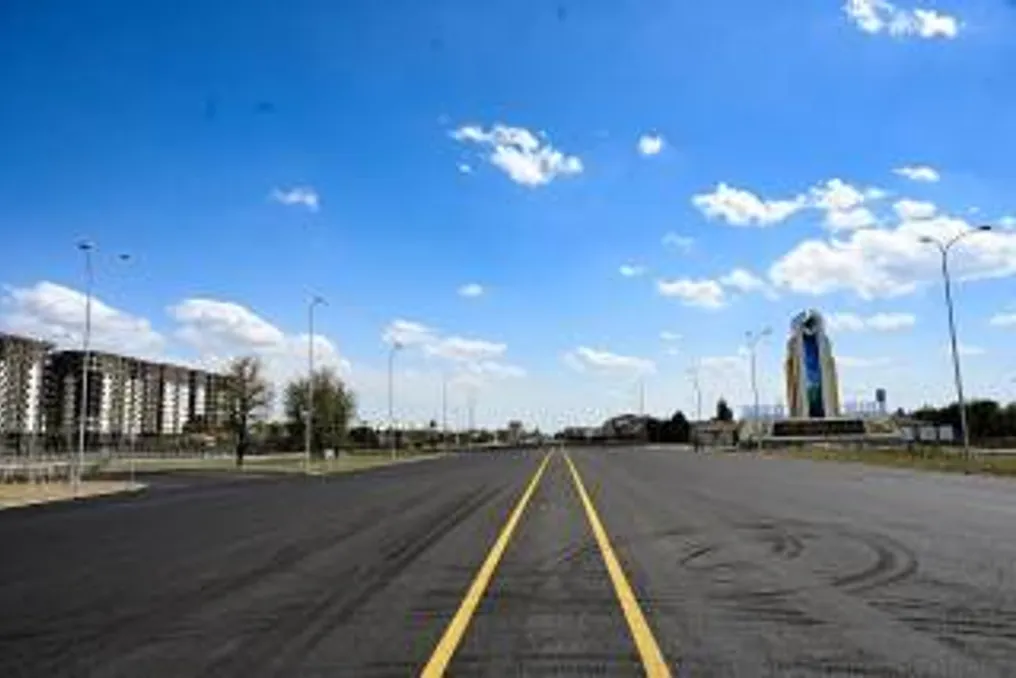
Laying road stone on the Tashkent – Samarkand highway opens a new era in the country's transport system. This major project, valued at about $2.2 billion, is designed not only to accelerate connectivity between the two cities but also to promote economic activity growth, reduce logistics costs, and increase the investment attractiveness of the regions.
In the context of the global economy, where competitiveness is determined by transport and logistical efficiency, the new highway will strengthen the country's position on international transport routes. This modern route is expected to become a key factor in transforming Uzbekistan into a regional logistics hub, especially in line with the 'China – Kyrgyzstan – Uzbekistan' railway lines and Trans-Afghan routes.
Furthermore, laying the foundation stone for the 'Center for Future Technologies' in the city of Nurafshon has both symbolic and practical significance. In the modern world, economic superiority is determined not by natural resources, but by capabilities in knowledge, innovation, and artificial intelligence. Therefore, this center, which combines education, science, and high-tech production, is intended to become an important intellectual space for the country's digital progress.
The launch of new industrial capacities in the Tashkent region with the participation of companies from China, Russia, and Germany demonstrates a steady inflow of foreign investment. This, in turn, contributes to the creation of new jobs, the production of high value-added products, and the improvement of people's well-being.
It is important to note that all projects initiated during the visit pursue a single goal: ensuring stable growth of the country's economy, increasing human capital potential, and forming a competitive economy for New Uzbekistan. Thus, the new initiatives in the Tashkent region are not just large construction works or investment ventures, but a practical embodiment of the country's long-term development strategy in the fields of transport, technology, and innovation. Every stone laid today serves as a solid foundation for the economic might, international competitiveness, and well-being of the people of Uzbekistan in the future.
From January to June 2026, the average nominal wage in Uzbekistan was 7.09 million soms, with the highest figure recorded in Tashkent.
The wage for January-June 2026 reached an average of 7,911 thousand soms nationwide. This figure exceeds the same period last year by 18.4%. For comparison, in January-June 2022, the average wage was 3,551.6 thousand soms, which represents an almost twofold increase in the average salary over four years.
When comparing by region, the highest average wage level was noted in the city of Tashkent, where it reached 12.014 million soms. Following in terms of income level is the Navoi region, where the average salary amounted to 8.723 million soms.
The lowest values for the average wage were registered in the Kashkadarya region, where it was 4.865 million soms, as well as in the Surkhandarya region, where the indicator reached 4.937 million soms.
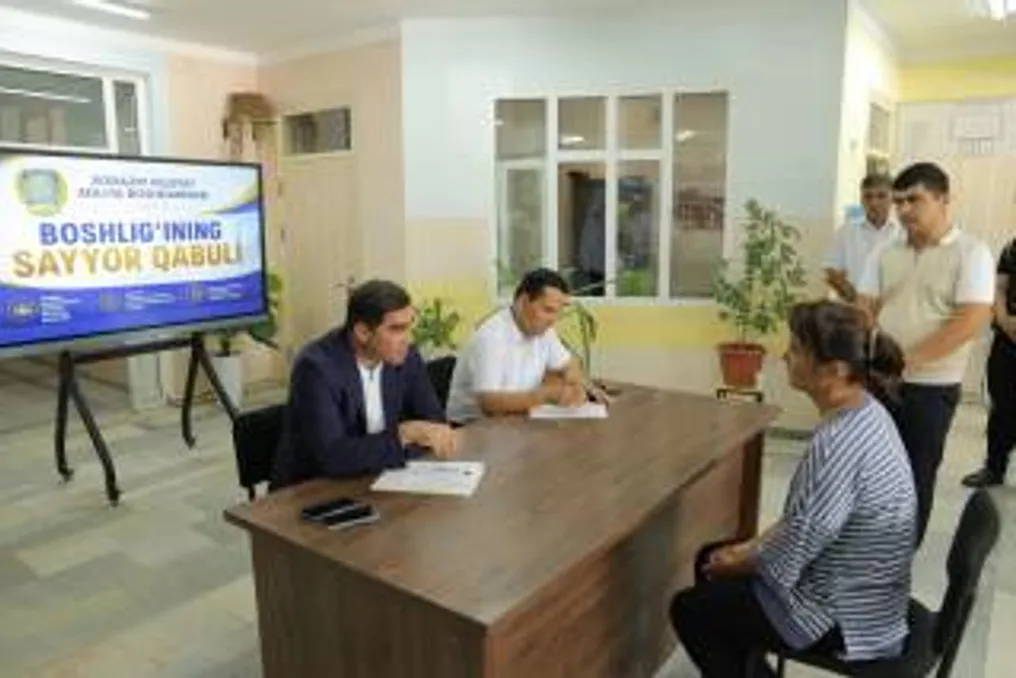
A reception by the regional justice department took place in the village of Yakkachikyr in the Tuproqqal'a district of Khorezm region.
Heads of the regional justice department, representatives of the 'neighborhood council,' and other organizations were present. During the reception, issues such as the adaptation of individuals under preventive registration, working with families in disputes, timely resolution of legal problems, and strengthening cooperation with the 'neighborhood council' in this area were discussed.
More than 30 citizens' appeals were heard during the reception. Ten appeals were resolved on the spot, and legal clarifications were provided for ten appeals. Twenty citizens received legal and state services as part of the outreach reception, and six appeals requiring investigation were accepted for work.
Citizen Ma'murjon Zhumaboyev noted that Yakkachikyr is one of the most remote villages not only in the region but also in the country. He emphasized that traveling to the regional center requires significant time and financial expenditure for the population. The arrival of the head of the justice department in their village reduces costs and facilitates citizens' appeals, as many issues are resolved directly on site.
During the reception, citizens were given direct explanations regarding new adopted laws, benefits, subsidies, and ways to protect their rights.