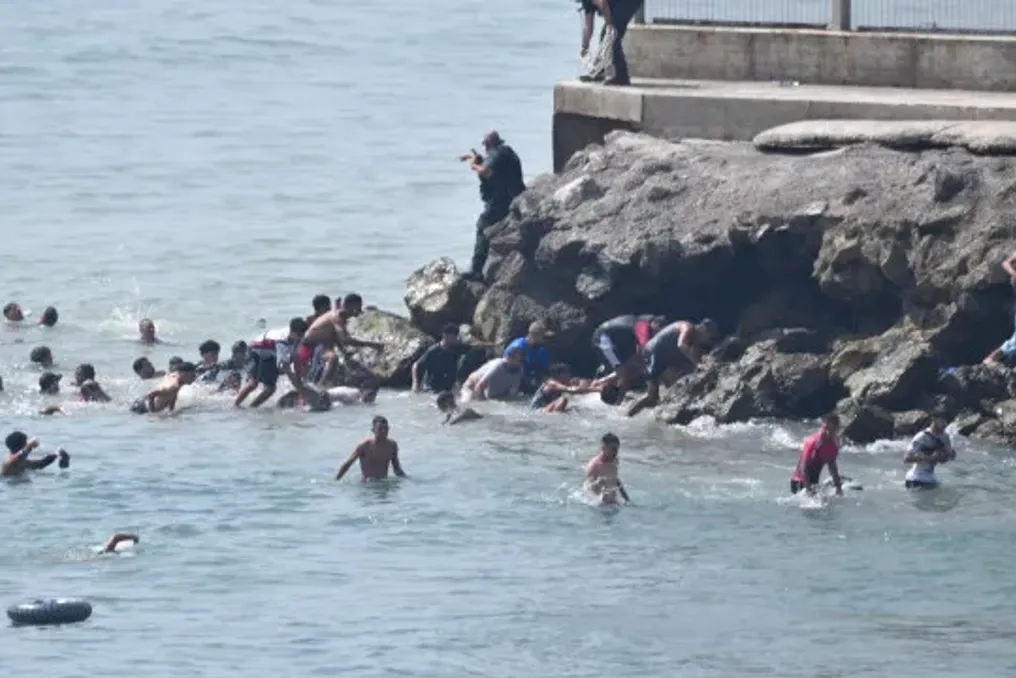
According to initial estimates from the Spanish Government, more than 50,000 individuals entered Ceuta illegally, with a large influx occurring on Thursday. However, at least 48,300 people voluntarily returned to Morocco on Friday.
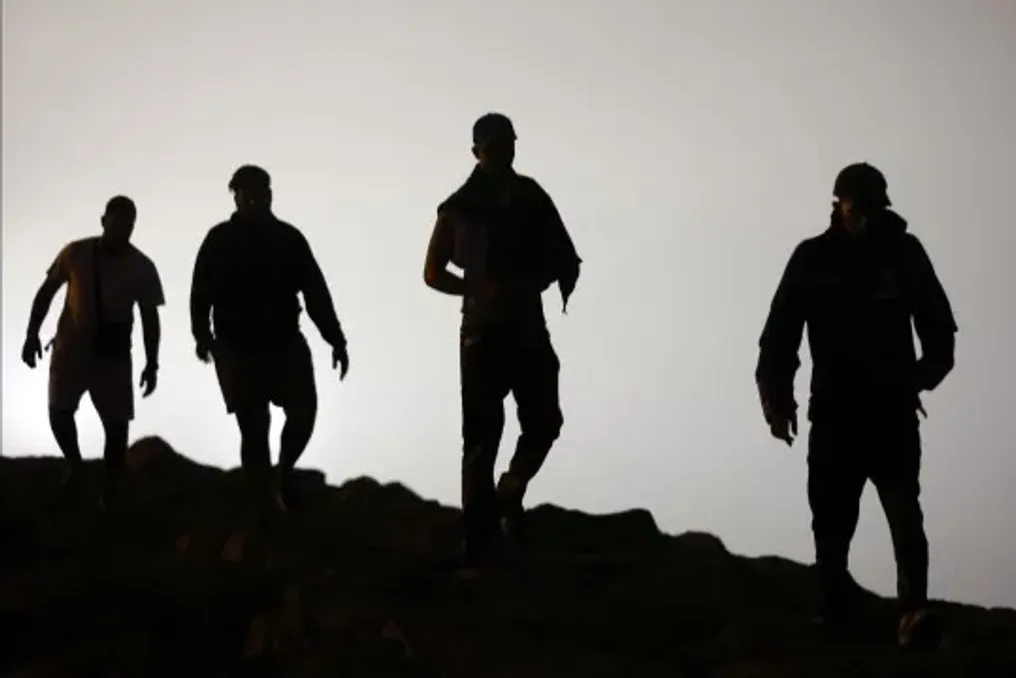
Despite the departure of many, hundreds, or even thousands, of migrants remain present in Ceuta. These individuals are grouped in areas further away from military and police checkpoints, whose patrols have been intensified in the city. They are found on beaches or near the Temporary Reception Center for Migrants (CETI), according to the Lusa agency.
Reports from other media sources indicate that hundreds of people are hidden or taking refuge in the city's hills. Almost all the migrants who remain are from sub-Saharan countries, while those who decided to leave on their own since Friday were Moroccan citizens.
Among the hundreds who persist near the CETI, without access to the reception center—which Ceuta authorities claim is overcrowded—are people from nations such as Senegal, Gambia, Yemen, or Sudan. Many of these individuals already resided in Morocco, in cities like Tangier or Casablanca, and headed to the Ceuta border after obtaining information, either by word of mouth or through the Internet, that it was possible to cross to the Spanish side, as reported by several migrants to Lusa.
All interviewees for Lusa mentioned crossing by swimming on Thursday, taking advantage of the large number of people and low tide, which allowed them to bypass the El Tarajal pontoon, located on the border between Ceuta and Morocco.
Currently, these migrants are on the streets, crowded on sidewalks and on the access road to the CETI, reporting no access to food, drink, or hygiene, but expressing a desire to remain in Ceuta, Spain, and in Europe. Florence, 32, from Senegal, stated: 'I want to live well, like everyone else. And freedom.' There, also a 32-year-old Senegalese man who worked in small trade in Morocco for four years told Lusa: 'I want to live well, like everyone else. And freedom.' Fatima, 28, from Sudan, added: 'There is war in our country.'
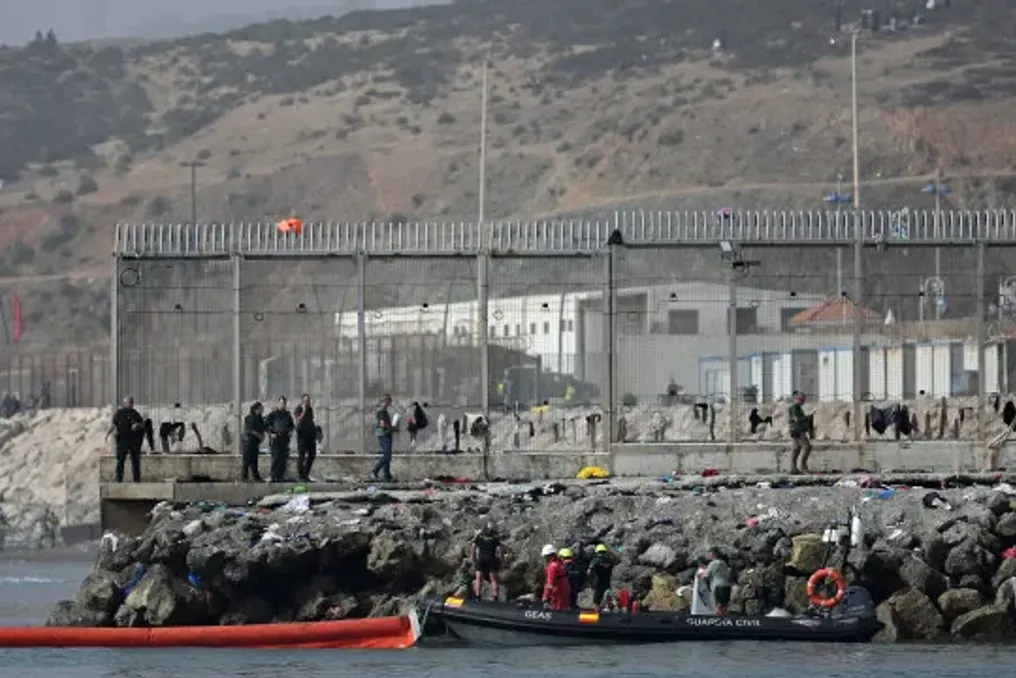
Spain mobilized military forces in Ceuta and reinforced the presence of security forces in the city. The Government announced on Friday an agreement with Morocco aimed at the rapid repatriation of people who had entered illegally the previous week. According to reports from the migrants themselves to the media, the closure of shops and other services in the city for two days, which made it impossible to buy food, led tens of thousands to leave the city shortly after entering.
The border near the El Tarajal pontoon was reinforced with the installation of a new half-kilometer pneumatic barrier over the sea on Saturday. Since Thursday, the Spanish police have counted the removal of 71 bodies from this location. In 2025, this point recorded 46 drowning deaths in illegal entry attempts into Ceuta.
Sources in the city cited by the newspaper El Pais assure that spaces with cold storage chambers are being prepared to receive up to 200 corpses, recognizing the possibility of more victims in the waters. To date, the number of bodies removed from the Moroccan side is unknown.
In contrast, local authorities informed that about 1,150 of the people who entered Ceuta since Thursday received medical attention. The city of Ceuta is gradually returning to normalcy, with shops and restaurants reopened since Saturday, tourists filling the central terraces, and vehicle traffic resuming.
However, this recovery occurs under strong police and military surveillance on the streets, and the city's major annual festivities, culminating in the celebration of Africa Virgin Day, scheduled for August 5th and supposed to start on Saturday, have been canceled.