Christopher Nolan's film 'Odyssey' not only revived interest in Homer's epic but also inspired travelers to visit the real landscapes that formed the basis of the story on screen.
Instead of relying heavily on studio sets, the Oscar winner filmed in some of the world's most impressive natural and historical locations, including Greece, Sicily, Morocco, Iceland, and Scotland. The result was a cinematic journey through ancient castles, volcanic coasts, secluded beaches, and age-old settlements that fans can now experience themselves.
Below are the real filming locations of 'Odyssey' that you can add to your travel bucket list.
Watergully Beach and Nestor's Cave, Peloponnese, Greece
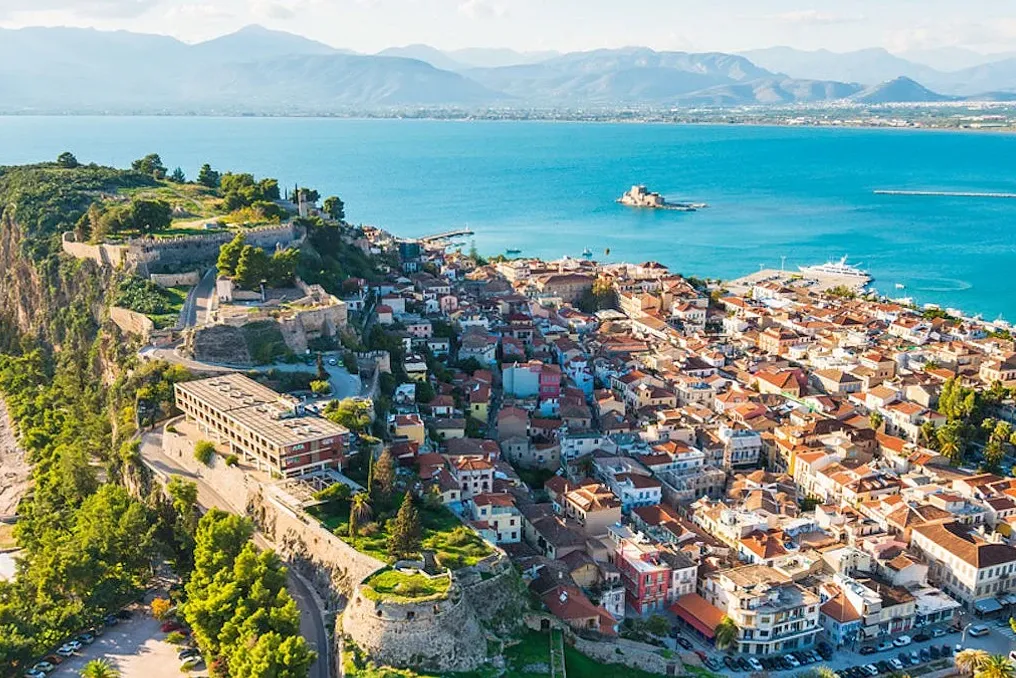
The Peloponnese served as one of the film's most important backdrops. Scenes were shot at the famous Watergully Beach, Nestor's Cave, and the medieval Metoni Castle. This region, known for its turquoise waters, archaeological sites, and rugged coast, offers visitors the opportunity to explore some of Greece's most iconic landscapes while tracing Odysseus' legendary journey.
In Polyphemus' cave, the Cyclops, Odysseus blinds the giant before escaping. A shipwreck scene was also filmed near Watergully Beach.
Sicily, Italy
Christopher Nolan filmed in both western and eastern Sicily, capturing the island's dramatic coastline and volcanic landscapes. On Favignana, located off the west coast of Sicily, the crystal-clear water and rocky cliffs helped create some of the scenes set on the island. In eastern Sicily, the volcanic landscapes and views around Taormina and the nearby Aeolian Islands added another layer to the mythical adventure. This island also serves as Ithaca, where the fortress is used as Odysseus' palace and place of return.
Marrakech and Ait Benhaddou, Morocco
The ancient architecture and desert landscapes of Morocco were transformed into the city of Troy for the film. Filming took place in the vicinity of Marrakech, Essaouira, Ouarzazate, and the UNESCO World Heritage site of Ait Benhaddou—a fortified village that has appeared in many Hollywood productions, including 'Gladiator' and 'Game of Thrones'. It was here that Troy was recreated, including the Trojan Horse and the final moments of the city after the war.
Iceland
Iceland's dramatic black sand beaches, volcanic terrain, and winding rivers provided some of the most otherworldly visuals for 'Odyssey'. The country's raw natural beauty has long attracted cinematographers, and visitors can explore lava fields, waterfalls, and geothermal landscapes that seem almost mythical. The black sand beaches and volcanic scenery depict Hades (the Underworld), where Odysseus goes in search of the prophet Tiresias.
Mòre Coast, Scotland
Scotland also holds an important place in the film, especially the Mòre coast, where Findlater Castle and nearby beaches created a rugged backdrop for several scenes. The dramatic ruins on the cliff edge overlooking the North Sea remain one of Scotland's most picturesque historical attractions, accessible to visitors year-round.
The Growing Trend of Film-Inspired Tourism
Film-motivated travel continues to grow as fans seek to see the real locations behind their favorite movies and TV shows. According to luxury travel company Matt Concierge, which recently highlighted destinations featured in 'Odyssey', many travelers are increasingly looking for bespoke itineraries that combine cinematic spots with cultural experiences and luxury accommodation.
Mathew Shaw, founder of Matt Concierge, stated: 'Cinema has an incredible ability to make people want to personally visit a certain place, but our clients rarely look for a standard tour.' He added: 'They want to explore privately, comfortably, and in a way that feels completely personal. With proper planning, the landscapes shown in 'Odyssey' can be an exceptional journey in themselves.'