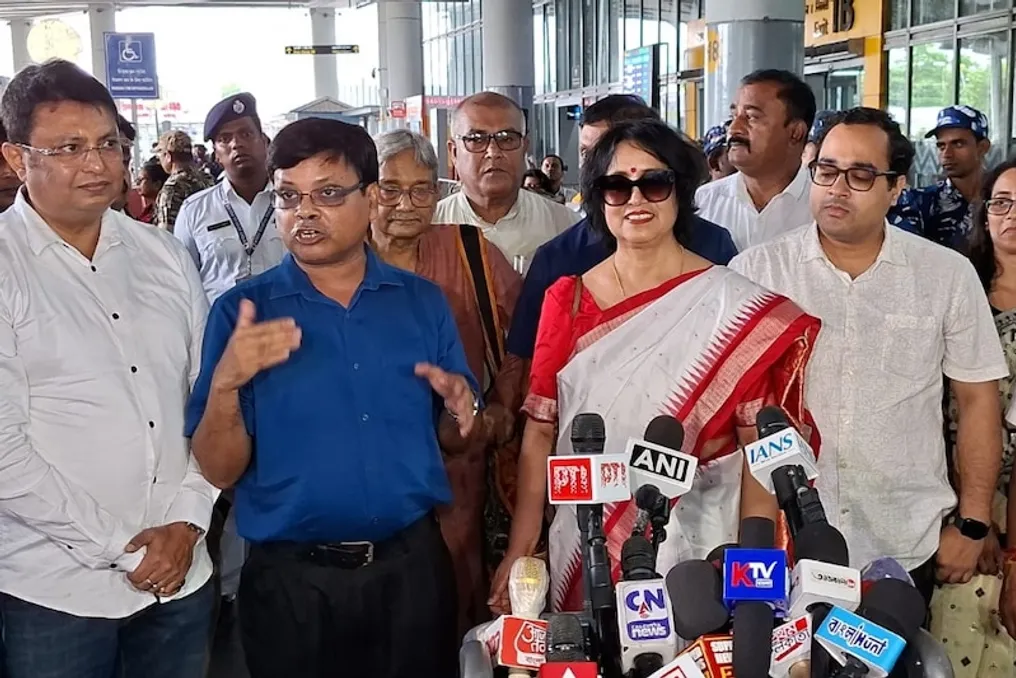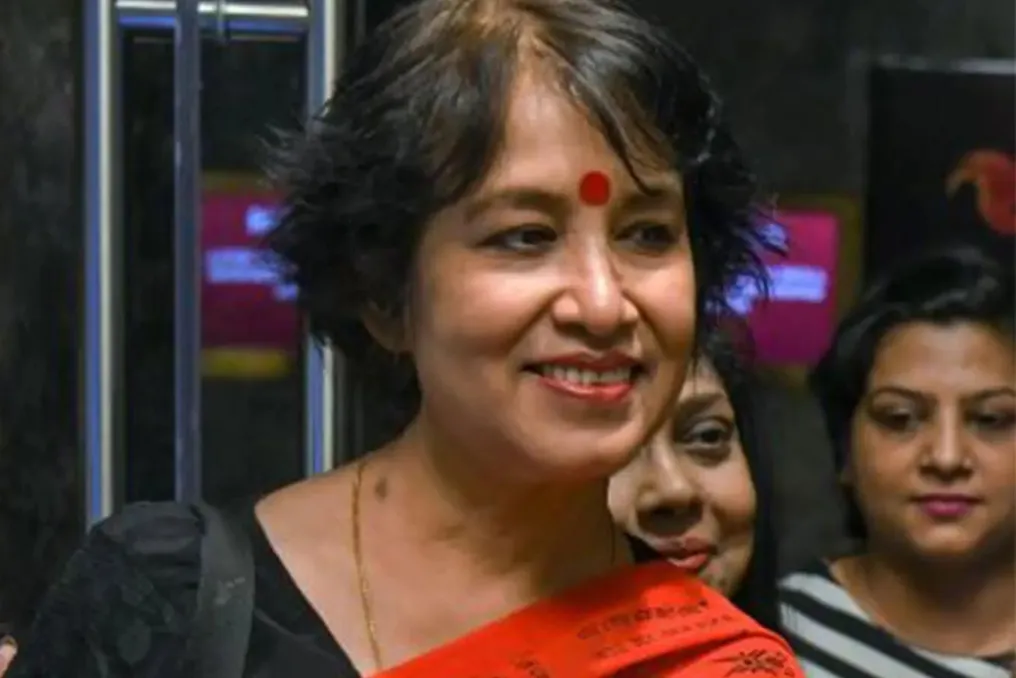
The exiled Bangladeshi writer Taslima Nasrin shared her views on returning to India after nearly two decades on Saturday, asserting that it serves as proof that 'injustice can be long, but it cannot be permanent.'
These statements were made by her during an event in Calcutta, almost two decades after she was forced to leave the city in 2007. The writer, who was 63 at the time, had managed to live in Calcutta since 1994, having left Bangladesh due to death threats from radical groups linked to her views on religion and her writings.
Nasrin, who resided in Europe, also clarified that her return to Calcutta is not tied to any political agenda. Quotes provided by PTI state: 'Today, opening this door proves that injustice can be long, but it cannot be permanent. History remembers who closed doors and who opened them... I am not here to speak for any political party or against any party. I am here to advocate for women's rights.'
She also expressed concern over what she termed the 'rise' of religious extremism in Bangladesh. Nasrin stated: 'I oppose all forms of fundamentalism, but I spoke out against Islamic fundamentalists because I saw it firsthand since childhood. The rise of fundamentalism in Bangladesh is at an alarming stage. Freedom of speech is being restricted.'
Visibly emotional, Nasrin described her return as the 'fulfillment of a long-awaited moment.' She added: 'It took me 19 years to say these words: 'I have returned to Calcutta.' I felt the pain of losing an address every day. On August 8, 1994, the then government forced me to leave Bangladesh. The state could remove me from my country, but it can never remove my country from within me.'
Expressing regret over the inability to find permanent housing in either Bangladesh or West Bengal, Nasrin emphasized that Europe provided her with safety but not a sense of belonging. She noted: 'Europe gave me citizenship and a place to live, but unfortunately, I could not find a small place to reside in the two Bengals. Europe gave me security, but it could not give me a sense of belonging. A home is built not just on security; it is built on language, memory, and culture.'
Nasrin insisted that she had never been convicted by any court but faced restrictions due to opposition from fundamentalist groups. She stressed: 'I did not commit a crime. The court never punished me. It is a painful truth of our times that a writer needs police protection to visit a city in their native language.'
Refuting accusations of offensive content in her works, she highlighted that her work focused on equality and human rights. She stated: 'I only spoke about equal rights for women and men, as well as human rights regardless of religion or caste. I said that any rule or doctrine that takes away equality and human dignity must be changed.'
Furthermore, she criticized the unequal treatment of women in the name of religion and supported the introduction of a Uniform Civil Code across South Asia, arguing that religion-based personal laws discriminate against women. She concluded: 'The real conflict is between secularism and fundamentalism, between rational reason and irrationality, between innovation and tradition, and between people who value freedom and those who do not.'