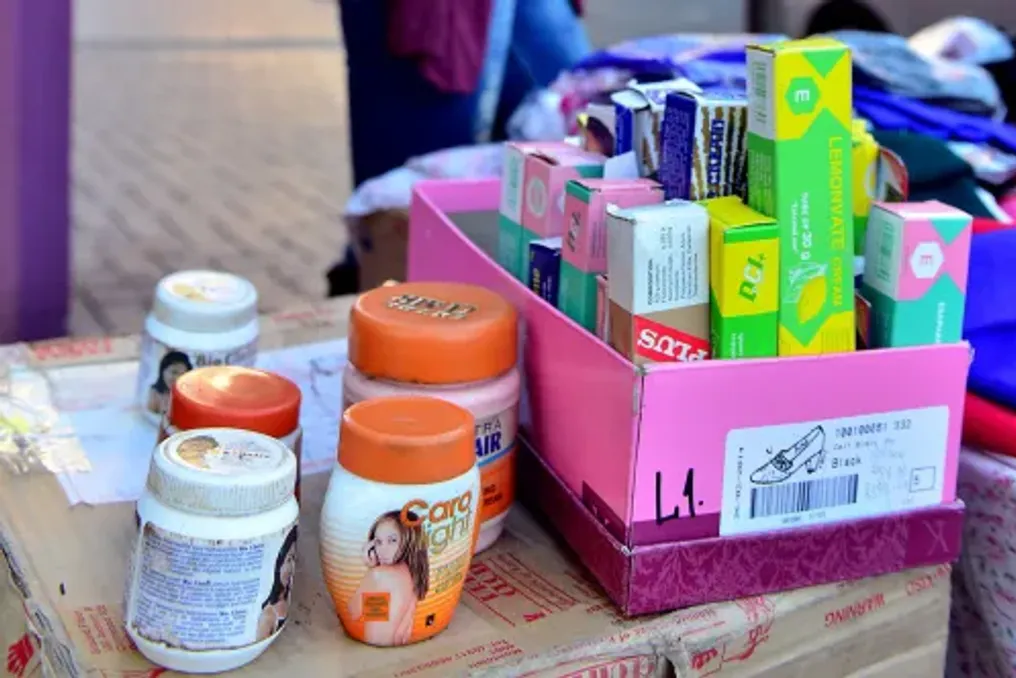
In Johannesburg, vendors sell skin lightening products that children as young as five years old are exposed to. Experts warn that this practice can lead to long-term skin damage and is linked to cases of potentially fatal forms of skin cancer.
Scientists consider the widespread use of skin lightening products in Africa, Asia, the Middle East, and South America a serious but often overlooked public health issue.
Professor Nkoza Dlova, head of the dermatology department at UKZN, has been appointed chairperson of the newly established Strategic Working Group on Skin Lightening. This global initiative aims to address health problems associated with harmful skin lightening practices.
The warning came amid South African researchers preparing a publication that may contain the first documented cases of squamous cell carcinoma linked to prolonged use of skin lightening agents.
Health
Dlova explained that squamous cell carcinoma is not common among people with darker skin because melanin provides protection against harmful ultraviolet radiation. She emphasized: 'When we remove melanin, we are effectively removing the very compound that protects us from skin cancer.'
Dlova reported that she and her colleague completed a study involving 50 patients from Senegal who developed squamous cell carcinoma after reporting prolonged use of skin lightening products. Researchers in South Africa were also preparing a paper based on several local cases.
Patients in the Senegalese study reported using skin lightening products for 10–20 years before developing squamous cell carcinoma. Dlova noted that while skin lightening was more commonly associated with women, it was increasingly used by men. Data from Nigeria, where mothers apply skin lightening products to their children, caused even greater concern.
During a recent public awareness campaign in Nigeria, Dlova encountered products specifically marketed for children. She stated: 'Children are exposed starting from five years old.'
Some skin lightening products contain hydroquinone, corticosteroids, mercury, and phenolic compounds. While some of these ingredients have legitimate medical uses when properly prescribed and monitored, Dlova cautioned that their misuse, prolonged application, or inclusion in unregulated products can cause serious harm.
She mentioned that some products are misleading, advertising themselves as achieving 'even skin tone,' 'light skin,' or as 'natural serums' and 'natural plant extracts,' despite containing potentially dangerous ingredients.
These products can thin the skin, making veins more visible and making users vulnerable to bruising, sun damage, darkening, and other complications. In severe cases, painless spots or ulcers can develop and enlarge.
Dlova warned that squamous cell carcinoma can be fatal if untreated, as it can spread to nearby lymph nodes and other parts of the body. She added that some people use these products not to change skin color, but to even out sun-tanned skin tone, especially in very hot regions, as skin darkens more in summer than in winter due to natural sun exposure.
She particularly highlighted the danger of product exposure in childhood, as the damage caused by removing the skin's natural ultraviolet protection can accumulate over time. 'Since melanin is our shield against harmful ultraviolet radiation, when you remove that shield, damage begins, and it becomes cumulative.'
Skin lightening practices are prevalent in several regions. Dlova reported that studies recorded usage in approximately 75% of women in Nigeria, 50% in Senegal, and 60% of participants in North India. She noted that prevalence varies between countries and communities, with some studies reporting rates as high as 70% in parts of West Africa and up to 60% in some parts of Asia. In South Africa, the prevalence was around 55%, which is still high but lower than in other countries.
Dlova pointed to deep social issues related to colorism, politics, race, and psychology. The Strategic Working Group includes dermatologists, psychologists, anthropologists, historians, community workers, and individuals who have experienced side effects and stigma associated with skin lightening. She stressed that it is not just about the desire to be lighter.
The need for strengthened regulation and continuous monitoring was noted to prevent the sale of harmful products in pharmacies, spas, beauty salons, and markets. Dlova mentioned that some products enter through 'porous borders' from India, Europe, and other parts of the world, while some are also manufactured in South Africa. She called on the government to introduce regulatory measures to ensure these products are not manufactured, imported, or sold.
Dlova noted that researchers and doctors have limited control over compliance, so their immediate priority was empowering consumers and educating them about potentially harmful ingredients. She advised consumers to be cautious with products advertised as 'natural,' 'lightening,' or 'even-toned,' especially if they cause noticeable changes in skin color. 'If anything changes your skin tone, you should stop using it.'
Dlova also explained that many users were not trying to become lighter; some were attempting to treat acne scars, melasma, or uneven pigmentation, while others wanted to match the darker skin tones of the face and arms to areas of the body covered by clothing. She said that safe treatment methods exist, but they are often expensive and inaccessible. Many patients could not afford private dermatological care, and public hospitals had long waiting lists and did not always provide treatment for pigmentary disorders.
Dlova recommended avoiding prolonged sun exposure, using sunscreen if available, and protecting the skin with hats, clothing, or umbrellas. The working group plans to focus on public education, training healthcare workers, social media campaigns, and strengthening international regulation. Dlova stated that achieving results will require support from the media, influencers, and other public figures. However, she also emphasized that long-term change requires combating colorism and social beliefs that equate light skin with beauty, success, or higher status. 'Our goal is to ensure that children grow up knowing that we are all different, but beautiful in our own unique shades of skin.'