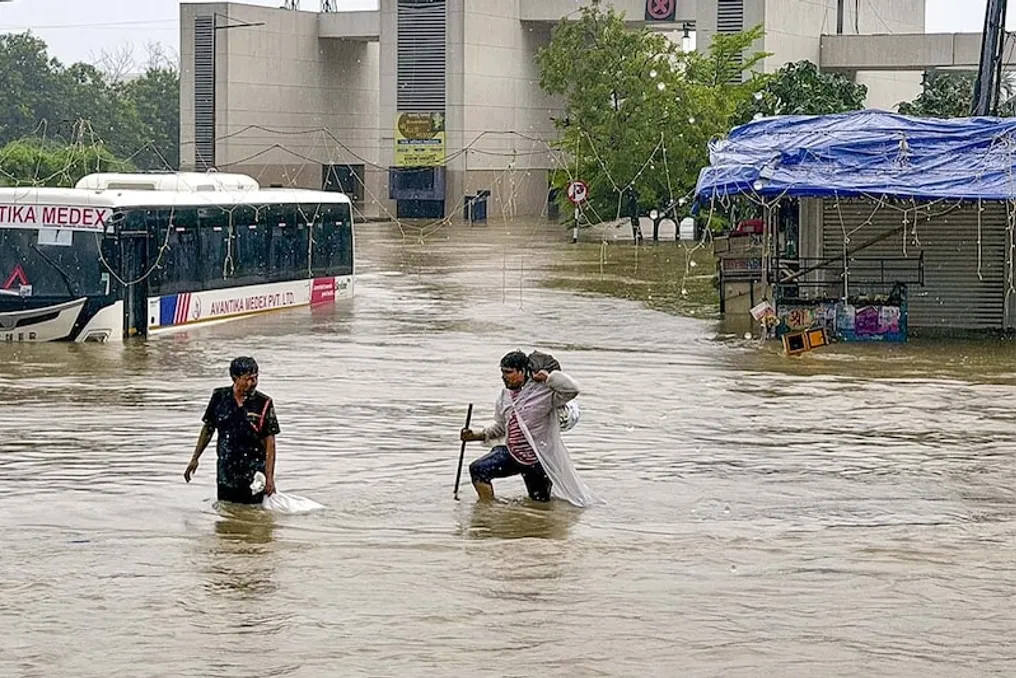
Rain has intensified again in Gujarat, and the meteorological department has issued a red alert for several districts of the state. According to forecasts, very heavy rains, strong winds, thunderstorms, and lightning strikes are expected over the next 24–48 hours.
The meteorological department explains the increase in precipitation is due to a low-pressure system that moved from Central India into Gujarat. This system is causing a continuous increase in rainfall. Consequently, there is an elevated risk of flash floods in cities and areas such as Ahmedabad, Gandhinagar, Surat, Vadodara, Navsari, and Aravalli. Residents are strongly advised to exercise caution and follow the recommendations of the meteorological department.
The meteorological department notes that although this system is gradually weakening, the moisture it brings will cause rain in Gujarat for another two days. Heavy rainfall over a short period may lead to flooding in many places, inundation of roads, and rising levels of small rivers and streams, which could affect people's daily lives.
In recent days, prolonged heavy rains have been observed in various parts of Gujarat, with reports of flooding and rising river levels. Now, with the arrival of a new weather system, intense precipitation is expected to resume. The meteorological department emphasizes that the next 24–48 hours are the most critical.
According to the IMD, the main cause of the heavy rains is the low-pressure system. This system first formed in Central India and then reached Gujarat. Furthermore, it receives constant moisture from the Arabian Sea, leading to heavy rains, thunderstorms, and gusts of wind. Even after the system weakens, the rains may continue for some time.
The meteorological department has identified an increased risk of flash floods in Ahmedabad, Gandhinagar, Surat, Vadodara, Navsari, and Aravalli. A warning for heavy rainfall has also been issued for Dadra and Nagar Haveli, as well as for Daman. Residents of areas prone to annual flooding are advised to be especially vigilant.
IMD predicts that overall rainfall in the country during August will be below normal. However, this does not mean that there will be less rain everywhere. When a low-pressure system forms, it can cause very heavy precipitation in specific areas over a short period, which is what is happening now in Gujarat.
The meteorological department urges the public to monitor the latest weather information and avoid rumors. Residents in areas under a red alert must exercise extreme caution. Since the next 24–48 hours are crucial for many parts of Gujarat, both the administration and the public must remain vigilant.