The month of August promises several attractions for astronomy enthusiasts, highlighting two eclipse events—one solar and one lunar—in addition to the peak of the Perseid meteor shower. These are just some of the celestial phenomena predicted for the period.
It is important to note that all times and dates presented refer to an observer located in Brasília (DF) and may vary slightly depending on the observer's geographical location. To ensure maximum accuracy, it is recommended to use specialized applications such as Star Walk, Stellarium, or SkySafari, which provide the exact position of celestial bodies according to the user's location.
On August 2nd, comet 10P/Tempel will reach its perihelion, which is the point closest to the Sun in its trajectory. The best viewing window for this comet will be before sunrise, when it is higher in the sky.
On August 3rd, comet 10P/Tempel will reach its maximum brightness and simultaneously reach its perigee, being the point closest to Earth.
Other milestones include the waning moon on August 5th at 11:22 PM, and the waxing moon on August 19th at 11:46 PM.
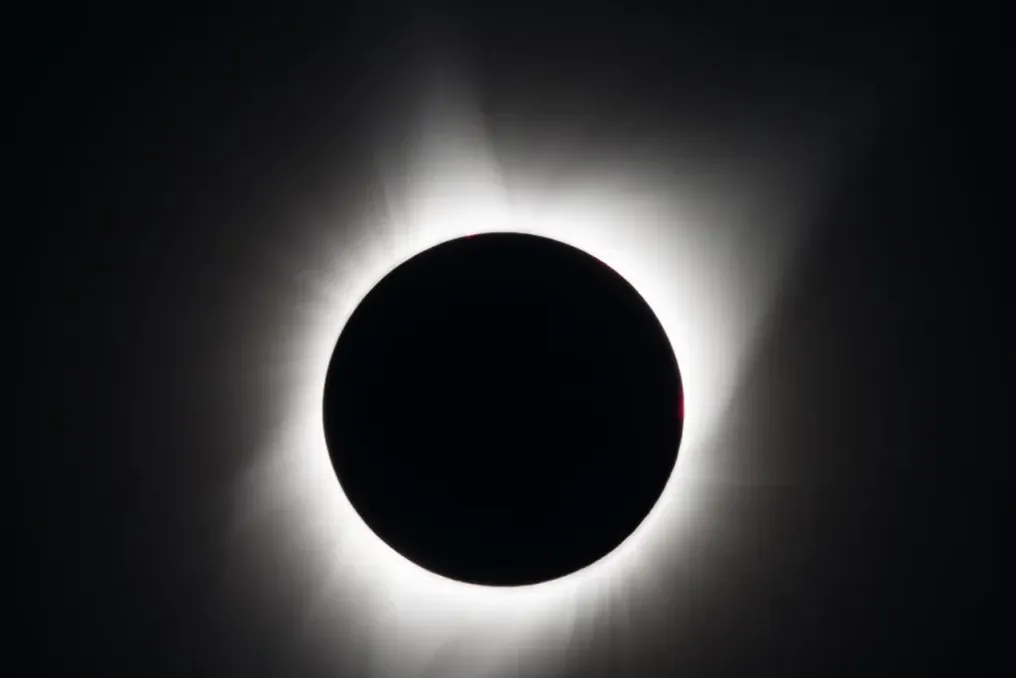
The total solar eclipse is scheduled for August 12th. This event will allow for the complete viewing of the Sun in regions such as the Arctic, Greenland, Iceland, northern Spain, and a small part of Portugal. In contrast, the partial eclipse phase will be visible throughout the rest of Europe, in North Africa, and in the eastern part of North America. On the same day, the Moon will enter the new phase at 2:37 PM.
Between August 12th and 13th, the Perseid meteor shower, active from July 17th to August 24th, will reach its peak. This phenomenon occurs when the Earth passes through the trail of particles left by comet 109P/Swift-Tuttle, located in the constellation Perseus. Since the apex coincides with the New Moon, it offers ideal conditions for observation.
In Brazil, although the display is not as impressive as in countries in the Northern Hemisphere, it is possible to see luminous trails after 1:30 AM, especially in the northern and northeastern areas. The shower activity extends until dawn, around 6 AM, when its radiant point will be highest. Therefore, the best times for the country are shortly before this time, starting from 3:30 AM.
The partial lunar eclipse will occur on August 27th or 28th. All of Brazil will be within the best visibility area, allowing residents from all regions to follow the event completely. Since it is a nighttime event, the Moon will be high in the sky, facilitating the observation of the Earth's shadow covering part of the lunar disk. In addition to South America, the eclipse will be clearly visible across North America, Europe, and Africa.
Additionally, August is considered the month with the highest probability for the launch of the Chang'e 7 mission, conducted by the China National Space Administration (CNSA). This mission is destined for the south pole of the Moon and will feature an orbiter, a landing module, a rover, and a hopper robot, all intended to investigate the lunar environment, search for water ice, and assist in planning future activities in the region.