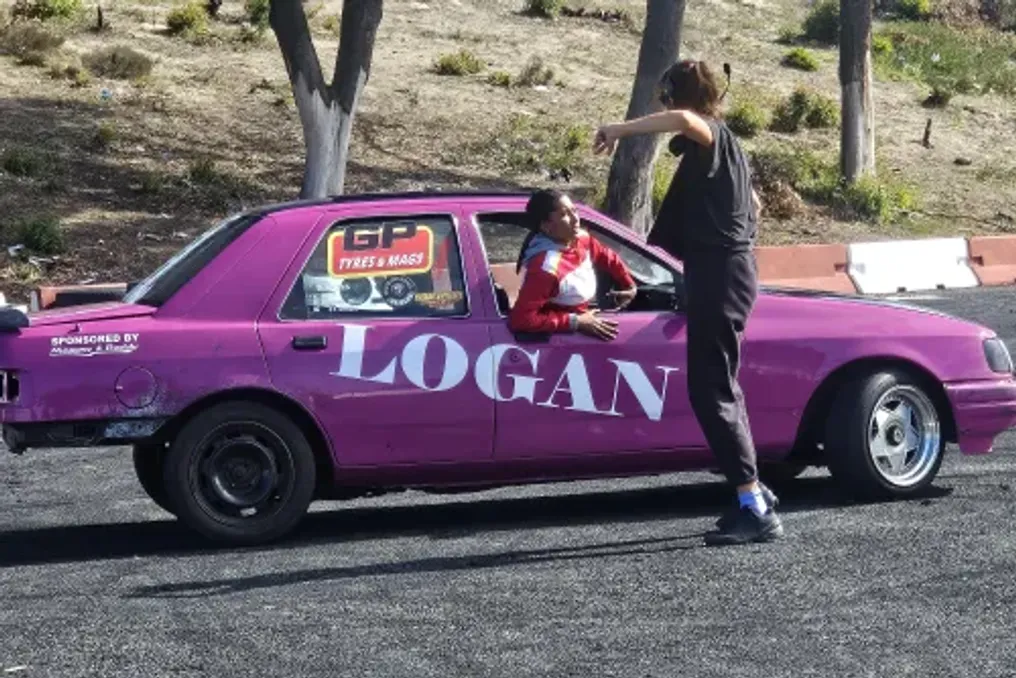
Award-winning filmmaker Julia Yang presents her new feature documentary, 'From Dust We Spin,' which will premiere for the first time at the Durban International Film Festival this year. The film is set in the Cape Flats area and tells the story of an 18-year-old girl who finds meaning in the forbidden world of auto racing while simultaneously dealing with mental health issues.
The story also features a coach who uses this sport to keep young people away from gang activity.
The project 'From Dust We Spin' began when Yang was working on production for Disney Plus and met producer Mark Linden, who headed the 'Slip and Slide' program in Mitchells Plain. Linden introduced her to the sport of racing, which involves modified cars used domestically as a way to engage local youth and prevent them from getting involved in drugs and gangs.
Yang initially rejected the idea, but returned to the project after seeing a speech by Minister of Sport and Culture Gethon Mackenzie discussing the legalization of racing. The filmmaker connected with Logan, a student who was learning to race. Production took two years, during which Logan's growth from eleventh grade to graduation was documented, alongside tracking the pursuit of racing recognition.
Yang emphasized the importance of authenticity and consent in documentary filmmaking, noting that Logan led the process. She stated: 'You cannot show anything false; it becomes obvious immediately.' Yang added that Logan's bravery in openly discussing difficult topics, including suicide and mental health issues, required immense courage. To ensure ongoing consent, they used a method where after Logan spoke, she would pause, and the team would check on her well-being by playing back scenes from the film.
For Yang herself, observing the development of Logan's story was like therapy. Although some may not consider racing a traditional sport, for the racing community, it has become a source of pride. According to reports, racing is deeply rooted in South African culture and has existed for over thirty years.
Years ago, racing sparked heated debates, often criticized as dangerous. Although the sport's legality is achieved only on specially designated, regulated tracks and sanctioned events, it remains illegal if conducted on public roads or unauthorized locations. Yang recalls her concerns about all the permits when operators filmed the races with the racers. She revealed that there was initially a version of the documentary with a strong political slant and commentary from politicians such as J.P. Smith and Mackenzie, but the version focusing on Logan's story was ultimately chosen.
Mark Linden noted that one of the main problems with racing in the Western Cape, especially in Mitchells Plain, is the lack of a legal venue for racing. He explained that because there is no place to simply go, illegal events occur. He also mentioned that various organizations, such as spin, interact with the government to coordinate time slots and designated areas.
Regarding the world premiere of the documentary, Yang called it 'special,' especially because her home country will see it before the rest of the world. Usually, films premiere abroad first and then return home, but they decided not to do so because the topic of racing is currently very relevant in South Africa. She noted that participation in DIFF, one of the largest Oscar-contending festivals, is a huge achievement, and the subsequent premiere in the Western Cape at Silwerskermfees also generates great excitement.