Significant changes may begin not with loud slogans, but with a simple class or another lesson in a local area. This could be a woman taking up a computer for the first time; a craftsman learning how to bring their products to market; or an elderly person discovering the possibilities of artificial intelligence or self-service government utilities. Each of these stories seems unique, yet they are united by one goal—investing in human capital and improving the quality of life through knowledge.
The 'Educational Zones in Jizzakh – a field of knowledge and opportunities' project, implemented in the Jizzakh province based on the principle of lifelong learning, serves precisely this noble goal. This initiative quickly transformed from just another social program into a practical model that awakened the need for knowledge in local communities and strengthened people's belief in their own abilities and potential.
This project, carried out by the 'Kalb Nuri' Center in Jizzakh province with the support of a small grant from the branch of the German Association of Universities (DVV) in Uzbekistan, is designed for three months. Its main task is to expand the population's opportunities for continuous education by creating 'Educational Zones' in the city of Jizzakh and the Pakhtakor district. The project is also aimed at developing digital, media, and entrepreneurial skills and strengthening the economic independence of residents.
This aligns with the country's state policy aimed at investing in human capital, increasing the professional potential of the population, and reducing poverty through education. Thus, this initiative holds special significance as a practical result of effective cooperation between state institutions, civil society organizations, and international partners.
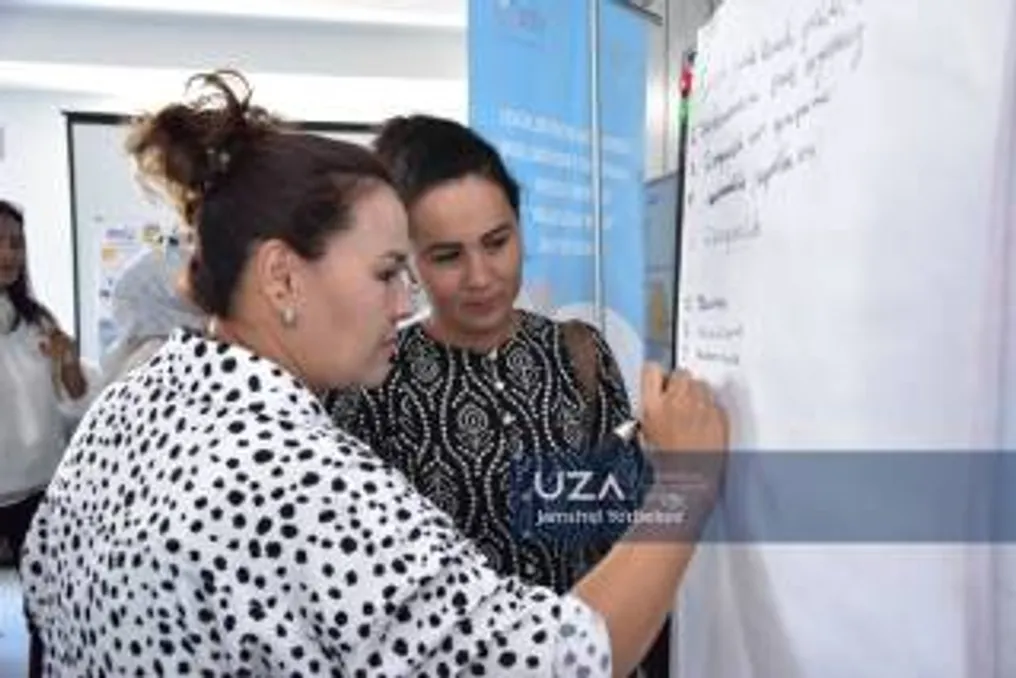
As part of the project, 20 master classes were organized for residents of the villages of Kimyogar in the city of Jizzakh and Dostlik in the Pakhtakor district, as well as for residents of adjacent territories. These classes were dedicated to developing vital and professional skills. Specialists from various fields were invited to cover important topics such as 'Effective Use of Tomorka,' 'Craftsmanship as a Source of Income,' 'Family Communication Skills,' 'Fundamentals of Entrepreneurship and Business Plan Creation,' 'Financial Literacy,' 'Improving Medical Culture,' 'Leadership, Negotiation, and Personal Initiative,' 'Loans and Their Use,' 'Taxes and Tax Benefits,' and 'Legal Literacy.' As a result, over 200 participants were able to strengthen their knowledge and practical skills.
Nodira Alimova, Director of the 'Kalb Nuri' Center in Jizzakh province, emphasized that the greatest achievement of the project is not the number of figures, but how these changes manifest in people's lives.