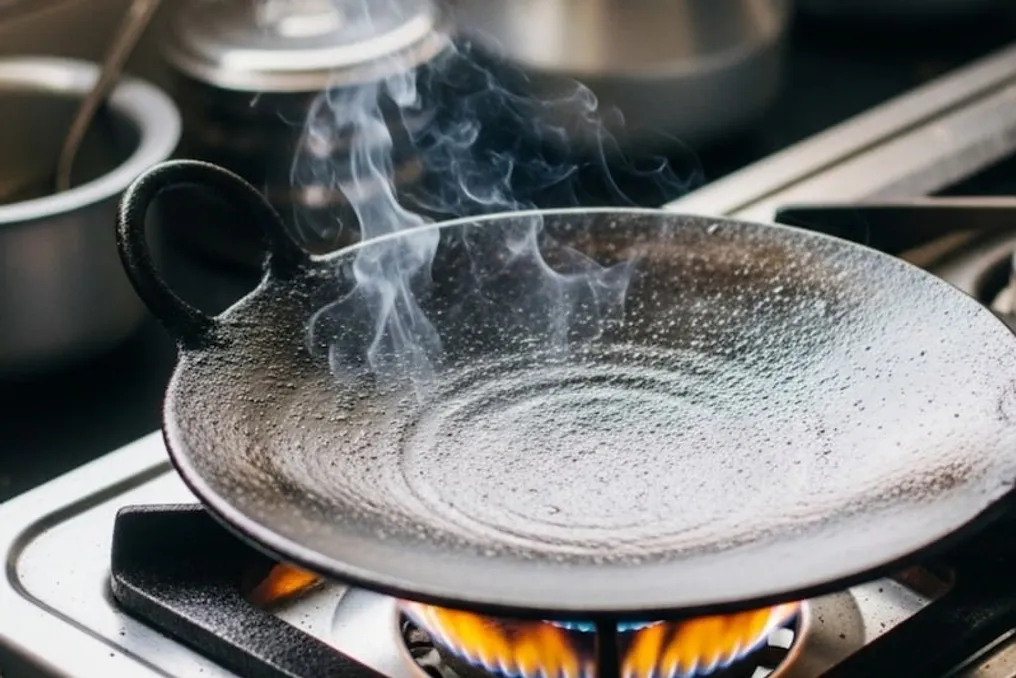
There are many small kitchen rules that people often ignore unconsciously, but they can have a profound impact on life. Often, after making roti or when cleaning a pan, water is immediately poured onto it, accompanied by a loud sizzling sound. This raises the question of how this ordinary habit can trigger crises in life. According to the principles of Vastu Shastra and astrology, pouring water onto a hot pan is considered extremely inauspicious.
According to astrological specialists, the pan used in the kitchen is associated with the deity of justice or the shadow planet Rahu, while water is viewed as a symbol of coolness associated with the Moon. When cold water hits a heavily heated pan, a conflict occurs between Rahu and the Moon, which portends sudden major problems, mental stress, and destruction in life.
In Indian culture, water is revered as a form of life and a deity, so it is respected. It is believed that pouring water onto a hot pan, turning it into steam and immediately releasing or burning it, is an insult to water. From a Vastu perspective, such behavior attracts negative energy into the home, leading to the stagnation of well-being.
There is also a belief that the steam and loud noise generated when adding water to a hot pan negatively affect the health of family members. This can cause sudden serious illnesses or hidden health problems in any household member.
The kitchen is considered the place of Annapurna, the goddess of food. The defect created by pouring water onto the pan can deprive the home of peace and harmony. This may lead to arguments between spouses or other family members, as well as financial difficulties.
After use, the pan should always be left upright and in a clean place; it should never be placed upside down, as this is considered a serious Vastu defect. It is also strictly forbidden to cook the first roti on a dirty pan that has not been washed or was used the day before; the pan must always be cleaned first before placing it on the stove.
Furthermore, the pan and pot should be placed in the kitchen in such a way that they are not visible to guests entering the home.