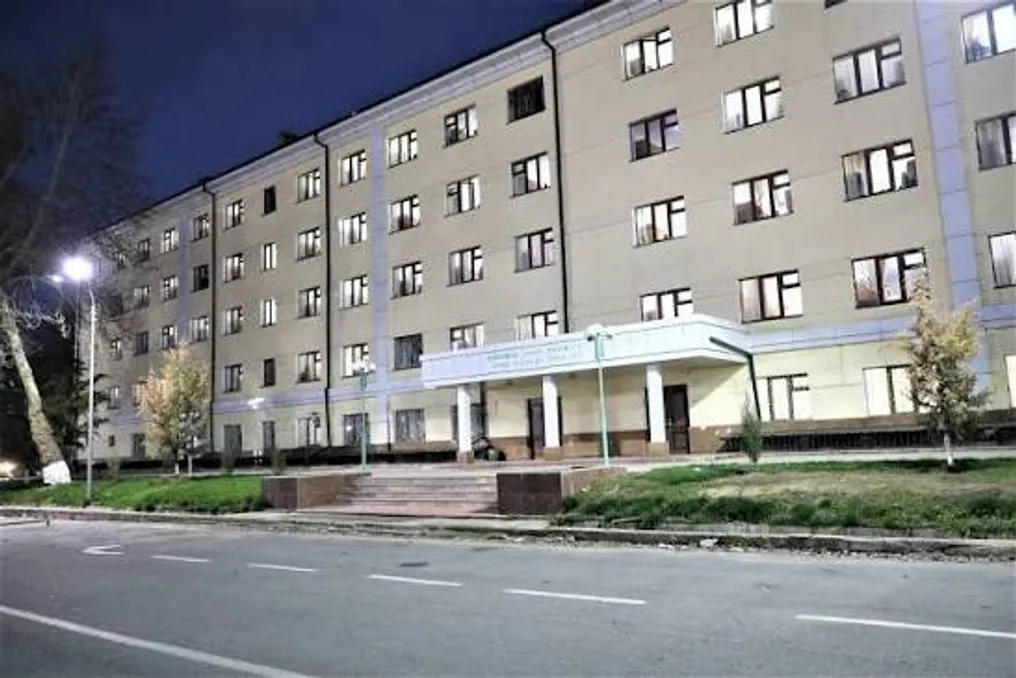
Since August 1, students in Uzbekistan have had the opportunity to apply for accommodation in student dormitories through the EPIGU public services portal.
Since August 1, students in Uzbekistan have had the opportunity to apply for accommodation in student dormitories through the EPIGU public services portal.
For students without benefits, specific percentages of places have been established: 55 to 65 percent is allocated to first-year students, 15 to 20 percent to second-year students, and 20 to 25 percent to third-year and older students.
Applicants recommended for admission to the first year during the 2026/2027 academic year can only submit their applications after the official announcement of the final admission results.
Concurrently, an updated housing registration system has been implemented. The contract payment process now automatically initiates the registration of temporary residence at the actual place of living. Previously, this process required collecting numerous documents and applying to various state bodies; however, now the entire procedure is consolidated into one service: the student makes a payment, receives confirmation, and is immediately registered.
This registration remains valid throughout the period stipulated in the concluded contract. Furthermore, the Ministry of Higher Education, Science and Innovation previously refuted rumors circulating on social networks regarding the sale of student dormitories.
The opportunity to apply for mortgage subsidies is reopening in Uzbekistan. The application period is scheduled to start on July 27, 2026, at 15:00. This process utilizes the remaining unused notifications issued to meet target indicators.
For an application to be accepted, a citizen must score at least 30 points in the social assessment, and their average monthly income must meet specific criteria. A critical condition is that the applicant and their spouse must not own any real estate within the entire territory of the republic.
Furthermore, the applicant's credit history must fully satisfy the internal requirements of at least one of the fifteen commercial banks participating in this program. Applications can be submitted in several ways: directly through Public Service Centers, or electronically via the myGov mobile application or the unified portal my.gov.uz.
Military personnel and employees of security agencies are required to submit documents only by personally visiting Public Service Centers. When completing the documents, it is crucial to ensure that access to personal data is permitted for commercial banks in the OneID system and that there is no temporary ban on obtaining a credit history. Otherwise, banks will be unable to verify the applicant's financial solvency, which will result in an automatic rejection.
The list of banks cooperating under this program includes institutions such as Agrobank, Alokabank, Asakabank, Asia Alliance Bank, Business Development Bank, Hamkorbank, Ipak Yuli, Ipoteka-bank, Microcreditbank, Orient Finance, Trustbank, Turonbank, Halk Bank, NBU, and Uzpromstroybank.
Uzbekistan plans to create a Higher School of Integrated Programs with the aim of expanding the application of international educational standards. Corresponding measures are stipulated in the presidential decree 'On additional measures for the implementation of secondary vocational, professional, and higher education in the republic based on international educational standards' (No. PP-269 dated July 17, 2026).
This document provides for the further development of the integrated educational program system, which is implemented in partnership with the British educational organization IQF (Integrated Qualifications Framework). Previously, the Center for International Qualifications and Assessment was established for these purposes.
According to the decree, the Center has been assigned additional tasks to bring integrated educational programs into compliance with the academic requirements of foreign universities included in the top 100 global rankings of QS (Quacquarelli Symonds) or Times Higher Education (THE).
The Center will also be responsible for developing educational models such as '1+3' and '2+2' for bachelor's programs, as well as the '1+1' model for master's programs. It is expected that these programs will be recognized by foreign universities included in the top 100 global rankings.
Furthermore, the Center will prepare agreements on opening campuses, branches, franchises, centers for implementing educational programs, and other structures in Uzbekistan focused on issuing diplomas from leading foreign higher education institutions. As part of the experiment, the Higher School of Integrated Programs will be established at the Tashkent University of Architecture and Civil Engineering, and its activities are aimed at introducing integrated educational programs using best practices from Great Britain.