Innovations often begin with an idea, and the Rooibos project is currently gaining momentum in the global space sector, demonstrating that agricultural science is developing not only in offices but also directly in field conditions.
Innovations often begin with an idea, and the Rooibos project is currently gaining momentum in the global space sector, demonstrating that agricultural science is developing not only in offices but also directly in field conditions.
Food For Mzansi conducted an interview with Douwe de Villiers, the director of the South African Rooibos Council (SARC). He detailed the mechanisms for sending local produce into orbit, the timeline for the upcoming launch, and how the project is transforming agricultural classrooms into true space laboratories.
Seeds of South African rooibos will be delivered to the International Space Station aboard the SpaceX Falcon 9 rocket. They will remain there for about six weeks, exposed to microgravity and cosmic radiation, before returning to Earth for testing.
It was noted that they have been given an exceptional opportunity to join other scientific experiments heading into space. It is a great honor for them to include their iconic South African product in this mission, which allows them to showcase a healthy, versatile, and tasty local product to a global audience.
Organizing a space mission requires immense complexity. The realization of the project demanded intensive and rapid work from all participants. Work was done on determining logistics, contacts, and confirming partner schools; specific laboratory experiments for the classrooms were developed, and critical deadlines aligned with the strict rocket launch schedule were finalized.
It is important to emphasize that at this stage, rooibos is not being considered for use in space exploration missions or as astronaut rations. The research is purely exploratory, aiming to study how the plant behaves after exposure to the harsh space environment. If clear, measurable differences in growth are observed upon return, it will pave the way for a completely different, deeper research project.
Local schools are a significant part of this initiative. Several schools from the Cederberg region, where rooibos is grown, are participating, including Môrester Akademie in Vanrhynsdorp, Sederberg Primary School, and Clanwilliam Sekondêr in Clanwilliam, Cederberg Academy in Citrusdal, Graafwater Primer in Graafwater, PW De Bruin Primary School in Lambert's Bay, and Hoërskool Piketberg in Piketberg.
Furthermore, Parklands College in Cape Town serves as a strategic partner for the project, providing its established course in space sciences and extensive experience in developing educational experiments for space missions.
The selection process was intentionally designed to maximize participation rather than limit it. The Western Cape Education Department, in collaboration with MaxIQ Space, invited schools from the rooibos growing region to apply. Initially, only five schools were planned to be selected, but partners quickly recognized the unique educational value of this initiative. Therefore, the decision was made to expand the reach and include every suitable school that expressed interest and applied, so that as many students from these agricultural communities as possible could gain this unique scientific experience.
The rocket launch is slated for October. After six weeks in orbit, the seeds are expected to return to South Africa in early 2027, presumably around February, although this is entirely dependent on the final mission schedule. Upon return, students will receive two separate seed sets: one exposed to space and a control set that remained on Earth. They will be provided with special kits and instructions for sprouting, cultivating, and measuring the plants during the natural rooibos planting season between February and March.
Since rooibos seeds typically germinate within two to three weeks, schools will be able to observe and compare initial growth rates very quickly. The South African Rooibos Council hopes that this project will be deeply inspiring, encouraging young students to pursue science, technology, engineering, and mathematics (STEM). Even if this is the only achievement, the project will be considered a huge success. However, if changes in plant characteristics are observed as a result of microgravity and radiation, the biological aspects will be studied much more deeply.
The beloved South African rooibos tea is preparing for an unusual journey that will take it far beyond the Cederberg mountains and into orbit. For the first time in the country, rooibos seeds will be delivered to the International Space Station (ISS) later this year as part of a new initiative, 'Rooibos in Space.'
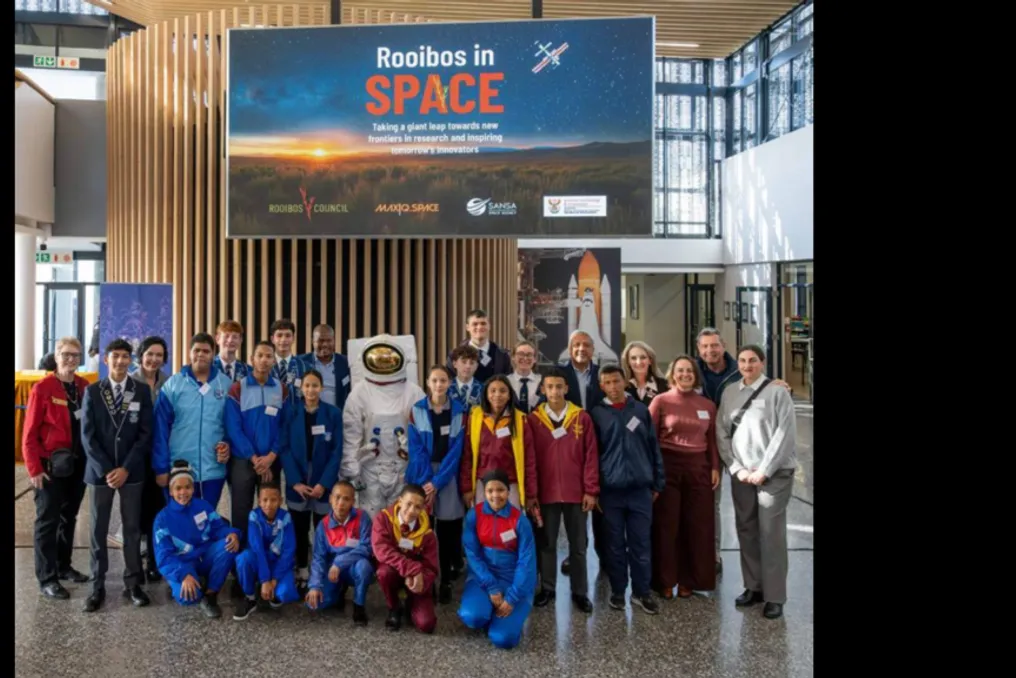
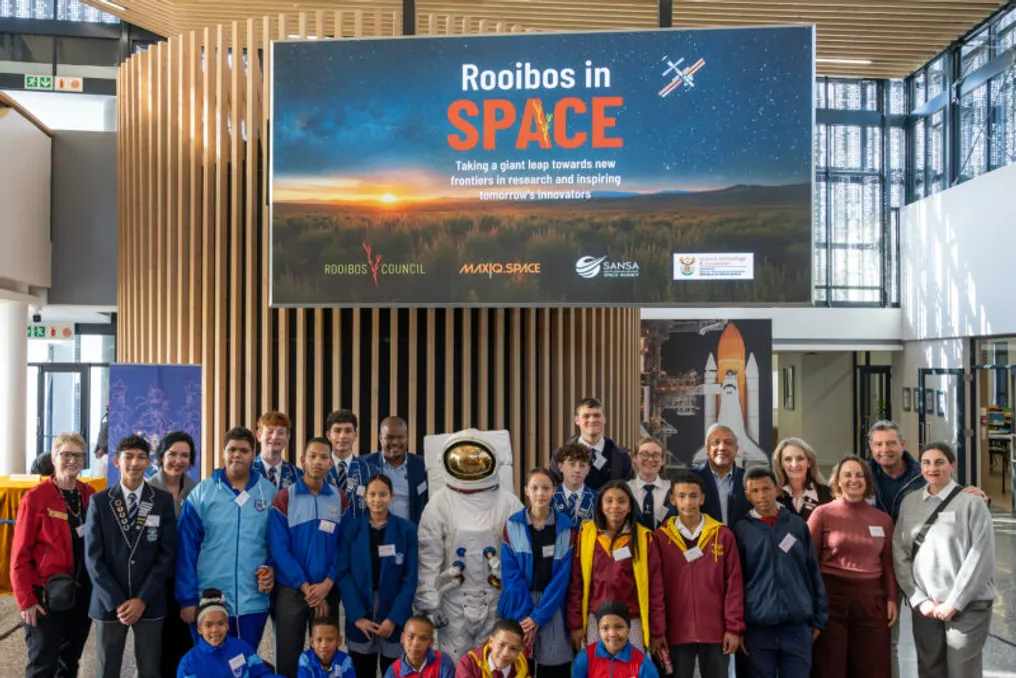
This project combines advanced space research with practical scientific education for South African students. The official launch of the program took place at the Parkland College Innovation Centre in Cape Town, where specialists from education, agriculture, and space science gathered to celebrate this initiative, which merges one of South Africa's most iconic plants with the future of space exploration.
Rooibos has long been recognized as one of South Africa's most unique agricultural products, grown almost exclusively in the Cederberg region of the Western Cape. It will now become part of international scientific research. The project, developed by the South African Rooibos Council (SARC) in partnership with MaxIQ Space and supported by the South African National Space Agency (SANSA), plans to launch rooibos seeds on the ISS in October.
After reaching the orbital laboratory, the seeds will spend several weeks under the influence of microgravity and cosmic radiation before returning to Earth. Researchers and students will then compare the seeds that traveled in space with a control group left on Earth, studying differences in germination, plant growth, resilience, and yield.
A key component of this initiative is the focus on education. Students from seven schools in the Cederberg—the origin of rooibos—will lead the scientific investigation alongside local rooibos farmers. Parkland College will also conduct a parallel experiment, allowing scientists to compare results obtained under different growing conditions.
In addition to planting seeds, students will collect data, analyze results, and gain direct experience in conducting scientific research. The program aims to strengthen STEM education, demonstrating to students the link between classroom lessons and real-world scientific challenges.
Scientists worldwide are increasingly studying plant behavior in space as space agencies prepare for longer missions to the Moon and eventually Mars. Growing crops in space could help astronauts produce food, generate oxygen, and support long-term human survival during deep space travel. Experiments conducted aboard the ISS over the past decade have already shown that some crops can grow in microgravity conditions, helping researchers better understand plant responses to unique space environments. South African rooibos is now joining this growing field of research.
The project also highlights South Africa's growing role in global space science while celebrating a plant that has become a symbol of the nation's agricultural heritage. To encourage broader participation, students across South Africa will be invited to design an official 'Rooibos in Space' mission patch in July and August, giving young people another opportunity to be part of this historic mission.
Staff involved in the launch noted that collaboration between education, science, agriculture, and industry helps create new opportunities for students and increases interest in future careers in STEM. The announcement generated great enthusiasm as it unites two proud South African success stories: rooibos and scientific innovation. While countries around the world continue to experiment with crops in space, this presents a unique chance for South Africa to contribute to international research using a plant found nowhere else on Earth. As preparations continue for the October launch, organizers reported that the public will be able to follow the mission through project updates, student activities, and key milestones as rooibos begins its remarkable journey from the Cederberg to the International Space Station.