FIFA is studying the possibility of increasing the number of participants in the World Cup to 64 teams. It should be recalled that the 2026 World Cup, which took place this summer, was organized with 48 national teams for the first time in history.
FIFA is studying the possibility of increasing the number of participants in the World Cup to 64 teams. It should be recalled that the 2026 World Cup, which took place this summer, was organized with 48 national teams for the first time in history.
FIFA has begun studying the potential to increase the number of participants in the 2030 World Cup from 48 to 64 teams. This was reported by The Touchline.
Previously, FIFA President Gianni Infantino did not rule out that the number of participants in the World Cup could be increased to 64 national teams in the future.
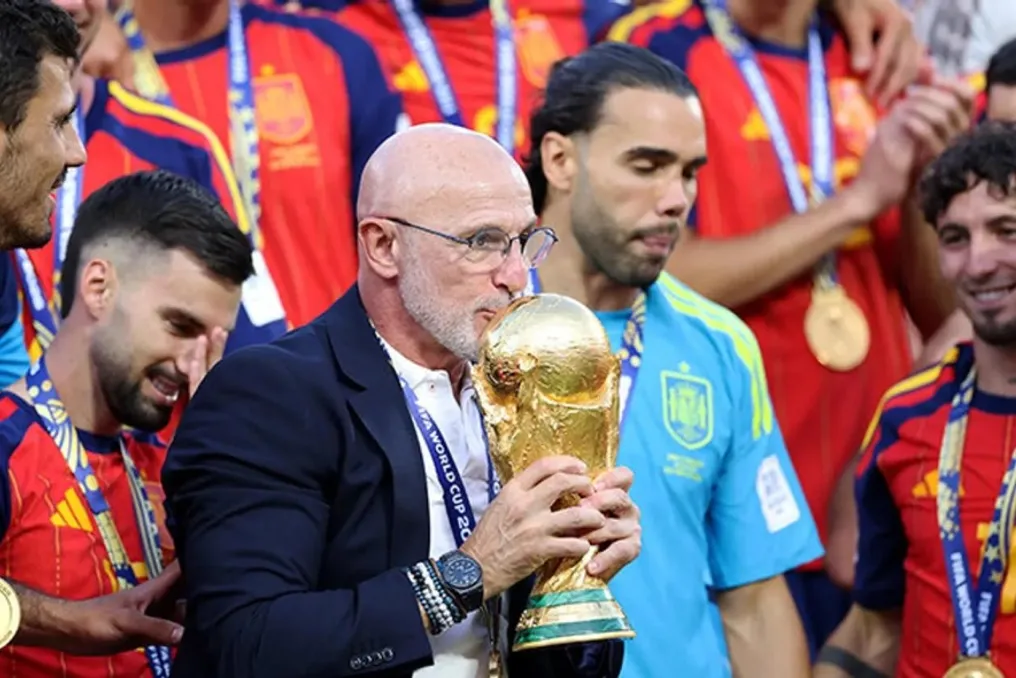
It is worth noting that the 2026 World Cup, held this summer, was the first in history to feature 48 teams. Spain won the tournament, defeating Argentina 1-0 in extra time in the final.
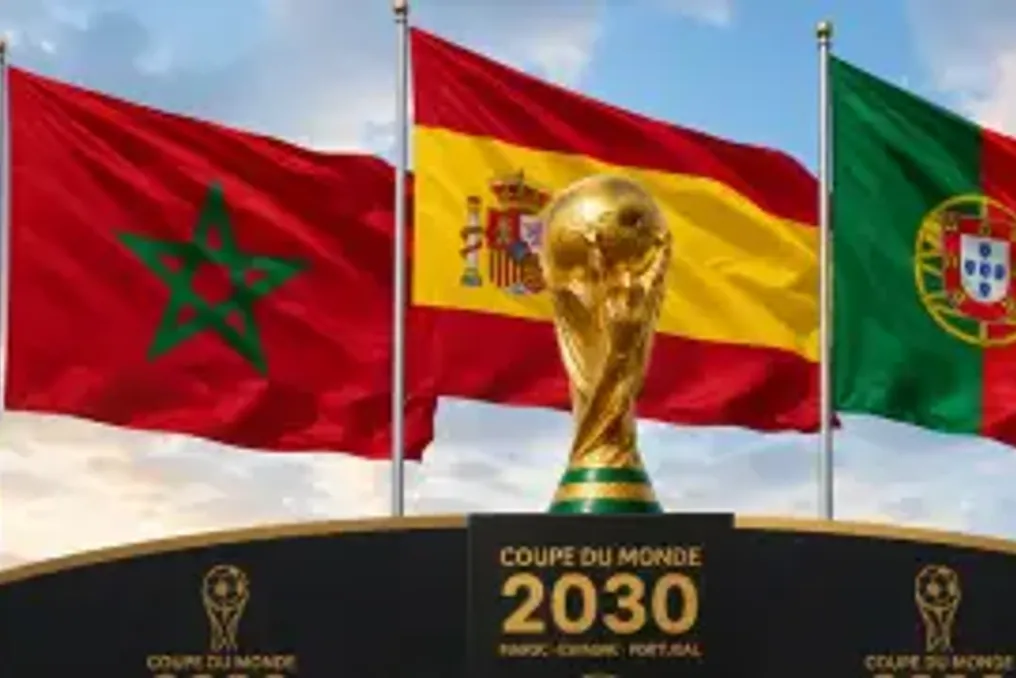
The 2030 World Cup will be held in Spain, Portugal, and Morocco. To celebrate the 100th anniversary of this competition, opening ceremonies will also take place in Uruguay, Paraguay, and Argentina.
According to FIFA statistics, a ranking of the best footballers of the 2026 World Cup was compiled. This ranking takes into account players' effectiveness in developing attacks and creating scoring opportunities.
All field players who participated in the tournament were evaluated based on three aspects: attacking, creative, and defensive metrics, with scores ranging from 0 to 10.
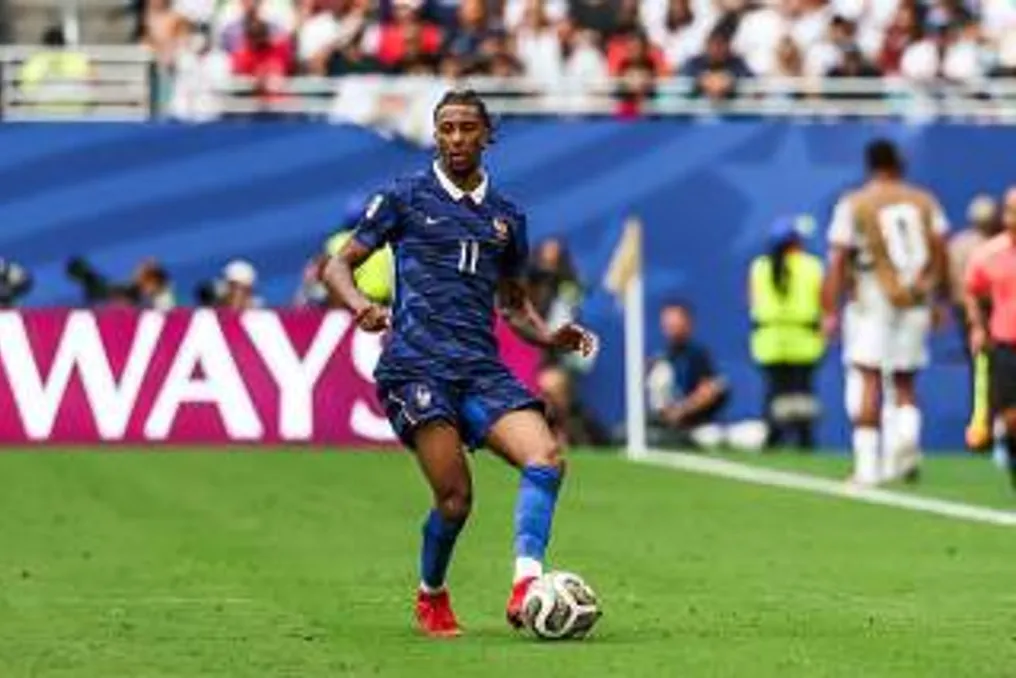
France national team winger Michael Olise took first place in the creativity metric, scoring 8.29 points. Thanks to this result, Olise also became the tournament's top assist provider, making 7 assists during the 2026 World Cup.
Lionel Messi ranked second in the creativity rating with a score of 8.26 points, and Kylian Mbappé placed third with 7.84 points.
The 2026 World Cup has concluded, and according to Podrobno.uz, the tournament set numerous records for goals scored, attendance, and financial payouts. Spain won the world championship title, while Uzbekistan participated in the World Cup for the first time.
In the final match, Spain defeated the reigning champion Argentina. Although the score was minimal, this match was part of the largest World Cup in history, which spanned three countries, featured 48 national teams, and consisted of 104 games. Only one accurate shot decided the fate of the tournament.
During regular time, Spain took 15 shots, while Argentina failed to hit the target even once. The Spanish team converted 20 shots out of 3, but no goal was scored before extra time. Emiliano Martínez set a record for World Cup finals by making 12 saves. Argentina only managed to shoot at goal after the 90th minute, already playing with a man down after Enzo Fernández's sending off.
Spain demonstrated exceptional defense, conceding only one goal in eight matches, which is the lowest figure among all World Cups. Unai Simón also set a record by finishing seven matches without conceding a goal. The only team that managed to break through this defense was Belgium in the quarterfinals. Interestingly, the future champion started their journey with a goalless draw against Cabo Verde.
Three of the four major individual awards went to the Spanish dressing room: Rodri received the 'Golden Ball' as the best player, Unai Simón received the 'Golden Glove', and Pau Cubarsí was named the best young footballer. Kylian Mbappé received the 'Golden Boot'. This tournament showed that team success is built on a cohesive system, not just on geniuses.
Lionel Messi, who was 39 years and 25 days old at the time of the tournament, became the oldest field player in the finals history. He finished the tournament with 21 goals in World Cups, playing 33 matches and participating in a third final. Argentina was close to winning a second consecutive title but failed to score a single goal in 90 minutes.
Kylian Mbappé set a new absolute record for goals in World Cups, scoring 22 goals. In the bronze medal match, he scored a brace, overtaking Messi and ending the tournament with ten goals in eight games. For the first time in one World Cup, four players scored at least seven goals: Mbappé, Messi (with eight), Jude Bellingham, and Erling Haaland (with seven).
Haaland scored seven goals in his first World Cup, turning Norway's return after a 28-year hiatus into a bright playoff story. The Norwegians eliminated Brazil in the Round of 16, with both goals scored by the forward late in the match. Brazil exited earlier than since 1990, and Norway reached the quarterfinals for the first time.
The total amount of funds allocated by FIFA to the 48 associations was increased to $871 million after review. Each national team received $2.5 million for preparation and $10 million for participation, plus over $16 million for delegation expenses. Thus, even a debutant who finished the group stage is guaranteed at least $12.5 million.
More than 6.8 million spectators passed through the turnstiles of 16 stadiums, almost double the 1994 record in the USA. On average, one match attracted about 65.5 thousand people. The tournament demonstrated the ability to transform complex logistics into a mass spectacle.
Four national teams debuted at the World Cup: Cabo Verde, Curaçao, Jordan, and Uzbekistan. All of them scored their first goals. Cabo Verde even scored points against the future champion. For some countries, this tournament marked the beginning of a new national biography.
Uzbekistan, despite earning zero points, became a historic team. Abbosbek Faizullaev scored the country's first goal at the World Cup against Colombia, and Eldor Shomurodov scored in the final match. Uzbekistan appeared in the World Cup for the first time, scored a goal, and had its goalscorer.
A total of 308 goals were scored in 104 matches, setting a new absolute World Cup record, averaging 2.96 goals per game. This significantly exceeds the maximum of Qatar-2022 (172 goals in 64 matches). Furthermore, fans consumed 420,000 hot dogs, equivalent to 63 kilometers.
Technology also played a role: sensors recorded ball acceleration at 500 times per second, and cameras filmed up to 29 points on each player 50 times per second, assisting VAR.
_